Mark Gurman / Bloomberg:
Tim Cook, in a memo to staff addressing racism in US, says Apple will give to non-profits like Equal Justice Initiative, match staff donations 2-to-1 in June — - Tim Cook writes letter to employees after George Floyd killing — Apple donating to equal justice, human rights groups, CEO says
Tech Nuggets with Technology: This Blog provides you the content regarding the latest technology which includes gadjets,softwares,laptops,mobiles etc
Sunday, May 31, 2020
Tim Cook, in a memo to staff addressing racism in US, says Apple will give to non-profits like Equal Justice Initiative, match staff donations 2-to-1 in June (Mark Gurman/Bloomberg)
Indian smartphone market to decline by 13-15%
Our grimdark meathook cyberpunk now
Ten years ago, the joke was: “It’s weird how, once everyone started carrying phones with cameras all the time, UFOs stopped visiting, and the cops started beating everyone up.” It was darkly funny, then. Now it feels something more like despairing.
Imagine pitching today as a setting for science fiction, back then:
“The year is 2020. A pandemic that will kill millions ravages the planet. America is masked: some because of the new virus, others as a ward against police surveillance. A global wave of implicit & explicit xenophobia and white supremacy has carried the UK out of Europe, and a narcissistic reality TV star to the presidency, where he fans the flames of America’s rampant police violence, and spars incoherently with the billionaires who control the tech megacorps that dominate the Internet and the economy. Meanwhile, America’s techno-militarized law enforcement agencies use drones, networked cameras, AI-powered facial recognition, and other police-state innovations to aid them in their running battles against an insurgent population which increasingly no longer sees them as legitimate.”
If you had pitched today only ten years ago, you would have been asked with genuine confusion whether it was intended as satire–and then, very possibly, more gently, if everything was OK at home. Yet here we are.
Six years ago I wrote a piece, “The techno-militarization of America” which concluded that “in juicing [the police] with the steroids of military technologies, rules, and attitudes, we have transformed them into a cure almost worse than the disease.” Looking back now, that ‘almost’ seems embarrassingly naïve.
I’ve seen multiple independent sources refer to the events of this week as a ‘legitimacy crisis,’ triggered by a common-knowledge collapse: a moment when everyone realizes that a belief they did not speak about, thinking it fringe and wild, is in fact also held by an enormous number of their peers. Nine years ago, when it was still possible to be optimistic about the effect Facebook would have on society, that sort of collapse is believed to have triggered the Arab Spring.
So combine these two things: (1) social institutions rely on legitimacy to function; (2) legitimacy can be lost catastrophically, by the explosive spread of common knowledge.
— Simon DeDeo (@SimonDeDeo) May 30, 2020
Here, the cultural collapse appears to be precipitating around the concept “all cops are bastards.” Once that catchphrase was something I only heard from my furthest of far-left punk and anticapitalist acquaintances. Let’s just say that the line of demarcation has moved in towards the mainstream a lot. As in the Arab Spring, this apparent common-knowledge collapse was catalyzed by a single awful death, then spread with remarkable speed, fueled in large part by social media.
Of course America is a huge and diverse place which includes many communities who have long–understandably–viewed the police as an illegitimate occupying army. (Often literally: “In about two-thirds of the U.S. cities with the largest police forces, the majority of police officers commute to work from another town.”)
What’s different is that this attitude seems to be accelerating nationwide. A few random examples from my own social media of late include — all white, since it matters — a battery researcher, a rocket technologist, and a middle-aged Minnesotan mother of teenagers describing the Minneapolis police as “a suburban occupying force.”
It doesn't matter what you think about who's right or wrong, if your community doesn't trust its police, it can't function as a cohesive society.
How do we rebuild trust?
It's the only question that matters.
— Staying Home Michael J. Casey (@mikejcasey) May 31, 2020
Those are anecdotes, so here’s some data: in 2007, Pew Research reported that 37% of black Americans, and a whopping 74% of white Americans, had “a great deal” or “a fair amount” of confidence in police to “treat races equally.” If you add those who indicated “just some” confidence, those numbers go up to 51% and 82%.
Twelve years later, the numbers who said that Americans of all races are generally treated fairly equally by police had fallen by more than half, to 16% and 37% respectively. In 2017, a sizable majority of all Americans agreed that “the deaths of blacks during encounters with police during recent years are signs of a broader problem”–while 72% of white police officers disagreed.
What do you think those numbers would be today? Given the scale of the disagreement, and the rapid loss of faith, is the prospect of a sudden legitimacy collapse really so surprising?
There have been many protests against police violence before. What's new here is when you listen to the protesters its clear they have lost all respect for the state. It goes beyond Trump. It's a legitimacy crisis. For a chunk of the population, the mandate of heaven is gone.
— Jeet Heer (@HeerJeet) May 30, 2020
You’ll note that the Arab Spring didn’t last long, and was ultimately followed by bitter winter (except arguably in Tunisia where it began.) I’m not especially optimistic that this will be a profound national turning point in America. But I am hopeful it may shake the attitude among county and city governments that police and police unions should be treated as a local Praetorian Guard, to whom is owed unquestioning gratitude, a blind eye when a body camera happens to wink off before a suspect suffers an injury or death, and zero or toothless civilian oversight.
I’ve been to a lot of countries whose police are not perceived as legitimate; where it’s widely understood, across disparate communities, that whatever the situation, you think twice before involving the cops, because they’ll very likely just make things worse. America feels increasingly like such a country. Let’s hope the de-techno-militarization, and de-white-supremacization, of law enforcement happens before the nation spins into that kind of vicious cycle … because once there, it’s terrifyingly hard to break free. After the events of last night, you have to at least wonder whether it’s already too late.
Ludo helps friends, families separated by borders & quarantine come closer
Can we save the night sky from satellite streaks?
Enlarge / The solar eclipse and ISS transit back in August of 2017. (credit: Trevor Mahlmann)
As much of the world has slowed down amid COVID-19, the same cannot be said for the burgeoning small satellite broadband industry. In recent weeks, SpaceX CEO Elon Musk announced he hopes to move the company’s Starlink broadband service to public beta in about six months. And that very same day, the Federal Communications Commission unanimously approved new rules for preventing orbital debris and collisions in space (those rules have been revised so as to not hamper NASA, but they still require more analysis, tracking, and disclosure from satellite companies). It's a small snapshot of what's been an ongoing debate: astronomy advocates say we are running out of time to preserve pristine views in the night sky, companies sending satellite constellations into space say they are mitigating the threat their satellites could pose to skywatchers.
The fleets of low-cost satellites will certainly be beneficial for telecommunications and Earth observation customers, particularly those living in remote areas. Crowds of satellites decrease the "revisit time" between satellite passes and make it easier to stay in touch, or to get frequent images during natural disasters.
Yet astronomers warn that without care, the satellites could ruin science observations and also make it difficult for groups like Native Americans who see the sky as part of their culture. Space organizations in Europe and the United States are already sounding alarm bells in reports and press releases. The European Southern Observatory (which operates the Very Large Telescope in Chile, among others) recently warned their observatories would be "moderately affected" if constellations launch at current rates. The National Science Foundation's Vera C. Rubin Observatory in northern Chile said nearly every image obtained during twilight "would be affected by at least one satellite trail."
US is taking a state-by-state approach to COVID-19 contact tracing apps, which could cause security and privacy issues in addition to hindering interoperability (Andy Greenberg/Wired)
Andy Greenberg / Wired:
US is taking a state-by-state approach to COVID-19 contact tracing apps, which could cause security and privacy issues in addition to hindering interoperability — With no nationwide Covid-19 notification software in sight, security and interoperability issues loom large.
Walmart employees are out to show its anti-shoplifting AI doesn’t work
Enlarge (credit: Roberto Machado Noa | Getty Images)
In January, my coworker received a peculiar email. The message, which she forwarded to me, was from a handful of corporate Walmart employees calling themselves the “Concerned Home Office Associates.” (Walmart’s headquarters in Bentonville, Arkansas, is often referred to as the Home Office.) While it’s not unusual for journalists to receive anonymous tips, they don’t usually come with their own slickly produced videos.
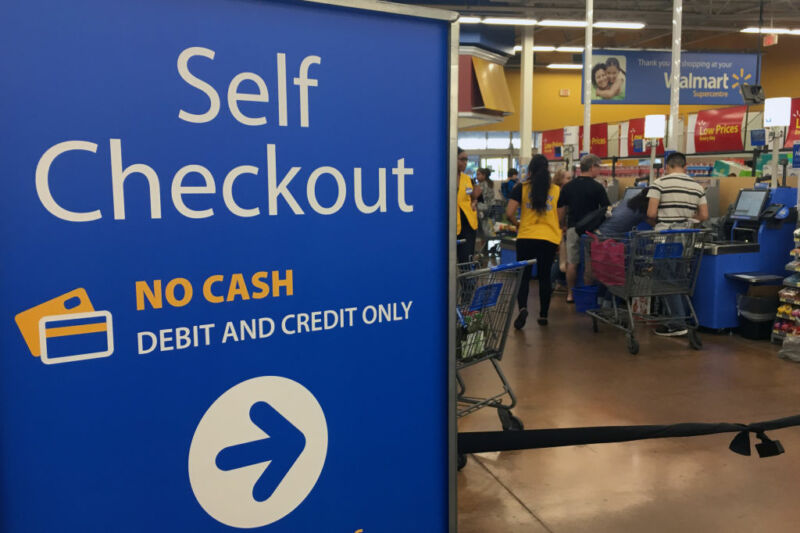
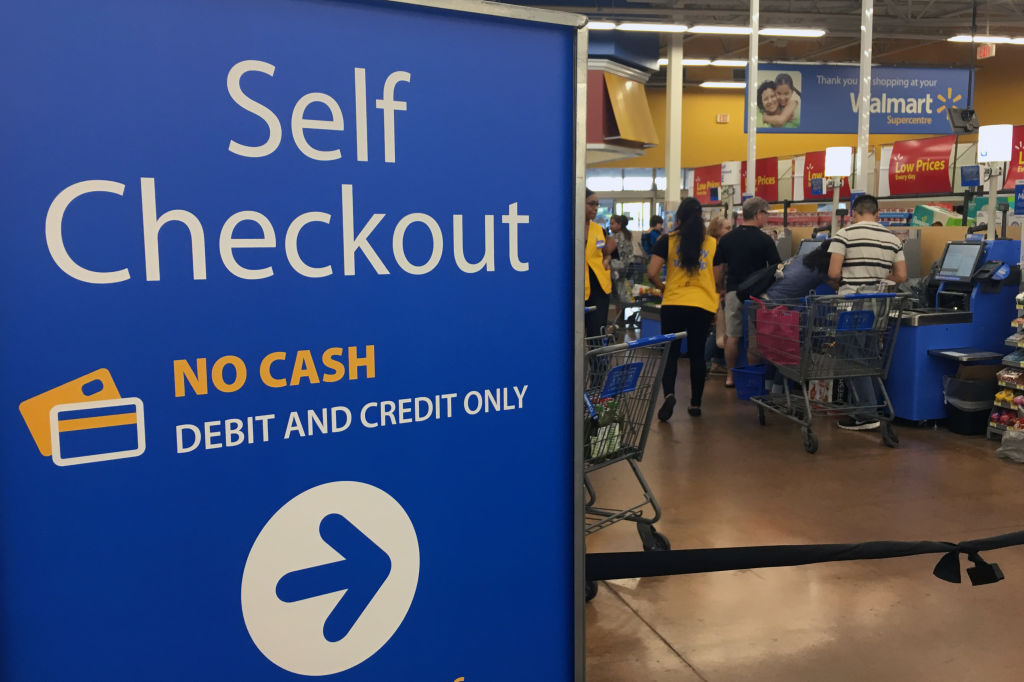
The employees said they were “past their breaking point” with Everseen, a small artificial intelligence firm based in Cork, Ireland, whose technology Walmart began using in 2017. Walmart uses Everseen in thousands of stores to prevent shoplifting at registers and self-checkout kiosks. But the workers claimed it misidentified innocuous behavior as theft and often failed to stop actual instances of stealing.
They told WIRED they were dismayed that their employer—one of the largest retailers in the world—was relying on AI they believed was flawed. One worker said that the technology was sometimes even referred to internally as “NeverSeen” because of its frequent mistakes. WIRED granted the employees anonymity because they are not authorized to speak to the press.
Experts discuss plans announced by Coinbase, Genesis Trading, and BitGo to become crypto's "prime brokers" and what that reveals about the state of the industry (Ian Allison/CoinDesk)
Ian Allison / CoinDesk:
Experts discuss plans announced by Coinbase, Genesis Trading, and BitGo to become crypto's “prime brokers” and what that reveals about the state of the industry — It's probably no coincidence that three major crypto firms - Coinbase, Genesis Trading and BitGo …
Twitter takes on a new kind of task for fact-checking
OnePlus India engineers help to improve OS, camera, 5G
Remote hiring is surging; here’s how to ace it
Basketball helped Wabtec's Sujatha Narayan up the game in a man’s world
NASA Astronauts Head for ISS on Historic SpaceX Flight
Internet security group Shadowserver receives $600K over 3 years from Trend Micro and a $400K donation from Internet Society, says it can now operate into 2021 (Lily Hay Newman/Wired)
Lily Hay Newman / Wired:
Internet security group Shadowserver receives $600K over 3 years from Trend Micro and a $400K donation from Internet Society, says it can now operate into 2021 — Ten weeks ago, Shadowserver's main source of funding dried up. Now, it's back on level footing.
Saturday, May 30, 2020
COVID-19 Technology Task Force, an effort to let big tech companies assist White House's pandemic response, beset by disagreements over privacy and other issues (Kirsten Grind/Wall Street Journal)
Kirsten Grind / Wall Street Journal:
COVID-19 Technology Task Force, an effort to let big tech companies assist White House's pandemic response, beset by disagreements over privacy and other issues — Effort to join Silicon Valley tech giants including Facebook, Google, Microsoft and Amazon with the White House to fight the coronavirus is faltering
Alibaba releases Qwen3.6-Plus, its third proprietary, closed-source AI model launched within a three-day period, saying it "drastically enhanced" agentic coding (Luz Ding/Bloomberg)
Luz Ding / Bloomberg : Alibaba releases Qwen3.6-Plus, its third proprietary, closed-source AI model launched within a three-day period, s...
-
The first project we remember working on together was drawing scenes from the picture books that our mom brought with her when she immigrate...
-
Sohee Kim / Bloomberg : South Korean authorities are investigating a data leak at e-commerce giant Coupang that exposed ~33.7M accounts; ...