Friday, June 21, 2019

Two Earth-like planets found near dwarf star

Kepler-452b has been for some time now consider Earth's closest cousin in terms of characteristics. It belongs in the Cygnus constellation and is approximately 1400 light-years away from us. Now, however, a team of international researchers led by the University of Göttingen has discovered two new Earth-like planets near one of our nearest neighbouring stars. Named Teegarden's Star, it's located approximately 12.5 light years away from us, 2700  degrees Celsius  warm, and roughly ten times lighter than the Sun. It was first discovered in 2003.

The news of the discovery of the two planets was announced in a press release by the University of Göttingen. “The two planets resemble the inner planets of our solar system,” comments lead author Mathias Zechmeister of the Institute for Astrophysics at the University of Göttingen. “They are only slightly heavier than Earth and are located in the so-called habitable zone, where water can be present in liquid form.”

The researchers believe that the two newly discovered planets could in fact be part of a larger system. Teegarden is the smallest star in which researchers have been successful so far in measuring the weight of a planet directly. “This is a great success for the Carmenes project, which was specifically designed to search for planets around the lightest stars,” says Professor Ansgar Reiners of the University of Göttingen, one of the scientific directors of the astronomical project.

The Carmenes project is currently carried out by the universities of Göttingen, Hamburg, Heidelberg, and Madrid, the Max-Planck-Institut für Astronomie Heidelberg, Institutes Consejo Superior de Investigaciones Científicas in Barcelona, Granada, and Madrid, Thüringer Landessternwarte, Instituto de Astrofísica de Canarias, and Calar-Alto Observatory. Clearly, Earth has more cousins now and in closer proximity.

Cover image courtesy: University of Göttingen

http://bit.ly/2KDu5W7

Google was never really serious about tablets, with years of scattershot reboots; its decision to stop making tablets was rational but could be shortsighted (Dieter Bohn/The Verge)

Dieter Bohn / The Verge:
Google was never really serious about tablets, with years of scattershot reboots; its decision to stop making tablets was rational but could be shortsighted  —  Google's getting out of the tablet hardware business, canceling two different tablets it was building and reassigning those employees to other projects.


Aadhaar Is Very Well Protected, Cybersecurity Chief Rajesh Pant Says

National cybersecurity coordinator Lt Gen (retd) Rajesh Pant has said that Aadhaar is very well protected and that there was nothing to worry about. http://bit.ly/2WZK4PD

Poco F1 Price in India Slashed Once Again, Now Starts at Rs. 17,999

Poco F1's last reduced price was Rs. 19,999, and it is now retailing for a further Rs. 2,000 discount. http://bit.ly/2Xn52wk

Huawei Sues US Commerce Department Over Seized Equipment

Huawei has filed a lawsuit against the US Commerce Department challenging whether telecommunications equipment it sent from China to the United States, and then back to China, is covered by Export... http://bit.ly/2J1psSf

5 Chinese Supercomputer Companies Blacklisted by US Over Security Fears

United States is blacklisting five Chinese organisations involved in supercomputing with military-related applications, citing national security as a justification for denying its Asian geopolitical... http://bit.ly/2Ky89vo

Amazon, Toshiba Launch Low-Cost Fire TV Televisions With Dolby Vision

Amazon has announced the first budget-friendly Toshiba-branded 4K TV with built-in Fire TV software and Dolby Vision. http://bit.ly/2IxQu4T

Millions of Google Maps Listings Are Fake, Report Claims

With thousands of new fake accounts being added every month, Google Maps is flooded by about 11 million false listings and phone numbers that reroute to competing businesses. http://bit.ly/2ZJ126X

MPSC 2019 – Civil Judge (Jr Division) Prelims Result Released

Maharashtra Public Service Commission (MPSC) has declared result for the posts of Civil Judge (Junior Division) Prelims Examination 2019.

HSSC Clerk Recruitment 2019 – Apply Online for 4858 Posts

Haryana Staff Selection Commission (HSSC) recruit 4858 Clerk Posts. Candidates with 10th Class, 10+2/ Degree can apply online form 24-06-2019 to 08-07-2019.

Samsung Galaxy M40 Review

Samsung M40 boasts of a modern hole-punch display and powerful internals, making it an attractive package under Rs. 20,000. We find out what this phone is like to live with, in our review. http://bit.ly/2IvtUcS

Heres why we never had a reversible USB-A plug

We've all been there. We've all shoved a USB Type-A plug in the wrong way into our laptops or desktops and groaned with frustration before correcting ourselves. If we're lucky, it takes two tries to get the plug in right. If we're unlucky, it takes three. And if we're super lucky, it happens in the first go. But have you ever wondered why the original USB plug was never reversible to begin with, like its younger cousin USB-C? That should have made life easier for a huge chunk of the world's population. Here's the answer.

Ajay Bhatt is an Indian-born American computer architect who led the Intel team that drafted the original USB plug design. In a recent interview with NPR, Bhatt explained why he and his team could not come up with a reversible plug design when USB-A was created in the mid 90s. If the plug were reversible, it would have needed double the amount of wires and circuits, which would have doubled the cost, making it harder to sell to PC manufacturers.

Ajay Bhatt, the man who led the team that designed the USB plug

Considering that persuading PC makers to adopt the USB port was the main task at hand, Bhatt and his team were forced to keep it cheap. They simply had to leave it at that. However, they blessed the port and receptacle with key visual indicators to tell if it was the right way up. As we all have come to experience it first-hand, it's still not all that easy to tell if a USB plug is going in the right way unless both sides are carefully examined before making the connection.

In his interview with NPR, Bhatt acknowledges the grievance of its users. “In hindsight, based on all the experiences that we all had, of course it was not as easy as it should be,” he comments. “It took us some time to prove that this technology is indispensable.” Luckily for all of us, USB-C, which was introduced some five years ago, is gradually replacing the good old USB-A plug in many laptops and desktops.

Inline image courtesy: Anthony Pidgeon/Redferns

http://bit.ly/31NDLm5

NASA says it was hacked in April 2018 via an unauthorized Raspberry Pi on the network; hackers had access for nearly a year, stealing Mars mission-related data (Catalin Cimpanu/ZDNet)

Catalin Cimpanu / ZDNet:
NASA says it was hacked in April 2018 via an unauthorized Raspberry Pi on the network; hackers had access for nearly a year, stealing Mars mission-related data  —  NASA described the hackers as an “advanced persistent threat,” a term generally used for nation-state hacking groups.


Renault-Nissan team up with Waymo to work on self-driving mobility services

Does the name Waymo ring a bell in your head? It's the company behind the famous squircle-shaped “Google” self-driving car that was being tested a few years ago by parent company Alphabet, Inc. According to a recent press release, Groupe Renault and Nissan have signed an exclusive agreement with Waymo to explore driverless mobility services for passengers and cargo alike in France and Japan.

According to the release published by Renault Nissan Mitsubishi yesterday, the new agreement is designed to bring together the strengths of all participants and “expand expertise by assessing market opportunities, working together to research commercial, legal and regulatory issues related to driverless transportation-as-a-service offerings”. The agreement holds good only for efforts made in France and Japan, although it could at a later time include other markets except China.

“This is an ideal opportunity for Waymo to bring our autonomous technology to a global stage, with an innovative partner. With the Alliance’s international reach and scale, our Waymo Driver can deliver transformational mobility solutions to safely serve riders and commercial deliveries in France, Japan, and other countries,” noted John Krafcik, Chief Executive Officer at Waymo.

Waymo is perhaps best known in recent times for its Waymo One service, a self-driving car service that is currently operational in the Phoenix metropolitan area of the US. As they would with Uber, a user in the right, serviceable area need only request a car using the Waymo app. They should then be able to board an autonomous car to reach their destination.

http://bit.ly/2x6ITnj

Google Pixel 4 renders reveal new Mint colour with yellow power button

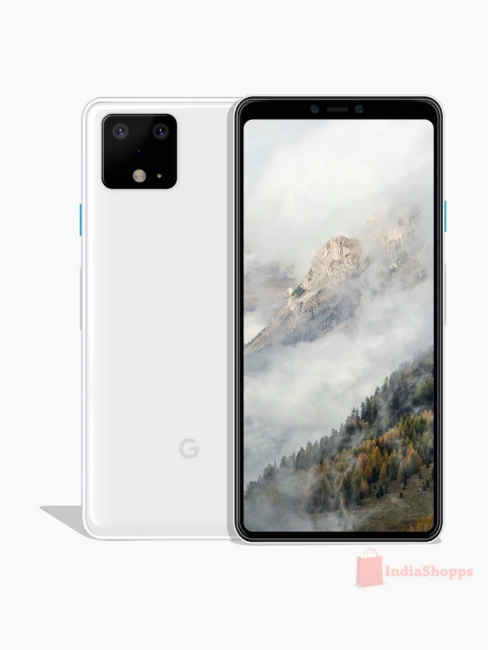
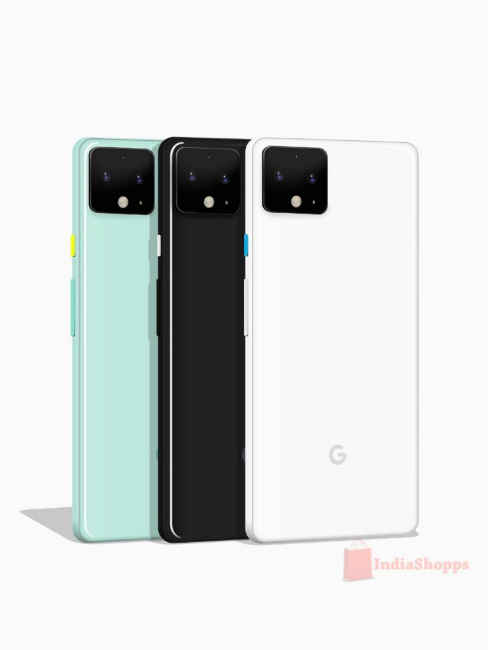
Google has a record of launching Pixel phones in three colours. Apart from the regular Black and White options, there has always been a unique third colour in the line-up. For example, the Pixel 2 had Kinda Blue, the Pixel 3 series got Not Pink and the recently launched Pixel 3a came out with a Purple-ish colour option. It seems that Google wants to continue this trend because the latest renders suggest that the tech giant will release a Mint Green colour along with the regular coloured Pixel 4 devices.

Citing industry sources, Indiashopps.com released the renders of the Pixel 4 device, which is scheduled to launch sometime in October. Apart from the minty Green colour, the renders show the phone carrying a yellow coloured power button. Further, there is a White-coloured lining along the border. The back panel sports the “G” branding on the lower half and the camera module sitting on the top left corner. Unlike its previous models, there’s no two-tone design on the back.

Last week, Google revealed the Pixel 4 design with a square camera module. This is probably the most important element of the phone because Pixel devices have always set a bar in the computational photography space. While OEMs moved on to include multi-camera setup on their devices, the company stuck to its one camera design. This year, however, Google is incorporating three rear sensor on the back.

The camera module is similar to the one seen in iPhone XI leaks. The image confirms that Google would equip the Pixel line-up with a dual camera system. A closer look at the released Pixel 4 image shows another cutout on top of the two cameras. Rumours suggest that it could be a time of flight sensor, or a spectral sensor that is already present on the Pixel 3. The spectral sensor enables the camera to deal with flickering lights or screens.

http://bit.ly/2RvjoVP

How Schneider Electric is using AI in call centers and manufacturing to complement employees' work and boost productivity, rather than to replace them (Patricia Cohen/New York Times)

Patricia Cohen / New York Times : How Schneider Electric is using AI in call centers and manufacturing to complement employees' work ...