Saturday, November 24, 2018

BlueCargo optimizes stacks of containers for maximum efficiency

Meet BlueCargo, a logistics startup focused on seaport terminals. The company was part of Y Combinator’s latest batch and recently raised a $3 million funding round from 1984 Ventures, Green Bay Ventures, Sound Ventures, Kima Ventures and others.

If you picture a terminal, chances are you see huge piles of containers. But current sorting methods are not efficient at all. Yard cranes end up moving a ton of containers just to reach a container sitting at the bottom of the pile.

BlueCargo wants to optimize those movements by helping you store containers at the right spot. The first container that is going to leave the terminal is going to be at the top of the pile.

“Terminals spend a lot of time making unproductive or undesired movements,” co-founder and CEO Alexandra Griffon told me. “And yet, terminals only generate revenue every time they unload or load a container.”

Right now, ERP-like solutions only manage containers according to a handful of business rules that don’t take into account the timeline of a container. Empty containers are all stored in one area, containers with dangerous goods are in another area, etc.

The startup leverages as much data as possible on each container — where it’s coming from, the type of container, if it’s full or empty, the cargo ship that carried it, the time of the year and more.

Every time BlueCargo works with a new terminal, the startup collects past data and processes it to create a model. The team can then predict how BlueCargo can optimize the terminal.

“At Saint-Nazaire, we could save 22 percent on container shifting,” Griffon told me.

The company will test its solution in Saint-Nazaire in December. It integrates directly with existing ERP solutions. Cranes already scan container identification numbers. BlueCargo could then instantly push relevant information to crane operators so that they know where to put down a container.

Saint-Nazaire is a relatively small port compared to the biggest European ports. But the company is already talking with terminals in Long Beach, one of the largest container ports in the U.S.

BlueCargo also knows that it needs to tread carefully — many companies already promised magical IT solutions in the past. But it hasn’t changed much in seaports.

That’s why the startup wants to be as seamless as possible. It only charges fees based on shifting savings — 30 percent of what it would have cost you with the old model. And it doesn’t want to alter workflows for people working at terminals — it’s like an invisible crane that helps you work faster.

There are six dominant players managing terminals around the world. If BlueCargo can convince those companies to work with the startup, it would represent a good business opportunity.

Amazon warehouse workers in Europe stage ‘we are not robots’ protests

Amazon warehouse workers in several countries in Europe are protesting over what they claim are inhuman working conditions which treat people like robots. It’s the latest in a series of worker actions this year.

They’ve timed the latest protest for Black Friday, one of the busiest annual shopping days online as retailers slash prices and heavily promote deals to try to spark a seasonal buying rush.

In the UK, the GMB Union says it’s expecting “hundreds” to attend protests timed for early morning and afternoon at Amazon warehouses in Rugeley, Milton Keynes, Warrington, Peterborough and Swansea.

At the time of writing the union had not provided details of turnout so far. 

Protests are also reported to be taking place in Spain, France and Italy today. Although, when asked about strikes at its facilities in these countries, Amazon claimed: “Our European Fulfilment Network is fully operational and we continue to focus on delivering for our customers. Any reports to the contrary are simply wrong.”

The demonstrations look intended to not only apply pressure on Amazon to accept collective bargaining but encourage users of its website to think about the wider costs involved in packing and dispatching the discounted products they’re trying to grab.

Spanish newspaper El Diaro reports that today’s protests by workers at Amazon’s largest logistics center in the country, in San Fernando, Madrid, mark the fourth round of strikes over working conditions in Spain.

Protestors in Madrid this morning reportedly chanted: “We will not accept discounts to our rights.”

A report by AP quotes the spokesman of the protest group in Spain, Douglas Harper, claiming that around 90 percent of workers at a logistics depot in near Madrid joined the walkout — leaving just two people at the loading bay. Though Amazon reportedly diverted cargo deliveries to its other 22 depots in the country.

Update: Amazon disputes the 90 percent figure. A spokesman told us: “The numbers released by the unions are categorically wrong. Today, the majority of our associates at Amazon’s Fulfillment Center in San Fernando de Henares (Madrid) are working and processing our customers’ orders, as they do every day.”

French press also reports warehouse workers striking locally, and a union representing Amazon logistics workers calling for a national strike.

In the UK the GMB Union is calling on Amazon to recognize its representation of workers, and has attacked the company for what it dubs “Victorian working practices”. 

This summer an investigation by the Union revealed ambulances had been called to Amazon’s UK warehouses 600 times during the past three financial years.

Earlier this month the Union also revealed a total of 602 reports have been made from Amazon warehouses to the Health and Safety Executive since 2015/16 — with workers reported to have suffered fractures, head injuries, contusions and collisions with heavy equipment.

It added that one report detailed a forklift truck crash caused by a ‘lapse of concentration possibly due to long working hours’.

In a statement on Wednesday announcing the Black Friday protest, Tim Roache, the GMB’s general secretary, said: “The conditions our members at Amazon are working under are frankly inhuman. They are breaking bones, being knocked unconscious and being taken away in ambulances. We’re standing up and saying enough is enough, these are people making Amazon its money. People with kids, homes, bills to pay — they’re not robots.”

“Jeff Bezos is the richest bloke on the planet; he can afford to sort this out,” he added. “You’d think making the workplace safer so people aren’t carted out of the warehouse in an ambulance is in everyone’s interest, but Amazon seemingly have no will to get round the table with us as the union representing hundreds of their staff. Working people and the communities Amazon operates in deserve better than this. That’s what we’re campaigning for.”

In a further update today the GMB Union said Amazon has not replied to a joint plea, backed by a shadow minister, for a health and safety review to reduce the hundreds of ambulance call outs to its warehouses.

Two UK MPs wrote to Amazon’s director of public policy for UK and Ireland last week to suggest a joint audit with the union and also a meeting hosted by them in parliament — to discuss the issues. But the union said Amazon has so far failed to respond.

Responding to today’s protest action, a spokesman for Amazon UK provided us with the following statement:

Amazon has created in the UK more than 25,000 good jobs with a minimum of £9.50/hour and in the London area, £10.50/hour on top of industry-leading benefits and skills training opportunities.

All of our sites are safe places to work and reports to the contrary are simply wrong. According to the UK Government’s Health and Safety Executive, Amazon has over 40% fewer injuries on average than other transportation and warehousing companies in the UK. We encourage everyone to compare our pay, benefits, and working conditions to others and come see for yourself on one of the public tours we offer every day at our centers across the UK uk.amazonfctours.com.

The spokesman declined to respond to additional questions.

In October, facing rising political pressure on its home turf after senator Bernie Sanders introduced legislation targeting low rates of pay at the coal face of Amazon’s business, the e-commerce giant said it would raise the minimum wage of its US workers to $15 per hour. That change went into effect at the start of this month.

In another change to its business announced yesterday, also just before the Black Friday spending binge kicked off, Amazon reversed a decision that had been triggered by a change in Australian tax law earlier this year, when it had shuttered its U.S. store to shoppers in the country to avoid paying a 10 percent levy — deciding to suck up the charge to lift a geoblock that had proved unpopular with customers.

Equity podcast: A Thanksgiving-ish special episode

Hello and welcome back to Equity, TechCrunch’s venture capital-focused podcast, where we unpack the numbers behind the headlines.

It’s the day after Thanksgiving, so if you are reading this in America I hope there is a pet leaned up against your legs and that you are sitting next to a fire while staring down one more plate of leftovers.

We made this episode for just such a moment. Welcome to our take on a relaxed episode of Equity, a show normally featuring four people arguing about this or that. This week, it’s just TechCrunch’s Kate Clark and myself digging into some of the strangest and most interesting rounds of the year. Thus far, at least.

So what made our cut?

We hope that you are well and that the holidays are as delightful and full of joy as they can be. And if you are having a bad run of the end of the year, big hugs from the Equity crew. We think you are just perfect.

Stay warm!

Equity drops every Friday at 6:00 am PT, so subscribe to us on Apple PodcastsOvercast, Pocket Casts, Downcast and all the casts.

Black Friday predicted to hit $6.4B in online sales, $643M spent so far

After a record-breaking Thanksgiving with $3.7 billion in digital sales across desktop and mobile devices, it looks like Black Friday will also pull in a bumper year for e-commerce. Adobe — which tracks trillions of transactions across a range of retail sites — says that as of 7am Pacific Time, there has already been $643 million spent online.

That’s not only a rise on yesterday’s sales at this point in the day — when Adobe had recorded $406 million — but a rise of some 28.3 percent on the same period a year ago. For the full day last year, shoppers spent $5.03 billion online, a record at the time; Adobe is currently predicting that this year there will be $6.4 billion spent on Black Friday, revising up its figures based on strong morning demand.

“Shoppers are already capitalizing on Black Friday discounts online in the early hours of the morning, gearing up for a record Black Friday we expect to match last year’s Cyber Monday,” said Taylor Schreiner, director, Adobe Digital Insights.

As with Thanksgiving and the overall trends of more smartphone shopping, we’re seeing an ongoing shift to more shopping on mobile devices — specifically smartphones. That’s partly because phones are always improving with more functionality and bigger screens, but also because e-commerce technology has improved to make the mobile shopping experience faster and easier.

“Mobile shopping continues to skyrocket and see increased conversion,” Schreiner said. “Retailers understand that shopping and buying on smartphones is now the norm for consumers, and as a result are delivering better experiences and optimization on mobile devices.”

Adobe hasn’t released figures yet for conversion rates on Black Friday, but yesterday desktop was still seeing a higher rate of people who would buy after browsing: five percent on desktop versus around three percent for smartphones.

And while tablets are not nearly as popular for people to use — they account for only around eight percent of traffic and purchases — conversion rates on these are essentially on par with desktop.

At the smaller-retailer end of the scale, things are also doing well. Shopify, which provides a real-time sales visualisation for some 600,000 merchants on its platform — typically smaller retailers than the 80 biggest tracked by Adobe — notes that at the moment the average sales per minute for those merchants is currently hovering at around $650,000 per minute, a rise on earlier today.

Black Friday — once the traditional ‘start’ of the holiday sales period — has downshifted somewhat in importance as retailers have brought up their seasonal promotions earlier and earlier, tapping into a key aspect of e-commerce: shopping anytime you please, not just when a store is open.

At the same time, while Thanksgiving brings online retailers a captive audience — physical stores are mostly closed — Black Friday really sees the two going head-to-head, with the added competitive twist that people get days off after Thanksgiving and use them to take to the stores.

Adobe surveyed shoppers ahead of today, and it found that 60 percent planned to shop online — same as last year — and 43 percent planned to go to physical stores.

The competitiveness at physical stores has had a dark undercurrent, too, with pictures of crazed shoppers trampling over others to get to the best bargains an annual theme in the media.

Interestingly, Adobe notes that there has been a sharp rise in “buy online, pick up in store” transactions, with people buying twice as much on Thursday as on Wednesday to pick up starting Friday. That might go some way to alleviating some of the heated moments in shops.

Adobe says that so far this month, there has been $38 billion spent online, up 18.5 percent on a year ago.

Meituan, China’s ‘everything app,’ walks away from bike sharing and ride hailing

A major player in the race to transport Chinese people around is losing steam. Meituan Dianping, the Tencent-backed, all-encompassing platform for local services, continues to put the brakes on bike-sharing and ride-hailing, the company said on its earnings call on Thursday.

The eight-year-old firm is best known for competing with Alibaba-owned Ele.me in food deliveries — the segment that makes up the majority of its sales — and hotel booking, but it’s aggressively branched into various fronts like transportation.

In April, Meituan entered the bike-sharing fray after it scooped up top player Mobike for $2.7 billion to face off Alibaba-backed Ofo. Over the past few years, Mobike and Ofo were burning through large sums of investor money in a bid to win users from subsidized rides, but both have shown signs of softening their stance recently

Mobike is downsizing its fleets to “avoid an oversupply” as the bike-sharing market falters, Meituan’s chief financial officer Chen Shaohui said during the earnings call. Ofo has also scaled back by closing down many of its international operations.

In the meantime, Meituan said it has no plans to expand car-hailing beyond its two piloting cities — Shanghai and Nanjing — after venturing into the field to take on Didi Chuxing last December. The update is consistent with what the firm announced in its prospectus ahead of a blockbuster $4.2 billion initial public offering in Hong Kong this September.

The halt is likely related to changing dynamics in the country’s shared rides. Following two passenger murders on Didi, the Softbank-backed transportation platform that took over Uber China in 2016, Chinese regulators launched their strictest verification requirements for drivers across all ride-hailing apps. The mandate has squeezed driver numbers, making it harder to hire rides on Didi and its competitors.

During its third quarter that ended September 30, Meituan posted a 97.2 percent jump on revenues to 19.1 billion yuan, or $2.75 billion, on the back of strong growth in food delivery transactions. The firm’s investments in new initiatives – including ride-hailing and bike-sharing – took a toll as operating losses nearly tripled to 3.45 billion yuan compared to a year ago. Meituan shares plunged as much as 14 percent on Friday, the most since its spectacular listing.

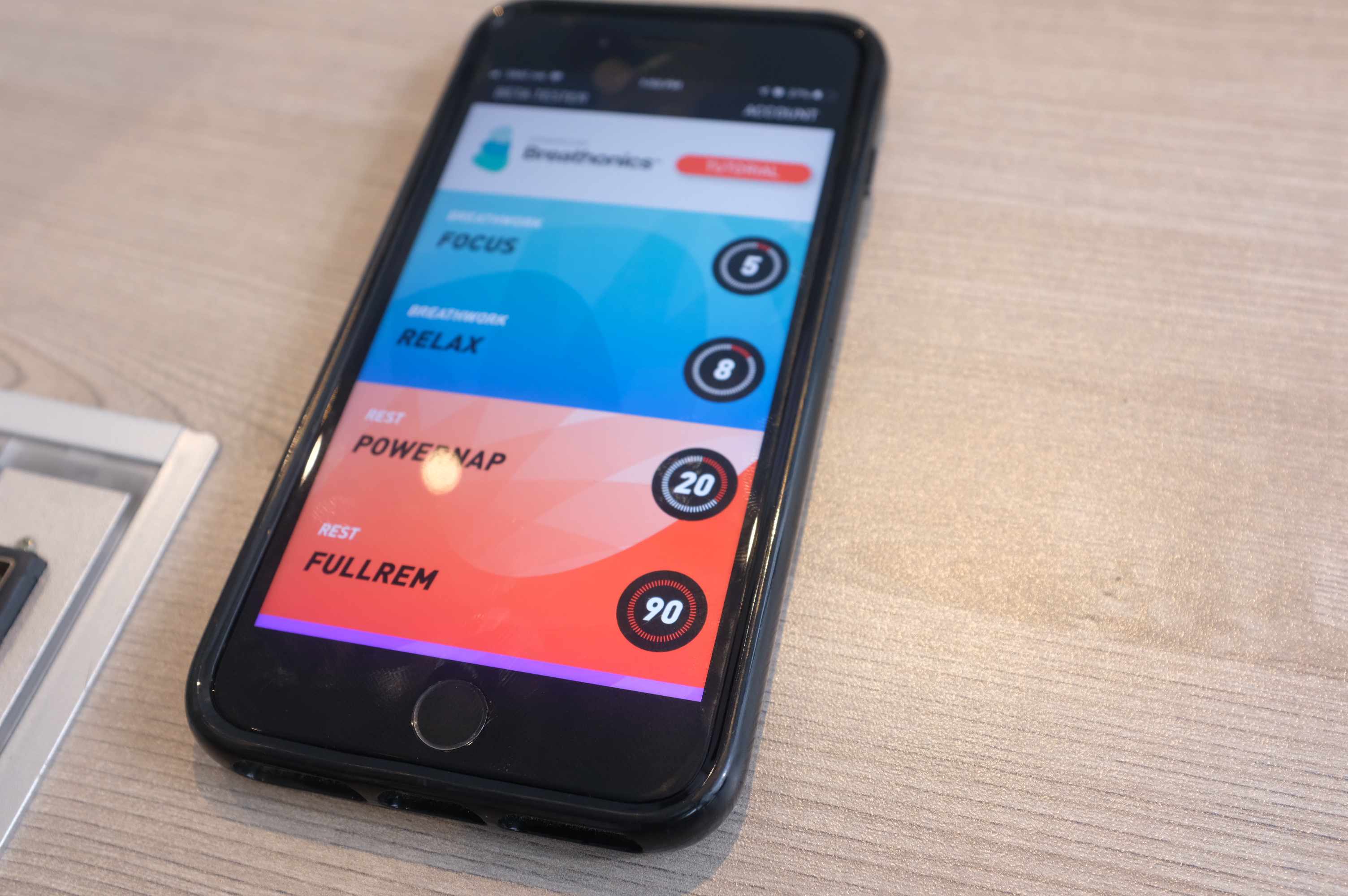
Silentmode’s PowerMask is a $200 connected relaxation mask

I barely slept my second night at Chunking Mansions. The loud neighbors, the hot Hong Kong air, the landlord banging on the door after midnight: None of these things are particularly conducive to a peaceful rest, and for once in my life I actually looked forward to attempts at shut eye on the 15-plus hour flight home in the morning.

For all the dread of returning to the notorious Hong Kong hostiles that evening, after a day of exploring the area, I was actually looking forward to strapping Silentmode’s PowerMask to my head — closing my eyes and embracing the luxury of forgetting where I was for a few precious minutes.

I’d tried this weird thing earlier in the day, in the middle of the Brinc accelerator’s well-lit meeting room. The whole thing was oddly soothing, if fairly awkward — a big, foam black-out mask with headphones embedded on either side. Probably not the sort of thing you want to wear out in the open, though Lucas Matney happily modeled it above — because we clearly don’t have enough pictures of our in-house VR guy wearing weird crap on his head over at TechCrunch.com.

I’d be lying if I said I didn’t enjoy the minute or two I spent with the mask on, wondering if this is how pet parrots feel when you cover their cages with a blanket for the night. Maybe that’s just the jet lag talking.

It’s a momentary respite from the cloying terrors of the world, a way to briefly trick our overactive brains into thinking, yeah, sure, everything is just fine with some New Age music, breathing exercises and, most importantly, just complete and utter darkness.

I’m a sucker for this stuff. I have the Calm app on my phone and started getting pretty into the Muse headset before leaving for my two-week trip. I’ve shared the fact that I’m a bad and anxious meditator plenty of times before on these pages, but find even my failed attempts to be useful.

Someone described the PowerMask as a kind of small-scale take on a sensory deprivation tank, and sure, why not? I’ve had worse nights.

A bit of a wrinkle in all of this: it isn’t a sleep device, exactly. Or at least the company isn’t branding it as such. Initially pitched as a “Power Nap” product, there does appear to be some in-house confusion with regard to how exactly to position the product. Certainly the startup wants to distinguish itself from the 8 million connected sleep masks I see at tech events, particularly when traveling in Asia.

The company surprisingly doesn’t discuss current zeitgeisty startup phrases like meditation or mindfulness, either.

“We are on a much bigger mission to train the world in the art of relaxation,” co-founder Bradley Young writes in a followup email. The company’s site is far less subtle, with language rarely heard outside of supplement ads. “Reach peak state,” it writes in bold all caps font, “become a peak human.” I mean, sure, why not?

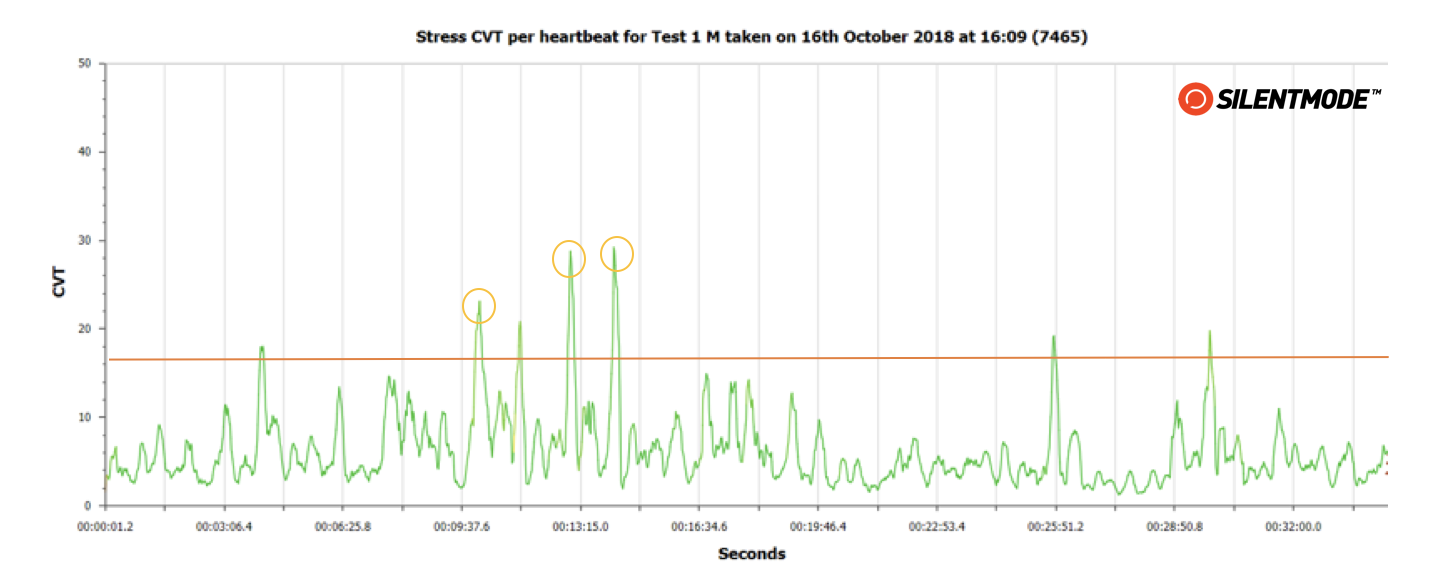
That last bit of hyperbole is courtesy of the company’s focus on something called CVT (Cardiac Vagal Tone). Silentmode claims the device can be used to help us normal folk achieve the resting heart rate of an athlete. Look, here’s a graph:

I won’t go too deep into that stuff here, because frankly, I don’t know what I’m talking about. Though I can see how buying some blackout curtains for your head b/w “psychoacoustic and therapeutic sonic experiences” could go a ways toward helping one chill the eff out. It did bring a momentary and much needed respite from my vaguely horrific lodging experiences.

Despite the company’s move away from sleep talk, it also went a ways toward helping me crash on this flight. The music is soothing, and while the padded headset isn’t a pillow exactly, it’s a lot more comfortable than just leaning your head on the seat in front of you. Assuming you can get over the awkwardness of wearing a giant thing on your head. Of course, no one looks good sleeping on a plane, weird head accessory or no.

At $199, it’s not cheap. And the company plans to offer premium audio through an additional app subscription. Silentmode is also working with some large companies to pilot these products in office spaces where relaxation is a rare commodity, indeed.

Black Friday only: 2-for-1 Innovator passes to Disrupt Berlin 2018

We love a great deal almost as much as we love early-stage startups. So, we decided to combine both into an awesome Black Friday mashup for Disrupt Berlin 2018. Europe’s premier tech startup conference takes place next week on 29-30 November, and this is your chance to save some serious euros.

For the next 24 hours, you can buy two Innovator passes to Disrupt Berlin for the price of one — that’s €1,184, VAT included. The clock runs out on this Black Friday special at midnight, CET, so don’t wait. Buy your 2-4-1 Innovator passes now.

Innovator passes are perfect for software engineers, product managers, marketers, consultants and all-around tech enthusiasts. They grant you access to all the Disrupt stages where you’ll hear from tech titans, startup veterans, up-and-coming founders and innovative investors.

Don’t miss compelling topics from the likes of Raycho Raychev, EnduroSat’s CEO — he’ll discuss making satellites more affordable. And that’s just one example of our stellar speaker lineup. You’ll find the full Disrupt Berlin agenda here.

Use your 2-for-1 Innovator passes to go watch Startup Battlefield, where a cadre of exceptional founders will launch their early-stage startups to the world while competing for the legendary Disrupt Cup, $50,000 in non-equity cash, media exposure and life-changing investor love.

Since 2007, Startup Battlefield has helped launch 778 companies — including the likes of Mint, Dropbox and Yammer — that have gone on to collectively raise $8.5 billion and generated 105 exits. Be in the room to cheer on the next generation of Startup Battlefield warriors and, who knows, you might witness the birth of the next tech unicorn.

Innovator passes also open the door to Startup Alley — our famed exhibition hall — where you’ll find more than 400 early-stage startups plying innovative tech products, platforms and services.

When you’re in the Alley, be sure to visit our TC Top Picks. These exceptional startups represent exciting innovations in the following tech categories: AI/Machine Learning, Blockchain, CRM/Enterprise, E-commerce, Education, Fintech, Healthtech/Biotech, Hardware, Robotics, IoT, Mobility and Gaming.

You’ll find networking opportunities everywhere at Disrupt Berlin, so take advantage of CrunchMatch and save your shoe leather. Our free business match-matching platform makes quick work of connecting you with tech service providers, product managers, developers, marketers or engineers, founders or investors — the choice is yours. CrunchMatch is curated, automated and efficient, and it’s all based on the criteria you provide.

Disrupt Berlin 2018 takes place on 29-30 November, and this is your last chance to get two Innovator passes for the price of one. Our Black Friday mashup offer disappears at 12 midnight CET, so buy your discounted Innovator passes right now. We’ll see you next week in Berlin!

Some promising news for kids with peanut allergies

Physics can explain the fastball’s unexpected twist, new study finds

Repowering the UK’s oldest wind farms could boost energy generation by 171%

From efficiency to airflow, it’s a golden age for racing tech in our driveways

Sources: private capital giant Apollo Global has shorted loans and rapidly cut exposure to the enterprise software sector in 2025 amid concerns over AI threat (Financial Times)

Financial Times : Sources: private capital giant Apollo Global has shorted loans and rapidly cut exposure to the enterprise software sect...