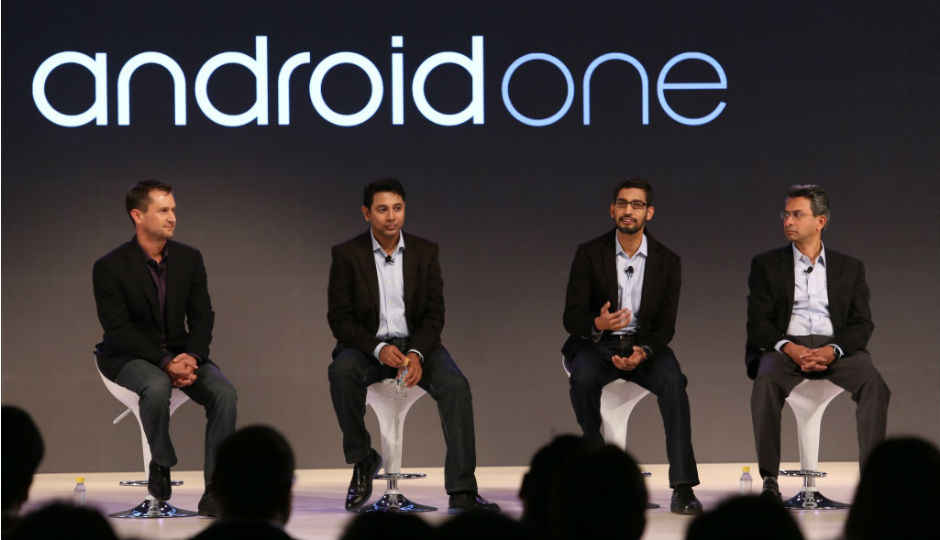
The Android One program by Google has come to replace the Nexus devices. In 2017, Google jumpstarted the program globally with the Xiaomi Mi A1. When earlier it was to make entry-level phones more responsive and usable, Android One became an embodiment of devices that would run a vanilla flavour of Android (always the latest), and offer two years of version upgrades and security patches. At that time, the promise of regular updates was a big selling point and a year down the line, we had quite a few Android One certified devices in the Indian market. On the landing page of the official Android One website, the promise of regular updates was highlighted explicitly — 2 years of guaranteed updates. However, a couple of days back, Reddit user anshumanpati6 spotted the mention of that same promise of regular updates missing from the landing page. This led many to believe that Android One no longer came with the compulsion of regular updates. However, Google denied there had been any change in the program; the promise of regular updates still holds. In a response to India Today, Google said, “We confirm that our promise to provide 2 years of updates on Android One devices still stands and our website design does not impact the promise of this program.” The Android One program was initially tailored for developing markets that demanded affordable devices with timely updates. Google enforced this with stringent minimum hardware requirements, but smartphone vendors couldn’t make much money on them. As a result, the present form of Android One is more flexible in terms of the hardware under the hood. For the entry-level phones, Google designed Android Go. Android One, on the other hand focused on offering affordable, mid-range devices update cycles users enjoy in the high-end Pixel phones with an user experience that seemed better than most skinned Android phones. There was no reason to think Google would abandon this crucial element of the program, save for the missing feature in the official website. In fact, there’s still no mention of the feature in the homepage. We are still waiting for Google to release an official response on the matter. It could just be a website redesign highlighting the security features, unlimited storage and the wide portfolio of Android One devices available in the market. Or, there could be more to the story than what meets the eye.Tech Nuggets with Technology: This Blog provides you the content regarding the latest technology which includes gadjets,softwares,laptops,mobiles etc
Sunday, December 30, 2018
Google clarifies Android One promise of guaranteed updates for 2 years
The Android One program by Google has come to replace the Nexus devices. In 2017, Google jumpstarted the program globally with the Xiaomi Mi A1. When earlier it was to make entry-level phones more responsive and usable, Android One became an embodiment of devices that would run a vanilla flavour of Android (always the latest), and offer two years of version upgrades and security patches. At that time, the promise of regular updates was a big selling point and a year down the line, we had quite a few Android One certified devices in the Indian market. On the landing page of the official Android One website, the promise of regular updates was highlighted explicitly — 2 years of guaranteed updates. However, a couple of days back, Reddit user anshumanpati6 spotted the mention of that same promise of regular updates missing from the landing page. This led many to believe that Android One no longer came with the compulsion of regular updates. However, Google denied there had been any change in the program; the promise of regular updates still holds. In a response to India Today, Google said, “We confirm that our promise to provide 2 years of updates on Android One devices still stands and our website design does not impact the promise of this program.” The Android One program was initially tailored for developing markets that demanded affordable devices with timely updates. Google enforced this with stringent minimum hardware requirements, but smartphone vendors couldn’t make much money on them. As a result, the present form of Android One is more flexible in terms of the hardware under the hood. For the entry-level phones, Google designed Android Go. Android One, on the other hand focused on offering affordable, mid-range devices update cycles users enjoy in the high-end Pixel phones with an user experience that seemed better than most skinned Android phones. There was no reason to think Google would abandon this crucial element of the program, save for the missing feature in the official website. In fact, there’s still no mention of the feature in the homepage. We are still waiting for Google to release an official response on the matter. It could just be a website redesign highlighting the security features, unlimited storage and the wide portfolio of Android One devices available in the market. Or, there could be more to the story than what meets the eye.
Subscribe to:
Post Comments (Atom)
EU finance ministers agreed to set a €3 customs duty on low-value parcels from July 2026, aiming to crack down on cheap Chinese imports from brands like Shein (Reuters)
Reuters : EU finance ministers agreed to set a €3 customs duty on low-value parcels from July 2026, aiming to crack down on cheap Chinese...
-
Amrith Ramkumar / Wall Street Journal : An interview with White House OSTP Director Michael Kratsios, a Peter Thiel protégé confirmed by ...
-
The first project we remember working on together was drawing scenes from the picture books that our mom brought with her when she immigrate...
No comments:
Post a Comment