Sunday, August 23, 2020
Microsoft Defends Fortnite Maker Epic Games in Apple Fight

Xiaomi Redmi 9 Prime with MediaTek Helio G80 to go on sale today via Amazon
Twitter hides Trump tweet behind notice for potentially dissuading people from voting
Twitter flagged one of President Donald Trump’s tweets on Monday, placing it behind a notice that warns users it violates the platform’s rules against dissuading people from voting.
In the tweet, posted on Monday, Trump claimed mail drop boxes are a “voter security disaster” and also said they are “not COVID sanitized.” Twitter’s notice says that the tweet violates its rules about civic and election integrity, but it “determined it may be in the public’s interest for the Tweet to remain accessible.” Users can still retweet it with comment, but are nor prevented from liking, replying, or retweeting it alone.
Through its Twitter Safety account, the company gave more details, saying that the tweet had been flagged for “making misleading health claims that could potentially dissuade people from participation in voting.” It also cited a section from its Civic Integrity Policy, highlighting a line that forbids users from making “misleading claims about process procedures or techniques which could dissuade people from participating” in elections.
Per our policies, this Tweet will remain on the service given its relevance to ongoing public conversation. Engagements with the Tweet will be limited. People will be able to Retweet with Comment, but not Like, Reply, or Retweet it. pic.twitter.com/USuaRr5ING
— Twitter Safety (@TwitterSafety) August 23, 2020
Mail-in ballots, which are expected to be used more widely by states in response to the COVID-19 pandemic, have become a partisan issue leading up to the November presidential election. Despite what Trump said in his tweet, expert consensus is that mail-in ballots and absentee ballots are both secure. Furthermore, the Centers for Disease Control and Prevention states COVID-19 is spread mostly through close contact from person to person. Though it is possible that a person can get COVID-19 by touching a surface or object that has the virus on it and then touching their mouth, nose, or possibly eyes, the CDC says this is “not thought to be main way the virus spreads.”
After years of controversy over how the platform handled the president’s tweets that contained misleading, false, or incendiary statements, Twitter has recently begun taking a harder stance on Trump’s account. In May, Twitter applied fact-check labels about mail-in ballots to two of Trump’s tweets.
Days later, Trump signed an executive order targeting Section 230 of the Communications Decency Act, which gives internet companies legal protections that shield them from liability for user-created content while also giving them power to make moderation decisions. The executive order argued that platforms forfeit their rights to legal protection when they moderate content, as Twitter did when it applied fact-check labels to Trump’s tweets.
Though it is not clear if Trump’s executive order is legally enforceable, it may serve to intimidate some platforms. Twitter called the order a “reactionary and politicized approach to a landmark law,” and its actions on Trump’s tweets today may indicate that the company does not see it as a threat.
TechCrunch has contacted the White House and Twitter for comment.


Jack Ma's Ant Group, which owns Alipay, had profits of around $3.5B in the six months to March, ahead of planned concurrent IPOs in HK and Shanghai (Stella Yifan Xie/Wall Street Journal)


Jack Ma's Ant Group, which owns Alipay, had profits of around $3.5B in the six months to March, ahead of planned concurrent IPOs in HK and Shanghai — Results show how lucrative the Chinese financial-technology giant's business has been as it gears up for blockbuster offering
Realme C12 to Go on Its First Sale Today at 12 Noon via Flipkart, Realme.com
Redmi 9 Prime to Go on Sale Today at 12 Noon via Amazon, Mi.com
Content moderation is even harder in African countries, due to colonial legacies, authoritarian governments, and colonial laws that violate online free speech (Tomiwa Ilori/Slate)

Content moderation is even harder in African countries, due to colonial legacies, authoritarian governments, and colonial laws that violate online free speech — This article was developed as part of a series of papers by the Wikimedia-Yale Law School Initiative on Intermediaries and Information …
This COVID-19 summer’s must-watch show is… an NBA rookie’s YouTube page?
-
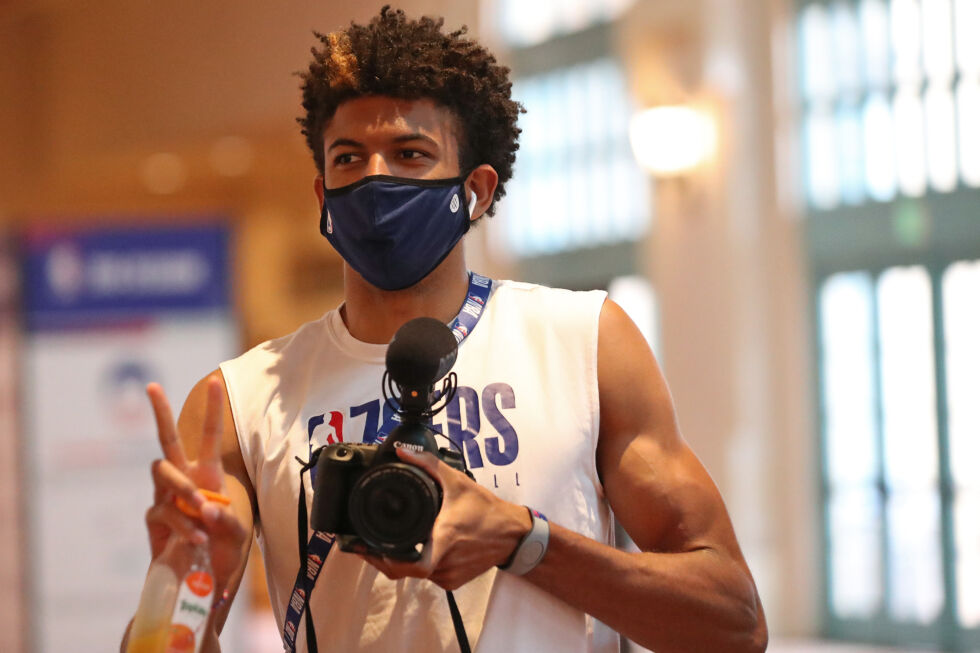
Philadelphia 76ers guard Matisse Thybulle in his natural habitat: camera in hand. [credit: Joe Murphy/NBAE via Getty Images ]
Even if you don't like sports, the NBA bubble in Orlando has been a fascinating epidemiological experiment: if you had seemingly infinite resources available and every participant willingly agreed to follow protocols based on our best understanding of a nascent viral pandemic, could you construct a truly safe environment? Take note, US government, as so far the answer has been, "Yes." As of August 19, the NBA has officially had zero new COVID-19 infections to report over the league's five-week restart. And that's with the league needing to utilize contingency quarantine protocols for players unexpectedly leaving and traveling (which they've done for everything from family emergencies to, um, lemon-pepper chicken wings?).
Traditional media has been invited inside to an extent in order to document this unprecedented playoff season, and the NBA has relied heavily on Zoom access to players for other reporters. Twitter, naturally, has also birthed an aggregator account that will bring you all the beer-chugging player social media you desire. But nearly all of these glimpses into bubble life remain limited—the league has shifted access areas for press on a dime, and player interviews have time restrictions (and often PR personnel on the line to step in if things get into unwanted territory).
All of this makes Philadelphia 76ers guard Matisse Thybulle's ongoing video diary remarkable and essential viewing. I've never been one to get into YouTube series or personalities, but his eight-episodes-and-counting of Welcome To The Bubble has been the can't-miss viewing experience of the summer.
Read 9 remaining paragraphs | Comments


Researchers propose a supernova triggered the Late Devonian mass extinction
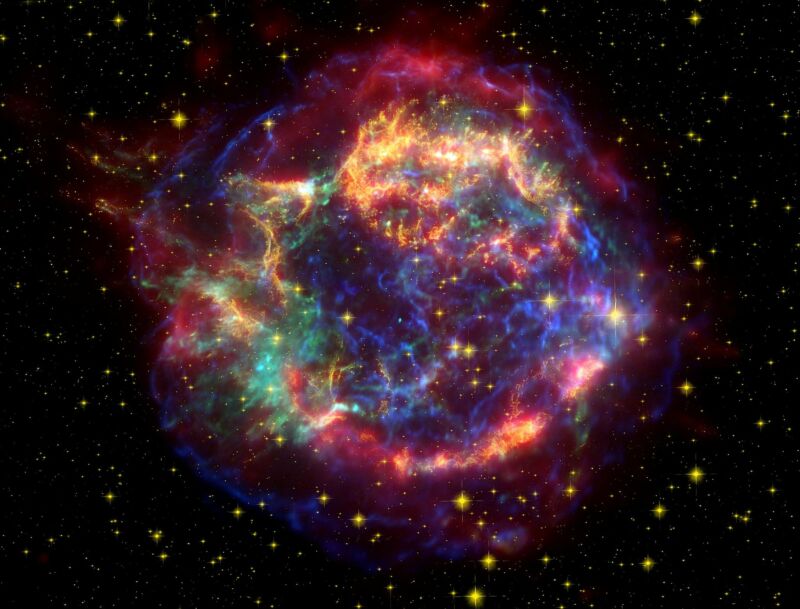
Enlarge / The Cassiopeia A supernova which left this remnant behind occurred about 11,000 light years away—much too far to pose a significant threat—and its wavefront likely reached Earth about 300 years ago. (credit: NASA/JPL-Caltech)
A paper released this week by University of Illinois Urbana-Champaign astronomy and physics professor Brian Fields makes a case for distant supernovae as a cause of a past mass extinction event—specifically, the Hangenberg event, which marks the boundary between the Devonian and Carboniferous periods. Fields has proposed this sort of thing before, and both this and his earlier piece are fascinating exercises of "what-if." Each models the effects a supernova could have on Earth's biosphere, and how we might go looking for evidence that it happened.
It's important to understand, however, that neither of these papers should be taken as indications that there is evidence that the events referenced were caused by a supernova, or as representative of any general scientific consensus to that effect. They're simply intriguing proposals, and they indicate what sort of evidence we should look for.
Existential threats
If you say "mass extinction" and "space" in the same sentence, the first thing on most peoples' minds is an asteroid impact with the Earth—even if dinosaur fans think of the Chicxulub crater, and pop culture fans think instead of movies such as Deep Impact or Armageddon.
Read 12 remaining paragraphs | Comments


US WeChat users sue Trump over order banning messaging app
Delhi HC directs Oyo to furnish affidavit of unencumbered assets for Anam Datsec
DiceKeys creates a master password for life with one roll

Enlarge / Not a board game, a security tool. (credit: DiceKeys)
Modern cybersecurity, done with properly paranoid best practices, requires meeting some tough demands: Carry a physical two-factor key to plug in and authenticate yourself on a new computer, but if you lose or break that tiny piece of plastic you could be locked out of your accounts. Use different, totally unguessable passwords for every website, without repeating them or writing them down. And even if you opt for a password manager—as you should—you'll need to remember a long master password for years, or risk losing access to the rest of them.
Or you could reduce all of that complexity to a single roll of 25 dice into a plastic box. This week Stuart Schechter, a computer scientist at the University of California, Berkeley, is launching DiceKeys, a simple kit for physically generating a single super-secure key that can serve as the basis for creating all the most important passwords in your life for years or even decades to come. With little more than a plastic contraption that looks a bit like a Boggle set and an accompanying web app to scan the resulting dice roll, DiceKeys creates a highly random, mathematically unguessable key. You can then use that key to derive master passwords for password managers, as the seed to create a U2F key for two-factor authentication, or even as the secret key for cryptocurrency wallets. Perhaps most importantly, the box of dice is designed to serve as a permanent, offline key to regenerate that master password, crypto key, or U2F token if it gets lost, forgotten, or broken.
Read 10 remaining paragraphs | Comments


A detailed look at some key developments/breakthroughs in robotics, amid an increasing interest in robots during the pandemic, and what to expect in the future (David Berreby/National Geographic)

A detailed look at some key developments/breakthroughs in robotics, amid an increasing interest in robots during the pandemic, and what to expect in the future — Machines now perform all sorts of tasks: They clean big stores, patrol borders, and help autistic children. But will they make life better for humans?
How Scientists Are Studying Diseases in Animals in the Himalayas
Anthropic cuts its list of unauthorized secondary market sellers from eight to four after the initial notice caused panic and pushback from investors (Yazhou Sun/Bloomberg)
Yazhou Sun / Bloomberg : Anthropic cuts its list of unauthorized secondary market sellers from eight to four after the initial notice cau...

-
Sohee Kim / Bloomberg : South Korean authorities are investigating a data leak at e-commerce giant Coupang that exposed ~33.7M accounts; ...
-
The first project we remember working on together was drawing scenes from the picture books that our mom brought with her when she immigrate...