Tuesday, July 14, 2020

Jack Ma’s fintech giant tops 1.3 billion users globally

The speculation that Alibaba’s fintech affiliate Ant Group will go public has been swirling around for years. New details came to light recently. Reuters reported last week that the fintech giant could float as soon as this year in an initial public offering that values it at $200 billion. As a private firm, details of the payments and financial services firm remain sparse, but a new filing by Alibaba, which holds a 33% stake in Ant, provides a rare glimpse into its performance.

Alipay, the brand of Ant’s consumer finance app, claims to earmark 1.3 billion annual active users as of March. The majority of its users came from China, while the rest were brought by its nine e-wallet partners in India, Thailand, South Korea, the Philippines, Bangladesh, Hong Kong, Malaysia, Indonesia, and Pakistan.

In recent years Ant has been striving to scale back its reliance on in-house financial products in response to Beijing’s tightening grip on China’s fledgling fintech industry. Tencent, Alibaba’s nemesis, is considered a lot more reserved in the financial space but its WeChat Pay app has been slowly eating away at Alipay’s share of the payments market.

In a symbolic move in May, the Alibaba affiliate changed its name from Ant Financial to Ant Group. Even prior to that, Ant had been actively publicizing itself as a “technology” company that offers payments gateways and sells digital infrastructure to banks, insurance groups, and other traditional financial institutions — rather than being a direct competitor to them. On the Alipay app, users can browse and access a raft of third-party financial services including wealth management, microloans, and insurance.

As of March, Ant’s wealth management unit facilitated 4 trillion yuan ($570 billion) of assets under management for its partners offering money market funds, fixed income products, and equity investment services. During the same period, total insurance premiums facilitated by Ant more than doubled from the year before.

In June, Ant’s new boss Hu Xiaoming set the goal for the firm to generate 80% of total revenues from technology service fees, up from about 50% in 2019. He anticipated the monetary contribution of Ant’s own proprietary financial services to shrink as a result.

Ant grew out of Alipay, the payments service launched by Alibaba as an escrow service to ensure trust between e-commerce buyers and sellers. In 2011, Alibaba spun off Ant, allegedly to comply with local regulations governing third-party payments services. Ant has since taken on several rounds of equity financing. Today, Alibaba founder Jack Ma still controls a majority of Ant’s voting interests.

Kobo introduces the lackluster Nia to replace its budget Aura e-reader

The e-reader category was exciting once — or at least as exciting as one could hope from such a space. It was a vibrant category, with plenty of key players, each looking to outdo one another. But as is the case with a depressing number of verticals, Amazon has largely wiped the floor with the competition.

Through all of this, however, Kobo has managed to remain a constant — thanks in no small part to its acquisition by Japanese retail giant Rakuten back in 2012. The company manages to maintain solid market share in a number of countries, including Canada, France, Japan, Australia and New Zealand. It has managed to maintain this presence, in part, due to so solid innovations on the tech side that have helped keep Amazon on its toes.

Image Credits: Brian Heater

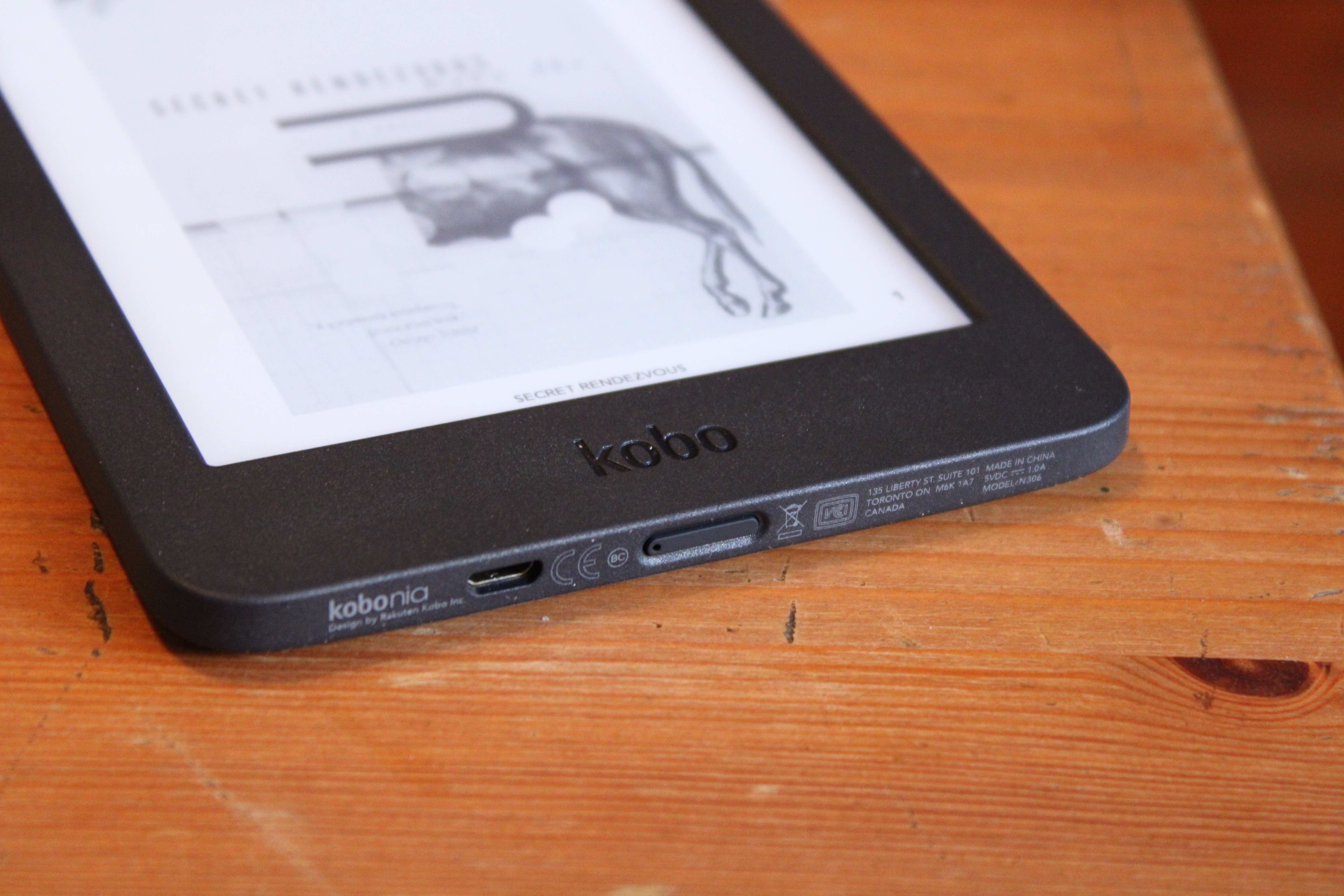
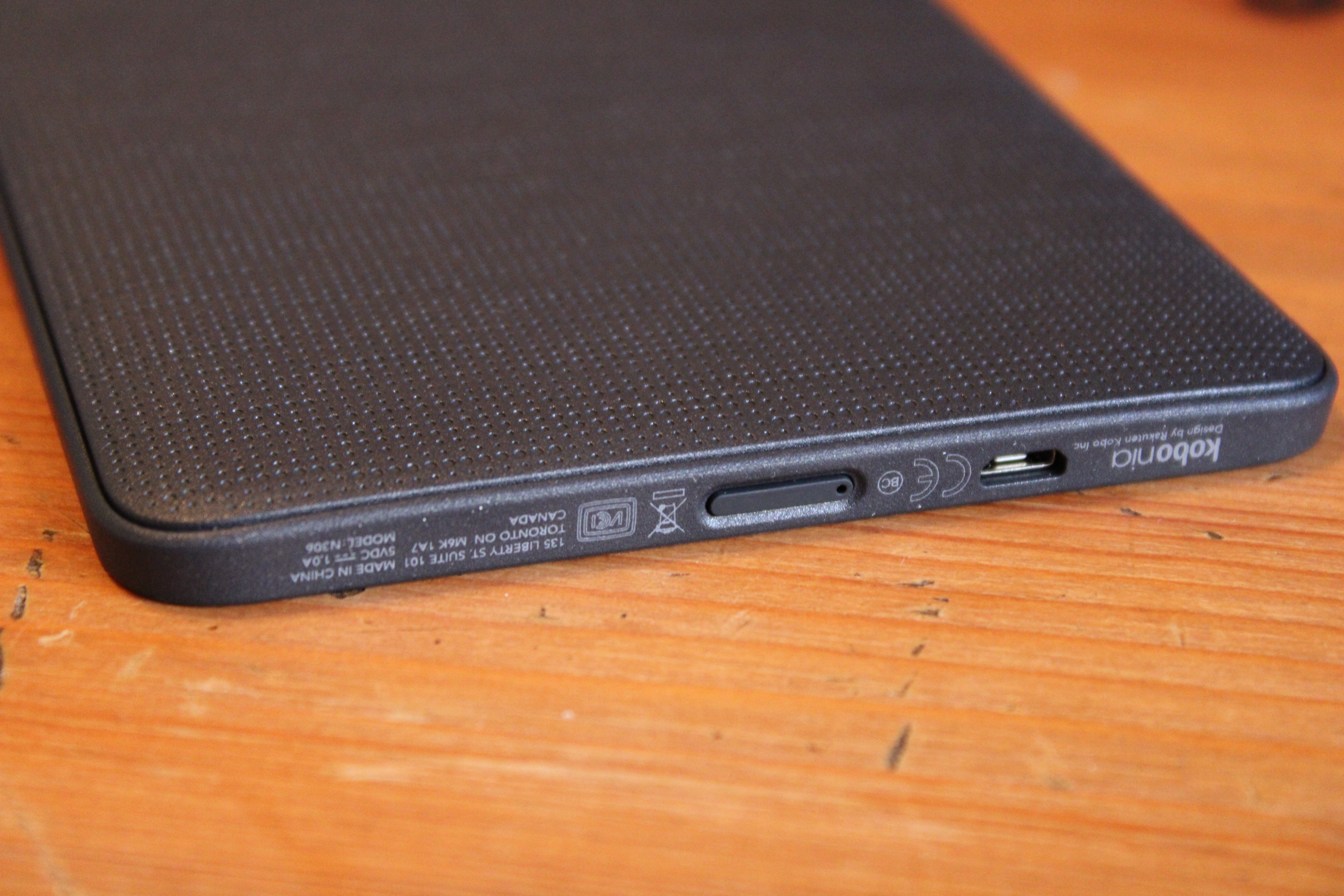
The Nia, however, is not that. It’s honestly a fairly uninspired addition primarily designed to take the place of the standard Aura, which has been made unavailable for sale on Kobo’s site for some time now. The biggest update here is a bit of a redesign to the hardware that’s…fine. The big blue power button from the back of the Aura has been swapped out for a small and subtler black model on the bottom of the device.

The screen is the industry-standard six-inch Carta from Ink. It’s still 212ppi, though the overall resolution has apparently been downgraded ever so slightly from 1024 x 768 to 1024 x 758. That’s a bit of a weird one. It’s a little bit lighter, a touch less wider and skinnier and a bit longer. All fairly minor there.

There’s a nice little bump in the storage, from 4GB to 8GB, the latter listed as being able to hold up to 6,000 books. The front-lit Comfortline is still on board — nothing quite like the adjustable color temperature that Amazon introduced on its high-end Kindle relatively recently.

Image Credits: Brian Heater

There are a number of different SleepCovers — always recommended for those who like to toss their readers in their backpacks, as E Ink screens scratch pretty easily. Most importantly, the price is the same as the Aura at $100. That’s $10 more than the standard Kindle with special offers and $10 cheaper than the version without.

The new reader’s not really much of an upgrade at all over its predecessor, but Kobo remains a solid Kindle alternative — especially due to the platform’s openness for non-proprietary file formats, including the popular ePub. Pre-orders start today. It starts shipping July 21.

Report: US VC deals slowed in Q2, with $34.3B invested across 2,197 deals, down 23% YoY, but started to pick up by mid-May with govt stimulus package rollout (Duncan Riley/SiliconANGLE)

Duncan Riley / SiliconANGLE:
Report: US VC deals slowed in Q2, with $34.3B invested across 2,197 deals, down 23% YoY, but started to pick up by mid-May with govt stimulus package rollout  —  2020 has been an unprecedented year thanks to the COVID-19 pandemic, with radical changes in the way tech companies do business coupled …


Government Said to Quiz Banned Chinese Apps Owners Over Content, Practices

Chinese companies such as TikTok-owner ByteDance have been asked by India to answer 77 questions about their apps that have been banned by New Delhi, including whether they censored content, worked on... https://ift.tt/3j7d3gG

Xiaomi Redmi Note 9 Pro Max with 32MP in-display camera to go on sale today via Amazon

Xiaomi Redmi Note 9 Pro Max is priced at Rs 16,999 onwards. The smartphone is backed by a 5020mAh battery with 33 watt fast charging support. https://ift.tt/308D1rO

Spotify expands to Russia and 12 other countries

Strong growth during the global pandemic convinced Spotify to move ahead with the launch plans, executives said. https://ift.tt/38Y0sbl https://ift.tt/eA8V8J

Adam Neumann is back in the shared economy business with an investment in GoTo Global

Adam Neumann, the controversial co-founder and former CEO of WeWork, has taken a 33% equity stake in GoTo Global, a shared mobility company that operates in Israel and Malta and aims to expand into Europe later this year.

Neumann’s family office, 166 2nd Financial Services, invested $10 million into GoTo Global, as part of a $19 million Series B round. As part of his investment, Neumann will be able to appoint one board member on his behalf. Existing shareholder Shagrir Group Vehicle Services, a publicly traded Israeli company, also participated in the round.

GoTo Global (also referred to is GoTo Mobility) is mobility-as-a-service company that is aiming to cover the entire range of shared vehicles from cars and mopeds to bicycles and electric scooters. The company, which started in 2008 with a focus on car-sharing, previously raised $3 million in seed funding. It had also secured a $9 million loan from Shagrir, which has been converted into the equity investment.

This latest funding will be used to expand its shared services into Europe, beginning with Madrid.

Since forming 166 2nd Financial Services, Neumann has made about 15 investments in startups in Canada, Israel, UK and the United States, including EquityBee, Moon Active and Peach Street.

However, this is Neumann’s first investment since he filed a lawsuit against Softbank Group for alleged breach of contract and breach of fiduciary duty for pulling a $3 billion tender offer for WeWork shares. SoftBank Group pulled its $3 billion tender offer for WeWork shares April 1, citing COVID-19’s impact on the business but also closing conditions not being met.

COVID-19, or more specifically changing consumer behaviors due to the pandemic, is largely what has driven Neumann’s investment in GoTo Global, according to a source familiar with the investment. Neumann isn’t speaking publicly due the lawsuit.

Neumann made the investment because he believes flexibility will be a key component in people’s lives post-COVID-19, the source said.

GoTo Global is just as bullish on its post-COVID future.

“Shared mobility, and transportation in general, was one of industries hit hard by the economy lock-downs as people were required to self-isolate,” GoTo Global CEO Gil Laser said in a statement announcing the raise. “But we are the ones who made the come-back fastest, we are +12% back to pre-lockdown baseline. We understand that although on one hand shared transport may not seem to be the safest solution, on the other hand it is perceived as a safer option than a public transport and it is definitely a much cheaper option than an owned car.”

Interview with Rashad Robinson, one of the organizers of the Facebook ad boycott, on working with Facebook, accountability, and mobilizing public support (New York Magazine)

New York Magazine:
Interview with Rashad Robinson, one of the organizers of the Facebook ad boycott, on working with Facebook, accountability, and mobilizing public support  —  Rashad Robinson, who has helped organize a high-profile advertising boycott of Facebook during the month of July …


After ban, India asks Chinese app makers to answer 77 questions on security, content

India last month banned the apps following a border clash between soldiers from the two countries, which left 20 Indian soldiers dead. India has said the apps pose a threat to its "sovereignty and integrity". https://ift.tt/32vEkE3 https://ift.tt/eA8V8J

10 things to know about the 77 questions TikTok, others have to answer to the government

https://ift.tt/2Opr8s3

Govt caps online classes for students at 3 hrs a day

The ministry framed the guidelines following concerns being raised by parents on schools conducting online classes like regular schools https://ift.tt/32fAkHv https://ift.tt/eA8V8J

OnePlus Nord Pre-Orders Open Today at 1:30pm Via Amazon in India

OnePlus Nord will be up for pre-orders today, July 15, in India starting at 1:30pm via Amazon. Even though not a lot of details about the OnePlus Nord have been confirmed till now, there is a lot of... https://ift.tt/2WfeZdt

As pandemic rages out of control, CDC head warns of darker times this fall

A serious man in a business suit puts on a surgical mask.

Enlarge (credit: Getty Images / Pool)

If seasonal influenza roars back this fall while the COVID-19 pandemic is still raging, the combined weight of the diseases could cause US healthcare systems to collapse, the head of the Centers for Disease Control and Prevention warned Tuesday.

The grim warning comes as COVID-19 is spreading out of control in many areas of the country, which is now seeing upwards of 60,000 new cases a day.

I am worried,” CDC director Robert Redfield said in a live interview with Howard Bauchner, editor-in-chief of the medical journal JAMA. “I do think the fall and the winter of 2020 and 2021 are going to be probably one of the most difficult times we’ve experienced in American public health.”

Read 9 remaining paragraphs | Comments

https://arstechnica.com

Google sued for allegedly tracking users' app activity via Firebase even after opting out of sharing data in settings, following Incognito mode suit last month (Abrar Al-Heeti/CNET)

Abrar Al-Heeti / CNET:
Google sued for allegedly tracking users' app activity via Firebase even after opting out of sharing data in settings, following Incognito mode suit last month  —  This follows a suit last month claiming Google tracked people using Chrome's incognito mode.  —  A lawsuit filed Tuesday alleges …


Redmi Note 9 Pro Max to Go on Sale Today at 12 Noon via Amazon, Mi.com

Redmi Note 9 Pro Max will be put on another flash sale in India today at 12pm (noon). The phone will be for grabs via Amazon and Xiaomi India website. https://ift.tt/2CAmZi6

Alibaba's DAMO Academy releases RynnBrain, an open-source foundation model to help robots perform real-world tasks like navigating rooms, trained on Qwen3-VL (Saritha Rai/Bloomberg)

Saritha Rai / Bloomberg : Alibaba's DAMO Academy releases RynnBrain, an open-source foundation model to help robots perform real-worl...