Vivo will launch its latest V19 smartphone with dual selfie cameras on May 12 in India after several delays due to the lockdown in place to curb the Coronavirus outbreak. Interestingly, the launch is set to be on the same date as the scheduled launch of the Poco F2 Pro.
Vivo V19 was announced globally in early-April and packs features like 33W fast charging, dual-selfie cameras and more. The phone could be priced around Rs 25,000 according to rumours circulating online.
Vivo V19 specifications
Vivo V19 features a 6.44-inch Full HD+ (2400 x 1080 pixels) resolution screen that uses a Super AMOLED panel. There’s a dual punch-hole cutout on the top-right corner. The chassis is plastic and the phone measures 8.5mm at its thickest point. There’s a fingerprint sensor housed under the display as well.
The V19 is powered by Qualcomm Snapdragon 712 chipset with an octa-core CPU and Adreno 616 GPU. This is paired with 8GB RAM and the phone is available with 128GB/256GB storage options. There is also an option to expand the storage via microSD card. It runs on Funtouch OS 10.0 that's based on Android 10.
On the back, there is a quad-camera array consisting of a primary 48MP sensor with an f/1.8 aperture, an 8MP ultra-wide-angle lens, a 2MP macro sensor and a 2MP depth sensor for portraits. The rear quad camera setup is capable of recording up to 4K at 30fps. There are two front-facing cameras housed within the punch-hole cutout with a 32MP primary sensor and an 8MP ultra-wide lens with a 105-degree field-of-view.
Vivo V19 is fitted with a 4,500mAh battery with support for 33W fast charging courtesy of Flash Charge 2.0. The company claims that the phone can recharge up to 54% in 30 minutes. The phone comes in two colours to choose from, Sleek Silver and Gleam Black.
Xiaomi Redmi Note 9 Pro Max will go on sale for the first time in India from May 12. This comes soon after the company announced it’s going to resume selling the Redmi Note 9 Pro. The company also recently unveiled the Mi 10 5G alongside the Mi TWS Earphones 2.
Due to the Coronavirus outbreak, e-commerce companies were prohibited from delivering non-essential items such as mobile phones and laptops to customers. However, the lockdown restrictions have been eased since and so companies are gearing up to make their products available for online orders for Green and Orange zones.
Xiaomi Redmi Note 9 Pro Max price and availability
Xiaomi Redmi Note 9 Pro Max alongside the Redmi Note 9 Pro and Mi TWS Earphones 2 will go on sale from May 12 on Mi India store and Amazon India.
The Note 9 Pro Max starts at Rs 16,999 for the base variant with 6GB RAM and 64GB storage, Rs 17,999 for the 128GB storage option and the maxed-out variant with 8GB RAM and 128GB storage is priced at Rs 19,999.
The phone comes in three colours-- Aurora Blue, Glacier White and Interstellar Black.
Xiaomi Redmi Note 9 Pro Max specifications
Xiaomi Redmi Note 9 Pro features a 6.67-inch Full HD+ (2400 x 1080 pixels) resolution display topped with a layer of Gorilla Glass 5 and a punch-hole cutout for the selfie camera.
It is powered by Qualcomm Snapdragon 720G chipset with an octa-core CPU and Adreno 618 GPU. This is paired with upto 8GB RAM and 128GB of storage options to choose from. The phone also comes with a dedicated slot for microSD cards for further memory expansion.
The Note 9 Pro has a quad-camera setup that consists of a primary 64MP camera with an f/1.9 aperture, an 8MP ultra-wide-angle camera, a 5MP macro camera with f/2.4 aperture and a 2MP depth sensor. On the front, there is a 32MP selfie camera housed within the punch-hole cutout.
The phone’s power button on the right edge doubles up as a fingerprint sensor and it has a 5,020mAh battery with support for 33W fast charging.
The World Health Organisation (WHO) is reportedly planning to launch an app to enable those in under-resourced countries to assess whether they may have the COVID-19 Coronavirus. According to a report by Reuters, WHO plans to launch the app sometime this month and is also considering a Bluetooth-based contact tracing features as well.
The report quotes Bernardo Mariano, chief information officer for the WHO, as stating that the new app will ask people about their symptoms and offer guidance on whether they may have COVID-19. Further adding that information about how to get tested will be personalised according to the user’s country.
Reuter’s report also notes that the WHO will release a version of the app on app store globally, and governments will be able to use the apps underlying technology to release their own version after adding more features. It also adds that while some countries like India, Australia and the UK have released their own contact tracing apps, WHO expects the app to draw interest in plenty of countries, especially those in South Ameria and Africa. Countries in these places may lack the technology and engineers to develop apps on their own.
The report further adds that engineers and designs have been volunteering to develop the new app and will designing it open-source on GitHub. This will allow the code to be open to public input. Further, the engineers have also talked to Apple and Google about adopting the technology that both companies are working on. The new technology is said to rely on ‘virtual handshakes’ between phones that come within a few feet of each other for over five minutes. Phones will keep an anonymised log of such encounters, allows someone who later tests positive to anonymously send notifications to recent contacts about their possible exposure to the virus.
Marinaro said that the WHO is not yet committing to such features in their app due to legal and privacy considerations. He also expressed concern that businesses may turn things around and use the system to gather personal data. Both Apple and Google have said that they will not allow any system using their technology to gather GPS location data and the system will stop once the pandemic ends.
“Games are very rapidly solved these days,” says Ion Hazzikostas, the game director of World of Warcraft.
Hazzikostas, known to the World of Warcraft community as Watcher, has developed the 16-year-old massively multiplayer online role-playing game since 2008. On a call with WIRED, he reminisced about how, early in the history of games, before raid walk-through videos, data-mining dumps, and Easter egg maps, opacity was a double-edged sword. To explain, he swerved over to Street Fighter.
“You’d have a whole competitive hierarchy in a local arcade, a local videogame store, where there was some character that was perceived as the best or the strongest because some person in the neighborhood was great with them,” he says. But in the next town over, arcade regulars battled with different tricks, different strategies, a different hierarchy of characters. Information was fragmented, localized.
As American states weigh the possibility of reopening services in the face of the covid-19 pandemic, the demand for contact tracing—helping track down and isolate potential carriers of the virus—will get even larger. We spoke to people working as contact tracers across America to understand what it’s like, what they’re seeing, and what might be coming next.
Jana De Brauwere, 44, San Francisco
When San Francisco’s Department of Public Health asked if anyone in the library system would want to join the city’s contact tracing program, I said yes right away. From the description, it seemed like a perfect match for our skills as librarians, as well as our mission: providing people with information that they and their families need.
I underwent a week of extensive training, during which I learned about the procedures, software, and privacy rules, and shadowed experienced contract tracers. My first shift started on Sunday, and I’ll be working 20 to 25 hours each week on the program while continuing to perform other duties, remotely, for the library system.
The main job is to contact people who have been exposed to the coronavirus by a person who has tested positive. The majority of our contacts right now speak only Spanish, so a lot of the librarians have to use translators, which can take a lot longer. It’s not my first language—that’s Czech—but I do speak Spanish, so I’ve been able to take more of those calls and feel like I’ve been able to help. I probably call 15 to 25 people per shift, and conduct full interviews with four or five.
“Some people are a little suspicious. I understand that, the mistrust of the government… but it’s too bad.”
Most of the people I interact with are really grateful that we’re reaching out. They have a lot of questions that we can provide answers for.
Some people are a little suspicious. Some people hang up after I ask for their date of birth and address. I understand that, the mistrust of the government, having grown up under communism. But it’s too bad. I feel like they can benefit from this information: how to quarantine themselves, how they can protect their families, and what kind of support is available.
Probably 50%, maybe 60%, of the contacts that I call on my shift don’t answer. Some don’t have voicemail set up. But I leave a message when I can, and several people called me back yesterday.
The first day was really hard. You’re following the script, inputting data, and talking to people, all at once. It’s more multitasking than I’m used to. But it’s gotten easier, and there have been times where I feel like I’ve been able to build their trust. Sometimes you have to assure them you’re calling to help them, you’re working on their behalf; it’s not the government trying to go after them.
It’s been a positive experience for me because I’ve learned a lot of new things, and because I’ve seen how people can pull together in times of need. People from across departments, medical students, librarians, staff from the city attorney’s office—all bringing different skill sets to the challenge.
Robert Bramson, 79, Massachusetts
Before this I was retired, but now I work 40 hours a week as a clinical investigator in Massachusetts. I call patients who have been diagnosed with covid-19 and ask a lot of questions: How do they feel? Do they have food? Can they isolate at home? Who did they have contact with 48 hours prior to their positive test? I enter this information into our computer system, and our contact tracers follow up with all the contacts named.
“The tracking process is new, and confusion is expected. We make mistakes, but we learn.”
I started in April, after the state put out the call for people with a health-care background to help track the outbreak. I had enjoyed practicing medicine for over 40 years, working at the Massachusetts General Hospital and the Children’s Hospital in Boston, until I retired 10 years ago. I elected to answer the call to do infectious-disease tracking, but it requires an enormous amount of labor. The call was for 1,000 employees to track virus contacts; 25,000 people answered.
Our goal is to slow the spread of the virus to buy time for researchers to develop a vaccine or an effective drug treatment. The tracking process in Massachusetts is new, and confusion is expected as new hires like me learn how to do things. We make mistakes, but we learn. People work around the clock to make the process go faster, smoother. On more than one occasion I have heard a sigh of relief and a “Thank you” when I told a patient that I would be calling back each day to check on their status. That “Thank you” reminds me why I loved medicine.
Robert Bramson is the father of Elizabeth Bramson-Boudreau, the CEO and publisher of MIT Technology Review. Nobody in this article was paid for their contribution.
Jade Murray, 22, Utah
I’m currently working for a rural local health department in Utah—I just graduated with my degree in public health. My job is to check on individuals, monitor their signs and symptoms, temperatures, and then answer questions on their diagnosis or how their recovery process looks after the 14-day quarantine period that they’re under.
Today I have about 20 cases, and it usually takes me about two or three hours a day to contact everybody, chat with them, and answer any questions they might have. The numbers are manageable, but one of the limiting factors there is that people are already not moving around as much as they would have done.
“We don’t really know if they’re staying at home, or if they are still going out. You have to believe that they’re complying.”
The hardest thing can be getting people to keep giving responses over the 14-day period. And as far as getting them to comply with your recommendations, obviously they have their own autonomy—we can’t control what they’re doing. But we don’t really know if they’re staying at home, or if they are still going out because they still feel okay. You have to believe that they’re complying; give them the recommendations and hope that they are taking those daily actions. I’ve had a couple of individuals that have pushed back, or where you can tell they’re not really interested in giving me feedback. But I haven’t had anyone reject us completely.
On May 1 we got our release to open the economy again, so businesses are allowed to be open to groups of 20 individuals or less. I think in this next coming month there might be more to do with the new positive cases. I would assume numbers could increase with the reopening of the economy; we have a game plan going both directions, but we’re hoping for a positive outcome.
After years of rumours, Apple finally announced the Apple iPhone SE 2020 on April 15, just a day after OnePlus 8 series launch. The phone is now set to go on sale in India on Flipkart starting at Rs 42,500 for the base 64GB storage variant. Due to the Coronavirus outbreak around the world, many countries are under lockdown and as such, smartphones launches have been postponed or moved online.
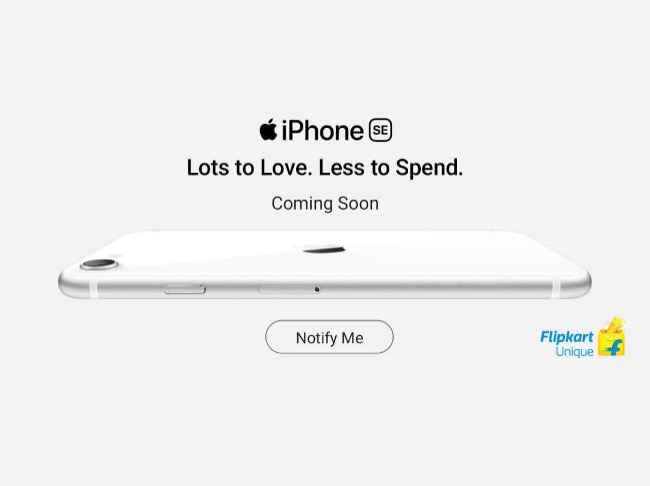
The Indian government recently eased up the lockdown restrictions in place, allowing e-commerce companies to start delivering non-essential goods such as mobile phones and laptops to Green and Orange zones. Flipkart has put up a banner for the iPhone SE 2020 on its app, asking users to register their interest in getting the phone.
The iPhone SE 2020 looks similar to the iPhone 8, but has the brains of the iPhone 11. It’s got a 4.7-inch display, Touch ID and is powered by the A13 Bionic chip.
Apple iPhone SE 2020 price and availability
Apple iPhone SE 2020 starts at Rs 42,500 for the base variant with 64GB storage, Rs 47,800 for the 128GB model and the maxed-out 256GB storage variant for Rs 58,300. The phone will be available in black, white and Product (Red) colour options to choose from.
Additionally, Apple is offering it’s Apple TV subscription for buyers of iPhone SE 2020 for a period of one year.
Apple iPhone SE 2020 specifications
The iPhone SE 2020 features a 4.7-inch HD+ retina display with a 16:9 aspect ratio and has an aluminium frame that lends it 7.3mm thickness, weighing in under 148 grams. The phone is also IP67 rated, making it resistant to dust and water for up to 1 meters for 30 minutes.
Apple iPhone SE 2020 is powered by the A13 Bionic chipset with hexa-core CPU and quad-core graphics. This is paired with 3GB RAM and buyers have 64GB/128GB/256GB storage options to choose from.
The phone has a single 12MP rear camera with an f/1.8 aperture and support for PDAF and Optical Image Stabilization. It can record in 4K UHD at up to 60fps and slow-motion videos at up to 240fps. On the front, there’s a 7MP selfie camera with an f/2.2 aperture.
Apple’s Touch ID makes a return in the form of a physical fingerprint reader that doubles up as a home button.
The iPhone SE 2020 is fitted with a 1800mAh battery that supports 18W fast charging and is also compatible with Qi wireless chargers.
Google has announced that it would be adding a bunch of new features to its Google Lens application. The new features are designed to help users be more productive while they are working from home. The new features let you copy text from paper to laptop, learn the pronunciation of new words and read sentences out loud.
Copy text from paper to laptop
Users can now use Google Lens to copy text from paper notes and transfer the text to their laptop. All users have to do is select the text with Lens, and use the “copy to computer’ feature to copy text from the paper, and transfer it directly to another signed on device with Chrome. Both devices should be running the latest version of Chrome and be signed into the same account for the feature to work. This should help reduce the hassle of manually typing down notes, or transferring text from one device to another.
Learn pronunciations of new words
Google Lens will now not only translate text from one language to another, but it will also help you pronounce any new words that you may be seeing. This should be handy for those who are learning a new language and wish to know how certain words and pronounced. In order to use the feature, users will have to select the text from Lens and tap the new ‘Listen’ button to hear the word out loud.
In-line Google Search results
The new in-line Google Search results feature is aimed at helping users help learn more about words or phrases that they may not be familiar with without the need to open another app. The new features will show the meaning of words and phrases within the app itself, so users don’t need to search for the term separately on Google.
National Council of Education, Research and Training (NCERT) offers e-book facility allowing students to download the digital copy of the books from their curriculum for free. Here's a step-by-step guide to download the books. https://ift.tt/2Wher76
Realme is set to launch it’s Narzo series of smartphones on May 11, and the company has now confirmed that the Narzo 10 will be powered by a MediaTek Helio G80 SoC. the company made the announcement on its Social Media handles. The company touted the gaming prowess of the chipset stating, Experience impressive performance and enjoy seamless gaming with A Class G80 AI Processor on the unique #realmeNarzo10.”
Experience impressive performance and enjoy seamless gaming with A Class G80 AI Processor on the unique #realmeNarzo10. Watch the launch video online at 12:30 PM, 11th May on our official channels. #FeelThePower Know more: https://t.co/nF4YzbHOs0 pic.twitter.com/5PAKeEdnKe
— realme (@realmemobiles) May 8, 2020
The MediaTek Helio G80 SoC was launched in February this year and is slotted between the Helio G70 and the Helio G90 chipsets. It is based on the 12nm process and features a cluster of two Cortex A75 cores clocked at 2.0GHz and six Cortex A55 cores clocked at 1.8GHz. It supports up to 8GB RAM and the eMMC5.1 storage standard. For graphics, the SoC packs the Mali-G52 2EEMC2 GPU, which the HyperEngine Game Technology is said to allow the chipset to offer smoother gaming performance with better resource management.
The chipset also comes with a bunch of other tech. This includes the CorePilot, NeuroPilot, Pump Express, Tiny Sensor Hub and an Integrated VoW. In terms of optics, the chipset supports up to dual 16MP sensors or a single 48MP unit. It also comes with electronic image stabilization (EIS), Rolling Shutter Compensation (RSC) and AI-assisted face unlock. As far as connectivity is concerned, the chipset supports Bluetooth 5.0. For location services, the SoC comes with GPS, GLONASS, Galileo, and Beidou. It should be noted that the chipset support 4G LTE and not 5G.
Realme is scheduled to launch the Narzo series of devices on May 11 and will live stream the launch. The event will be streamed online at 12:30 P.M. You can learn more about that here.


 https://ift.tt/3fD8B7E
 https://ift.tt/3dAzxU3
 https://ift.tt/2Wgwtq6



 https://ift.tt/2Wm7L81

 https://ift.tt/2WNKQ4y
 https://ift.tt/2YOmfyZ