Tuesday, March 17, 2020

Quibi just released a trailer for the Reno 911! revival

If you didn’t know that Reno 911! is coming back, no one could really blame you. There’ve been rumblings about it since early December, but… well, things have been a little bananas since then.

But sure enough: eleven years after the end of its original run on Comedy Central, Reno 911! is coming back by way of… not Netflix… not Hulu… but Quibi. And they just dropped the first teaser trailer for it.

For the unfamiliar, Quibi’s thing is that its content is meant to be watched in ten minute chunks. TV episodes? Ten minutes or less. Movies? They’ll be broken into chapters, ten minutes long at most.

That’s actually pretty perfect for Reno 911. While the original show’s episodes came in at 22 minutes each, each episode was really more of a handful of loosely scripted/mostly improv’d bits. Give them a ten minute cap, and it’ll still work just fine. Even in the little teaser clip above, it feels like the same, wonderful, ridiculous show.

Alas, no official launch date seems to be announced for the reboot; while Quibi itself is set to launch in April, the network has only said that Reno 911 is “coming soon.”


SoftBank reportedly balks at commitment to buy $3B in shares from WeWork shareholders

The Wall Street Journal is reporting that SoftBank Group is using regulatory investigations as a way to back out of its commitment to buy $3 billion in shares from existing WeWork shareholders.

WeWork’s spectacular train wreck of an initial public offering was an early harbinger that the good times might be over for a cohort of later-stage investments valued at multiple billions of dollars. And the buyout package was part of a broader effort by SoftBank to work out some of the issues at the most troubled company in its broad portfolio of high-priced, highly valued private startups.

Among those who would be left out of a potential buyback plan is WeWork’s founder and former chief executive, Adam Neumann, who was set to receive up to $970 million for his shares in the co-working company.

Citing a notice sent to WeWork shareholders, the Journal reported that if SoftBank reneged on the buyback, it would not go back on its commitment to give the office sharing company a $5 billion lifeline.

According to the Journal’s reporting, the deal to buy back shares isn’t canceled, and could just be an effort to renegotiate terms in light of the global economic slowdown caused by the world’s response to the coronavirus pandemic.

So far, the SEC and the Justice Department, along with New York state regulators, have asked for information from SoftBank about WeWork’s business practices and communications to investors.

Revolut launches Revolut Junior to help you manage allowance

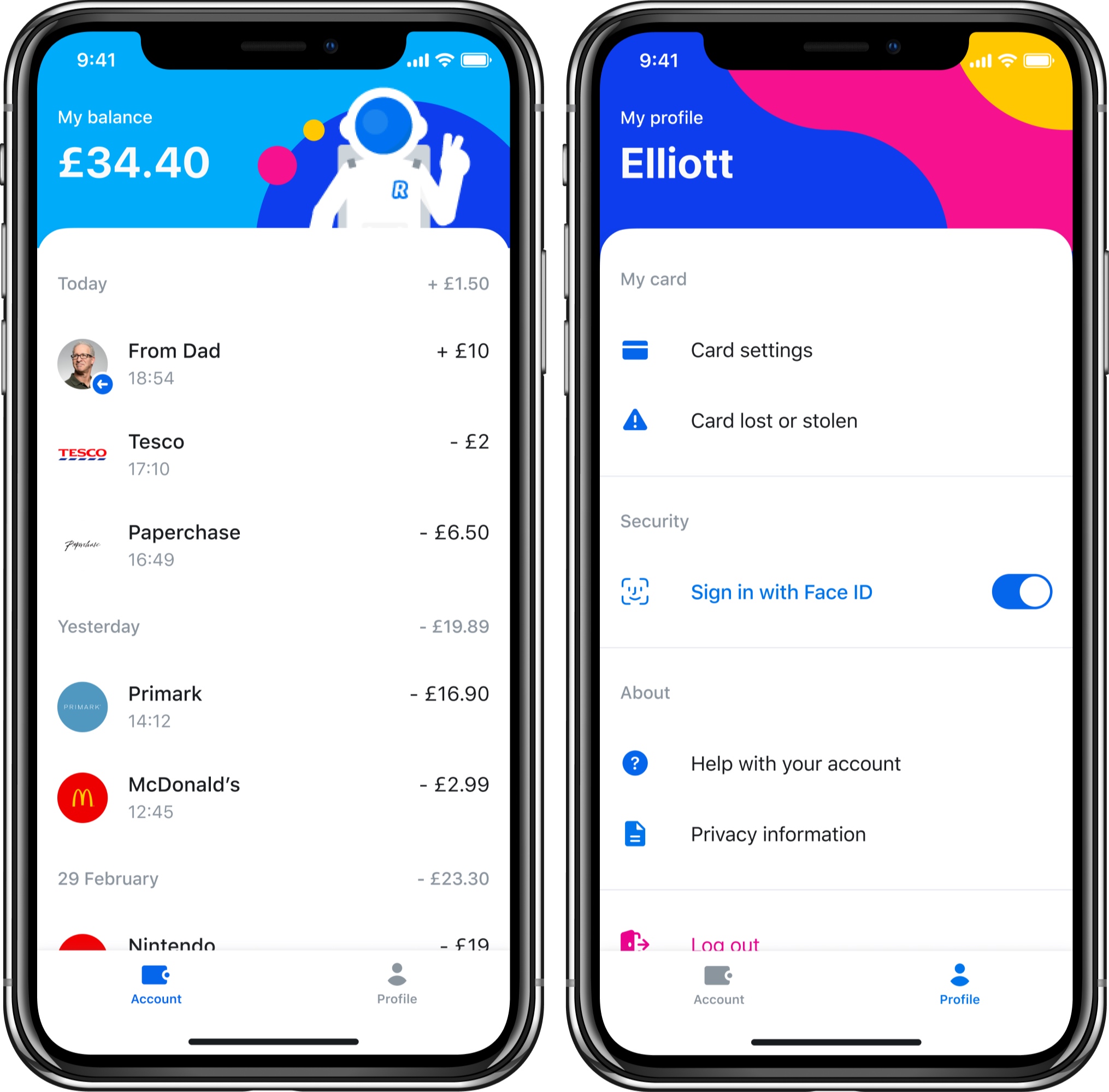
Revolut is introducing a new product specifically targeted toward kids aged 7-17 years old — Revolut Junior. Revolut Junior is a new app and service that integrates directly with the main Revolut app on the parent’s side.

Parents or legal gardians who are also Revolut users can create a Revolut Junior account for their kid. After that, your kid can download the Revolut Junior app and get a Revolut Junior card.

The new app offers a limited set of features with an interface divided in two tabs — Account and Profile. Kids can see a list of transactions in real time in the Account tab. They can configure card settings in the Profile tab. And that’s about it.

On the other end, parents can control their kids’ spending from Revolut. They can transfer money to a Revolut Junior account instantly. Parents can also access balances and transactions as well as disable some card features, such as online payments. They can also choose to receive notifications when a child is using their card.

The reason why Revolut Junior can attract a ton of users is that Revolut itself already has over 10 million users. It’s going to be easier to convince existing Revolut customers to use Revolut Junior over a custom-made challenger bank for teens, such as Kard or Step. Arguably, the biggest competitor of challenger banks for teens is still cash.

As kids grow up, chances are they’ll switch to a full-fledged Revolut account if they’ve been using Revolut Junior for years. Revolut Junior represents a great acquisition funnel as well.

Revolut Junior is only available to Premium and Metal customers in the U.K. for now. The company will eventually roll it out to more users and more countries.

Revolut plans to add more features to Revolut Junior in the future. For instance, parents will be able to set a regular allowance and financial goals. Kids will get savings options, spending reports, spending limits and more.

Reputable sites swept up in FB’s latest coronavirus-minded spam cleanse

Photoshopped image of a housekeeper with a Facebook logo for a face.

Enlarge (credit: Aurich Lawson / Getty Images)

As of press time, there is a chance that if you share this very news article on Facebook, its headline will trigger an eventual takedown with a "spam" tag and no further explanation.

On Tuesday, social media users began sharing scattered reports with a confusing issue in common: links from reputable news outlets they'd shared—either publicly or in private, friends-only groups—were marked as violations of "community guidelines" and automatically taken down, and many—but not all—had "coronavirus" mentioned in either the headline or in the article's body. Other hot topics in the automatic-takedown spree include recent Democratic Party primaries in the United States.

This seemed to affect posts going back as far as five days, and it includes content from established newspapers and sites such as Politico, The Atlantic, USA Today, Vice, Business Insider, Axios, and The Seattle Times. Also caught in the net are the more open-ended blogging platform Medium (which runs a series of staffed and edited sub-sites) and the crowdfunding site GoFundMe. As of press time, compiling a complete list of affected sites and topics is admittedly difficult, thanks to the anecdotal nature of how these takedown notices are being reported and circulated.

Read 3 remaining paragraphs | Comments

https://arstechnica.com

A tech bro opts for a digital afterlife in first trailer for Amazon’s Upload

Robbie Amell stars as Nathan in the new science fiction comedy Upload.

A wealthy tech bro finds himself in a virtual afterlife in Upload, a new comedy science fiction series coming soon from Amazon Studios. Its creator is Greg Daniels, who also co-created King of the Hill and Parks and Recreation, as well as the American version of The Office. Per the official premise:

In the near future, people who are near death can be "uploaded" into virtual reality environments. Cash-strapped Nora works customer service for the luxurious "Lakeview" digital afterlife. When party-boy/coder Nathan's car crashes, his girlfriend uploads him into Nora's VR world.

The trailer opens with Nathan (Robbie Amell) on a hospital gurney, in critical condition, as his girlfriend Ingrid (Allegra Edwards) urges him to take the "upload" option over surgery. "We could be together forever!" she enthuses. Nathan is less keen: "Forever is just soooo long." But he ends up taking the upload anyway and wakes up in a virtual apartment as Talking Heads' "Once in a Lifetime" kicks in on the soundtrack. "This is the first day of the rest of your afterlife," Nora (Andy Allo) calmly assures him.

There are myriad advantages to a digital afterlife, Nathan discovers, like being able to change the weather and associated landscape outside one's window just by turning a knob. And he feels freer to make some daring virtual fashion choices, with Ingrid's input. Nora, ever the good customer-service rep, praises Lakeview's "uplifting views" and "timeless Americana."

Read 6 remaining paragraphs | Comments

https://arstechnica.com

Monday, March 16, 2020

TNUSRB 2020 – Sub Inspector of Police Final Key & Exam Result Released

Tamil Nadu Uniformed Service Recruitment Board (TNUSRB) has released final key, exam result & marks for the post of Sub Inspector of Police.

Facebook, Reddit, Google, LinkedIn, Microsoft, Twitter and YouTube issue joint statement on misinformation

In an unprecedented move to reassure customers and flag the potential for misinformation about COVID-19 on their platforms, all of the major social media companies and their parent corporations issued a joint statement on their efforts.

“We invite other companies to join us as we work to keep our communities healthy and safe,” the statement read.

Last week, U.S Chief Technology Officer Michael Michael Kratsios held a remote meeting with representatives from major tech companies on how to coordinate various efforts related to COVID-19, including fighting disnformation. The Washington Post and Politico reported that the White House asked Google, Facebook, Amazon, Microsoft, Apple, IBM, Cisco and Twitter for help.

The World Health Organization’s director-general said last month that disinformation is as dangerous as COVID-19. During an address at the Munich Security conference on Feb. 15, almost a month before the WHO officially declared COVID-19 a pandemic, Tedros Adhanom Ghebreyesus said “We’re not just fighting an epidemic; we’re fighting an infodemic. Fake news spreads faster and more easily than this virus, and is just as dangerous.”

But tech companies aren’t just battling the spread of questionable posts by the public. They also have to contend with misleading information in several of President Donald Trump’s public statements on COVID-19, including his tweets and Facebook posts.

TechCrunch has contacted each of the companies in the joint statement for more details, and will update this post as we hear back from them.

In response to an email, a LinkedIn spokesperson directed TechCrunch to a post published by the company on March 13, with links to information about finding trustworthy news sources and working remotely.

Facebook’s efforts to fight disinformation about COVID-19 have included information cards on Instagram and Facebook, that redirect to sources like the World Health Organization or local health authorities.

Torch & Everwise merge into affordable exec coaching for all

While companies might pay for a CEO coach, lower level employees often get stuck with lame skill-building worksheets or no mentorship at all. Not only does that limit their potential productivity, but it also makes them feel stagnated and undervalued, leading them to jump ship.

Therapy…err…executive coaching is finally becoming destigmatized as entrepreneurs and their teams realize that everyone can’t be crushing it all the time. Building a business is hard. It’s okay to cry sometimes. But the best thing you can do is be vulnerable and seek help.

Torch emerged from stealth last year with $18 million in funding to teach empathy to founders and C-suite execs. Since 2013, Everwise has raised $26 million from Sequoia and others for its peer-to-peer mentorship marketplace that makes workplace guidance accessible to rank-and-file staffers.  Tomorrow they’ll official announce their merger under the Torch name to become a full-stack career coach for every level of employee.

“As human beings, we face huge existential challenges in the form of pandemics, climate change, the threats coming down the pipe from automation and AI” says Torch co-founder and CEO Cameron Yarbrough. “We need to create leaders at every single level of an organization and ignite these people with tools and human support in order to level up in the world.”

Startup acquisitions and mergers can often be train wrecks because companies with different values but overlapping products are jammed together. But apparently it’s gone quite smoothly since the products are so complementary, with all 70 employees across the two companies keeping their jobs. “Everwise is much more bottom up whereas Torch is about the upper levels, and it just sort of made sense” says Garry Tan, partner and co-founder of Initialized Capital that funded Torch’s Series A and is also a client of its coaching.

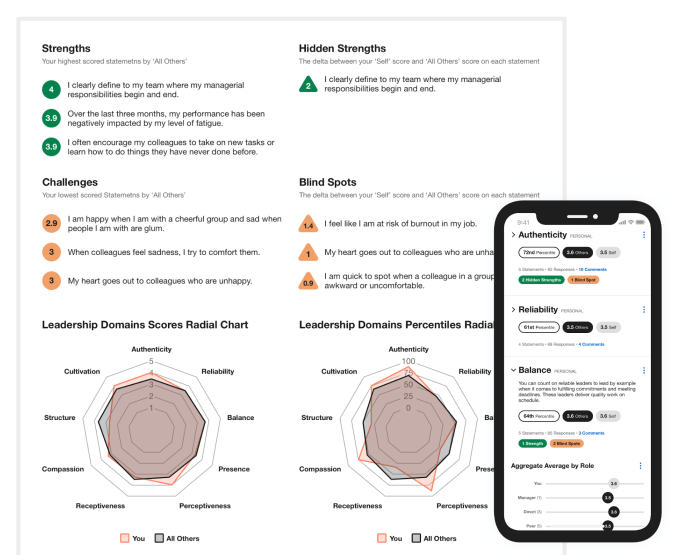
How does each work? Torch goes deep, conducting extensive 360-interviews with an executive as well as their reports, employees, and peers to assess their empathy, communication, vision, conflict resolution, and collaboration.  clients’ executives do extensive 360-interviews. It establishes quantifiable goals that executives work towards through video call sessions with Torch’s coaches. They learn about setting healthy workplace boundaries, stay calm amidst arguments, motivating staff without seeming preachy, and managing their own ego.

This coaching can be exceedingly valuable for the leaders setting a company’s strategy and tone. But the one-on-one sessions are typically too expensive to buy for all levels of employees. That’s where Everwise comes in.

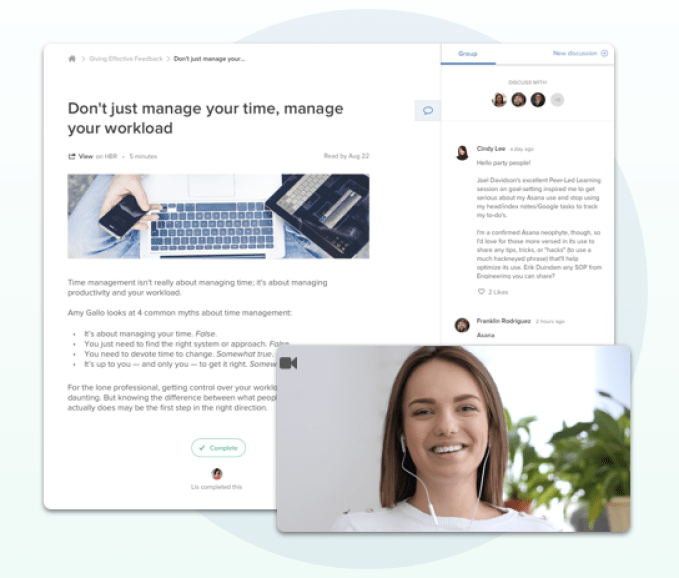
Everwise goes wide, offers a marketplace with 6000 mentors across different job levels and roles that can provider more affordable personal guidance or group sessions with 10 employees all learning from each other. It also provides a mentorship platform where bigger companies can let their more senior staffers teach junior employees exactly what it takes to succeed. That’s all stitched together with a curated and personalized curriculum of online learning materials. Meanwhile, a company’s HR team can track everyone’s progress and performance through its Academy Builder dashboard.

“We know Gen Z has grown up with mentors by their side from SAT prep” says Torch CMO Cari Jacobs. Everwise lets them stay mentored, even at early stages of their professional life. “As they advance through their career, they might notch up to more executive private coaching.” Post-merger, Torch can keep them sane and ambitious throughout the journey. 

“It really allows us to move up market without sacrificing all the traction we’ve built working with startups and mid-market companies” Yarbrough tells me. Clients have included Reddit and ZenDesk, but also giants like Best Buy, Genentech, and T-Mobile.

The question is whether Everwise’s materials are engaging enough to not become just another employee handbook buried on an HR site that no one ever reads. Otherwise, it could just feel like bloat tacked onto Torch. Meanwhile, scaling up to bigger clients pits Torch against long-standing pillars of the executive coaching industry like Aon and Korn Ferry that have been around for decades and have billions in revenue. Meanwhile, new mental health and coaching platforms are emerging like BetterUp and Sounding Board.

But the market is massive since so few people get great coaching right now. “No one goes to work and is like ‘man, I wish my boss was less mindful'” Tan jokes. When Yarbrough was his coach, the Torch CEO taught the investor that while many startup employees might think they thrive on flexibility, “people really want high love and high structure.” In essence, that’s what Torch is trying to deliver — a sense of emotional comradery mixed with a prod in the direction of fulfilling their destiny.

Can investors invoke so-called force majeure clauses to get out deals? Expect some to start trying

Event organizers were the first to be hit hard. As fear of the spread of Covid-19 began to sweep cities and countries around the world last month, one by one, large conferences with long uninterrupted histories —  Mobile World Congress, South by Southwest — began reluctantly pulling the plug on their plans. It wasn’t just a shock for these organizations; it will cost them and the vendors with which they work and surrounding service providers like hotels and car services millions of dollars in lost revenue.

Little wonder that many of those involved in the planning of such events are now testing the power of force majeure clauses, which are a typical provision in contracts that excuses a party’s performance of its obligations when confronted with circumstances beyond its control.

Yet they won’t be alone for long. With every passing day, it’s become clear that event organizers were just the proverbial canaries in the coal mine. As the world shuts down and people are urged to quarantine themselves, it seems no one will be spared from Covid-19 — not from its economic impact anyway. And that include startups and venture capital firms. Indeed, as the global markets tank, many of the institutions that fuel the venture capital industry are seeing their assets hammered. At some point, money flow could well become a problem.

Nate Cooper, a lawyer with Cooley’s 1100-attorney-strong firm, says it’s “mostly just clients right now, coming to us, anticipating this or that,” but he also says that because the “impact to the financial markets has obviously been significant,” there exists the “potential for disagreement about whether it’s enough to force changes to a financing agreement or suspend the timing of payment.”

Whether they can rely on force majeure clauses is less certain. Even for conference organizers or participants, he says, the “devil is in the details.” For one thing, most force majeure clauses enumerate as applicable acts of God or government actions, but there’s no precedent for whether a pandemic qualifies as an “act of God” unlike flash floods, earthquakes, and other natural disasters, where there is precedent.

Further, while some governments, as in Italy, have banned outright public gatherings, other governments are merely strongly “advising” populations not to gather in numbers. “Certainly, depending on the specific provision, there can be a lot of gray,” says Cooper.

As it pertains the startup industry, things aren’t bubbling up quite yet but Cooper notes you could “see a situation where you’re raising a round or it closed, and the investors no longer like the deal,” or where the “acquisition of capital is necessary to perform a contract, and there are concerns about that regarding the timing.”

Absent a market turnaround, we’ll invariably see more of the same soon. When we do, Cooper hopes people will try diplomacy first.

“You have the legal side of things, and the human side, and the more persuasive is the human side,” he says. “Everybody recognizes we’re in uncharted territory; everyone needs to be flexible.”

If you’re curious to learn more, Cooley is shooting out a client alert about the “applicability of force majeure and related doctrines in response to COVID-19” tomorrow to help its business customers understand better whether they can use it — and what its limitations are. We got a sneak peek and it’s worth a read, so we’ll link to it when it’s live.

For anyone wondering in the meantime if it might rescue them from either a financing round or a commitment to a venture fund, it seems possible but unlikely.

As says one section of the alert, “[I]n the aftermath of the 2008 financial crises, courts consistently concluded that market forces do not count as force majeure. While there were exceptions to this, it was generally because the specific force majeure clause contained nonstandard language (such as a reference to a ‘change in economic conditions’) that might apply to financial turmoil.”

The general rule, suggests the law firm, is that a crummy market — no matter how harrowing — doesn’t qualify as an unforeseeable circumstance that prevents someone from fulfilling a contract — even if what precipitated it was as hard as this one to imagine.

US colleges like Virginia Tech and Georgia Tech are using AI to streamline admissions; Virginia Tech says AI that scores essay questions saved ~8,000 hours (Francesca Maglione/Bloomberg)

Francesca Maglione / Bloomberg : US colleges like Virginia Tech and Georgia Tech are using AI to streamline admissions; Virginia Tech say...