Sunday, March 8, 2020
PM Modi Hands Over Social Media Accounts to Mark Women's Day

Uber, Delivery Services to Compensate Drivers Diagnosed With Coronavirus
Amazon’s deal of the day: Get up to 40% off on gaming laptops from Asus, Lenovo, Acer and other brands
PhonePe, BharatPe in talks with multiple banks to support UPI
Need reliable news sources more than ever: Tony Hall at ET GBS 2020
Payments will become user experiences & platform play: PayPal CTO
TPG, Lupa, Chrys Capital & Advent plan new innings with Dream11
Apple announces free repair programme for these iPad models: All you need to know
Fintech sector is back online after Yes glitch
Twitter applies its new “manipulated media” label to video retweeted by Trump
A video retweeted by Donald Trump is the first to be marked with Twitter’s new “manipulated media” tag. The company formally unveiled a new policy last month that said media that has been “significantly and deceptively altered or fabricated” is likely to be labeled if it is determined to be deliberately misleading.
The video, originally tweeted by White House director of social media Dan Scavino and shared by Trump, used footage taken during a speech by Democratic presidential candidate Joe Biden and was edited to make it appear as if Biden, speaking in Kansas City on Saturday, misspoke and accidentally endorsed Trump for re-election.
In the edited version of the video, Biden appears to say “Excuse me. We can only re-elect Donald Trump.” What Biden actually said was “Excuse me. We can only re-elect Donald Trump if in fact we get engaged in this circular firing squad here. It’s gotta be a positive campaign.”
Just in: Twitter applied its new manipulated media label for the first time to a deceptively edited video of Joe Biden. It was shared by White House social media director Dan Scavino, and retweeted by the president. pic.twitter.com/PggcCwMNkx
— Cat Zakrzewski (@Cat_Zakrzewski) March 8, 2020
The manipulated media label began appearing on the video to some users on Sunday evening. Twitter first announced a draft of its new policy in November, which it said was created after gathering user feedback and consulting with academic experts like Witness, the Reuters Institute and New York University researchers.
In order to determine if a piece of media violates the policy, Twitter says it looks at its metadata, the tweet’s context and the Twitter user’s public information.
Twitter’s new policy was enacted after years of criticism that the company has not done enough to prevent harassment on the platform. It has also faced calls from Democrats and other critics of Trump to remove the president from this platform, including last October after they said he posted tweets meant to intimidate individuals involved in the impeachment investigation against him, and in 2018 when he made a tweet that antagonized North Korean leader Kim Jong-un over a potential nuclear war.
In each case, Twitter said it would reveal questionable tweets by public leaders, but believes keeping them on the platform is a part of public discourse.


Self-driving electric vehicles can make your cab rides free: LinkedIn co-founder Chris Yeh
Reliance Jio builds in-house 5G, IoT to reduce dependence on foreign gear
Telecom operators in India warn people of coronavirus outbreak, share tips
Telecom operators in India have started to warn users of Covid-19 spread after more than three dozen cases have been detected in the nation.
Subscribers of Reliance Jio, Airtel, and state-run BSNL were greeted with a warning in Hindi and English when they attempted to make a phone call on Sunday. The message, locally known as “caller tune,” plays instead of regular phone ring.
“Always protect your face with a handkerchief or tissue while coughing or sneezing. Regularly clean hands with soap. Avoid touching your face, eyes, or nose. If someone has cough, fever, or breathlessness maintain one metre distance. If needed, visit your nearest health centre immediately,” the pre-recorded message said.
Vodafone, the top telecom operator in India, is in the process of implementing the warning message, while Airtel is looking to broaden the reach of its alert, people familiar with the matter told TechCrunch. The initiative is being overseen by the nation’s ministries of health and telecommunications.
The coronavirus outbreak, which has made severe impact in many industries worldwide, is beginning to disrupt several businesses and livelihoods in India as well. Solar companies, and manufacturing and pharmaceutical firms, all of which source materials from China, are looking at the government for help.
To date, 43 cases of Covid-19 have been detected in the nation, three of whom have recovered fully.
A handful of firms have also advised their employees to work from home, in line with recent actions of several American giants. Financial services startup Paytm urged its employees in Noida and Gurgaon last week to not come to the office after one of the employees was tested positive with the new virus.
Chennai-headquartered cloud services firm Zoho told all its employees to work from home out of abundance of caution. IT conglomerate Tech Mahindra has made a similar push.


U.S. response to the COVID-19 coronavirus moves from “containment” to “mitigation”
In interviews across major television networks on Sunday, U.S. officials all-but-admitted that efforts to contain the spread of the novel coronavirus, COVID-19, have failed and that the country now needs to move to mitigate the effects of the continuing spread of the disease on the nation’s health and economy.
“We now are seeing community spread and we’re trying to help people understand how to mitigate the impact of disease spread,” U.S. Surgeon General Dr. Jerome Adams said on CBS’ Face the Nation on Sunday.
Dr. Adams’ concerns were echoed by Dr. Anthony Fauci, head of the National Institute of Allergy and Infectious Diseases at the National Institutes of Health.
“There comes a time,” Fauci said in an interview on NBC’s Meet the Press, “when you have containment which [sic] you’re trying to find out who’s infected and put them in isolation. And if and when that happens — and I hope it’s if and not when — that you get so many people who are infected that the best thing you need to do is what we call mitigation in addition to containment.”
The admissions are supported by data from Johns Hopkins University, which indicates that despite government efforts to contain the novel coronavirus from spreading in the U.S. there are now at least 474 people infected with the virus across at least 31 states.
Exact information is difficult to ascertain since the Centers for Disease Control and Prevention said earlier this week that it would no longer be able to provide an official tally of tests conducted or under investigation. The CDC made the decision because states and private institutions are now authorized to conduct their own tests — making it difficult for the agency to keep up with the latest information.
“We are no longer reporting the number of PUIs or patients under investigation nor those who have tested negative,” said Dr. Nancy Messonnier, the director of the Center for the National Center for Immunization and Respiratory Diseases, at the CDC. “With more and more testing done at states, these numbers would not be representative of the testing being done nationally. States are reporting results quickly and even — states are reporting results quickly and in the event of a discrepancy between CDC and state case counts, the state case counts should always be considered more up to date.”
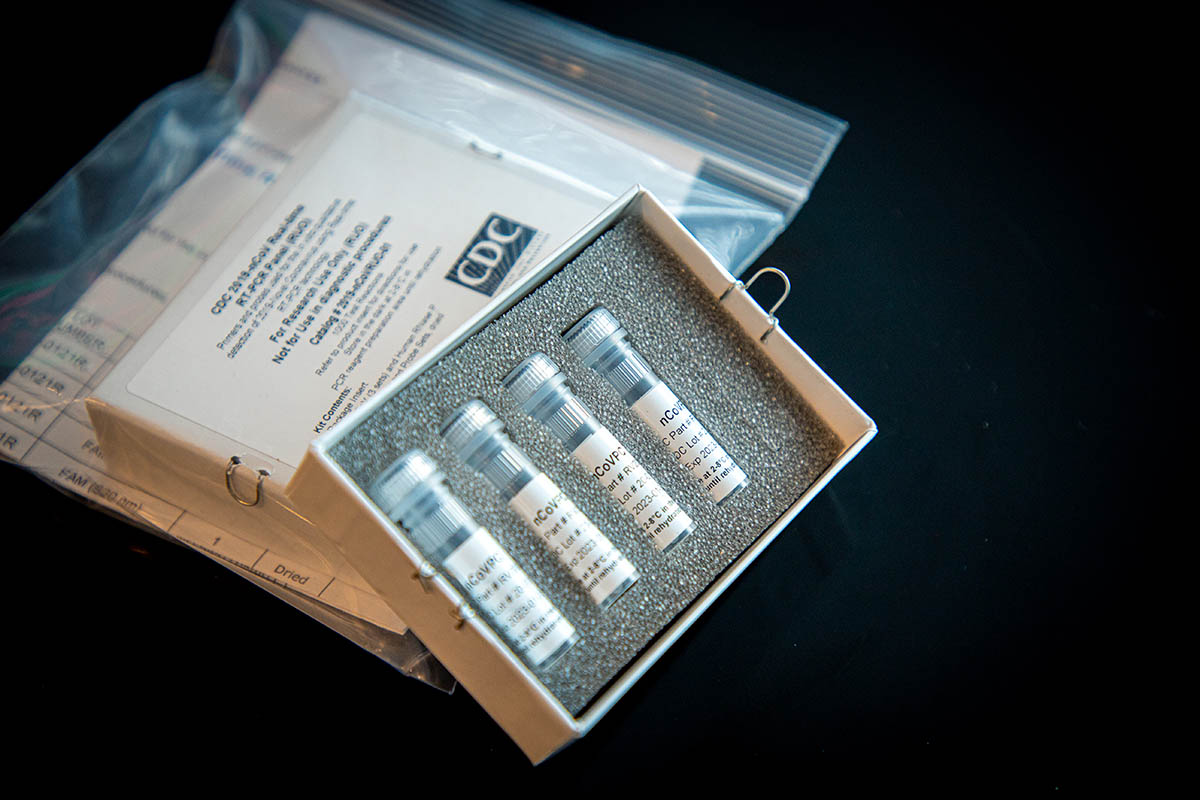
A coronavirus (COVID-19) test kit from the CDC.
Mistakes were made
Faulty test kits and internal divisions over how to respond to the spread of the virus in the United States hamstrung early efforts to get an accurate picture of how rapidly the virus was moving through the population, according to multiple reports.
“They’ve simply lost time they can’t make up. You can’t get back six weeks of blindness,” Jeremy Konyndyk, a senior policy fellow at the Center for Global Development and an Obama-era administration staffer involved in the government’s response to the spread of the ebola virus, told The Washington Post. “To the extent that there’s someone to blame here, the blame is on poor, chaotic management from the White House and failure to acknowledge the big picture.”
There is a world in which a coordinated U.S. response to the outbreak of the coronavirus, which the Chinese government first reported to the World Health Organization in late December, would have been led by the global health security team within the National Security Council, but that group was dissolved in 2018 by the National Security Advisor at the time, John Bolton.
In that world, perhaps the U.S. could have ramped up the production and acquisition of testing kits, provisioned facilities in communities deemed to be more at-risk with the necessary equipment, and issued emergency authorizations to enable public institutions to administer tests without undergoing formal approval processes. In that world, the CDC would not have needed to impose severe restrictions on who could be tested for the virus, because they would not have needed to limit the number of tests they could conduct to only the most pressing — or obvious — cases.
Instead, as reporting in both The Washington Post and the New York Times indicates, a series of poor decisions, slow responses, and technological missteps limited the government’s ability to respond effectively to the threat.
The problems seem to have been threefold — the Centers for Disease Control did not move quickly enough to manufacture test kits at scale (either because of lack of funding or political will) nor did it open up testing options to other institutions that could have worked to develop tests — and because of the limited availability of tests, the CDC rationed how many tests were performed. Those issues were compounded by the initial release of faulty tests by the CDC in early February.
As former U.S. Food and Drug Administration official Scott Gottlieb wrote on Twitter in early February, “Since CDC and FDA haven’t authorized public health or hospital labs to run the tests, right now #CDC is the only place that can. So, screening has to be rationed. Our ability to detect secondary spread among people not directly tied to China travel is greatly limited.”
There are many reasons to have testing kits run through the CDC and state labs affiliated with the center. Chiefly, tests developed and distributed by the CDC can be conducted free-of-charge at public health labs, while corporate labs and private healthcare facilities can charge for the tests they develop.
(There has already been one story involving a man from Florida who was stuck with a $3000 bill for his decision to be pre-emptively tested for the coronavirus after returning from a trip to China.)
However, the inability of the CDC and federal public health officials to respond quickly enough was soon apparent throughout February.
A system for tracking travelers who were returning from China went down just as federal officials were directing state agencies to track their movements, according to a report in The New York Times. Meanwhile, the head of the Department of Health and Human Services, Alex Azar, was estimating that the U.S. needed at least 300 million respirator masks for healthcare workers — the national emergency stockpile only had 12 million on hand, and many of those were expired, according to the Times.
Meanwhile, the CDC’s coronavirus test had a flawed component that led to inaccurate tests, which limited the testing efforts even further. And the limitations imposed on who could receive the tests have meant that there is still no accurate picture of how widely the disease has spread.
As recently as Friday, a nurse at a hospital in California was being denied access to the coronavirus test.
“I am currently sick, in quarantine, after caring for a patient who tested positive. I am awaiting permission from the federal government to allow for my testing even after my physician and county health professional ordered the test,” the nurse said in an issued statement. “The national CDC would not initiate the test. They said they would not test me, because if I was wearing the recommended protective equipment, then I wouldn’t have the coronavirus… Later they called back and now it’s an issue with something called the identifier number. They claim they prioritize running samples by illness severity and that there are only so many to give out each day. So I have to wait in line for the results. This is not a ticket dispenser at a deli counter, it’s a public health emergency…. I’m appalled at the level of bureaucracy that’s preventing nurses from getting tested. Delaying this test puts the whole community at risk.”
.@NationalNurses President Deborah Burger reads a public statement from one of our quarantined #nurses who works at a northern California Kaiser facility.
Full statement
https://t.co/YjTAvAXTRX#COVID19 @WorksafeCA pic.twitter.com/pSZ1ghCB2k
— Bonnie Castillo (@NNUBonnie) March 5, 2020
“When the CDC test was delayed, then the cases started appearing outside of China, there should have been a quicker response to get diagnostic testing going,” Melissa Miller, a director of the clinical molecular microbiology laboratory at the University of North Carolina at Chapel Hill School of Medicine, told the Washington Post.
“We have an epidemic underway here in the United States”
The Federal Government is now facing an epidemic, according to health experts, and the question now is how can it help states and local governments respond.
“We have an epidemic underway here in the United States,” said former Food and Drug Administration commissioner, Scott Gottlieb, in an interview on Face the Nation.
Gottlieb, who recently returned to his position as a managing partner at the venture capital firm NEA, has been monitoring the government’s response from afar and was once rumored to be a candidate for the position of “Coronavirus Czar” overseeing the Administration’s response to the outbreak.
“We have to implement broad mitigation strategies. The next two weeks are really going to change the complexion in this country. We’ll get through this, but it’s going to be a hard period. We’re looking at two months probably of difficulty,” said Gottlieb. “To give you a basis of comparison, two weeks ago, Italy had nine cases. Ninety-five percent of all their cases have been diagnosed in the last 10 days. For South Korea, 85 percent of all their cases have been diagnosed in the last 10 days. We’re entering that period right now of rapid acceleration. And the sooner we can implement tough mitigation steps in places we have outbreaks like Seattle, the- the lower the scope of the epidemic here.”
Part of mitigation involves continuing to track the spread of the disease, and Gottlieb has been encouraging the FDA to move quickly to get new tests approved for weeks. Already, the Gates Foundation and private companies are rushing to bring an at-home coronavirus test kit to market — and ways to share the results from testing with appropriate government agencies.
But testing alone isn’t enough, says Gottlieb. The U.S. needs to “[close] businesses, close large gatherings, close theaters, cancel events,” Gottlieb said.
Businesses have started to cancel large conferences and events, and universities like Stanford are turning to remote classes for the remainder of their winter term. No city or state has yet to take measures as drastic as Italy, which closed down the entire Northern region of the country over the weekend in an effort to contain the spread of the coronavirus.
“I think we need to think about how do we provide assistance to the people of these cities who are going to be hit by hardship, as well as the localities themselves to try to give them an incentive to do this.”
His recommendations align with policy suggestions issued recently by the International Monetary Fund, which are all steps that the U.S. government could take should it choose to proactively approach its response to the virus’ spread.
Indeed, the over $8 billion coronavirus response package approved by Congress last week goes a long way to addressing the first suggestion from the IMF, which is to spend on the prevention, detection, control, treatment and containment of the virus.
Equally as important, according to the IMF, is to provide cash flow relief to the people and firms that are most affected — either in the form of wage subsidies, accelerated and expanded unemployment benefits, or tax benefits for companies affected by the virus outbreak.
“We’re going to end up with a very big federal bailout package here for stricken businesses, individuals, cities and states,” said Gottlieb. “We’re better off doing it upfront and giving assistance to get them to do the right things than do it on the back end after we’ve had a very big epidemic.”
Meanwhile, leadership in the U.S. at the highest level insists that there’s nothing to worry about.


Twitter applied its "manipulated media" label for the first time to an edited video of Joe Biden, tweeted by a White House official and retweeted by Trump (Cat Zakrzewski/Washington Post)


Twitter applied its “manipulated media” label for the first time to an edited video of Joe Biden, tweeted by a White House official and retweeted by Trump — It's the first time the social network has enforced a new policy to fight doctored videos and photos
Tens of millions of South Korean retail investors, the market's biggest buyers in 2026, were caught in this week's selloff, as Samsung and SK Hynix tumble (Song Jung-a/Financial Times)
Song Jung-a / Financial Times : Tens of millions of South Korean retail investors, the market's biggest buyers in 2026, were caught i...

-
Sohee Kim / Bloomberg : South Korean authorities are investigating a data leak at e-commerce giant Coupang that exposed ~33.7M accounts; ...
-
http://bit.ly/2XqNIDz
