Tuesday, January 7, 2020

Researcher promoting red meat, sugar failed to disclose industry ties—again

A close-up of charred meat cooking on a grill with flames below and rising smoke

Enlarge / Cooked. (credit: Getty | picture alliance)

A controversial researcher known for bucking the well-established dietary advice that people should limit their sugar and red meat intake has, once again, failed to disclose his financial ties to the food industry.

Epidemiologist Bradley Johnston failed to report funding from a research agency backed by the beef industry when he published a high-profile review on red meat consumption, according to the journal that published the review last year, Annals of Internal Medicine. The review concluded that consumers should continue—not reduce—their consumption of red and processed meats, which has been fiercely criticized by nutrition experts.

Annals issued a correction on the review last week, updating the review's accompanying disclosure forms.

Read 10 remaining paragraphs | Comments

https://arstechnica.com

Roofstock, which makes it easier to buy a home as an investment property, just raised $50 million in new funding

There are plenty of startups that say they’re making it easier to buy a home. There are fewer startups that are promising to make it easier to buy a home as an income-producing property. Among these is Roofstock, a four-year-old, Oakland, Ca.-based online marketplace where buyers and sellers buy and sell rental homes in more than 70 U.S. markets — homes with tenants residing in them oftentimes. The idea: both institutional and retail investors can buy and sell homes without forcing renters to leave their homes; buyers can also presumably generate income from day one.

It’s a huge market to chase after. Though there’s an assortment of (huge) estimates out there, Rooftstock pegs the single-family rental
market at a whopping $3 trillion. Investors just gave the company with fresh $50 million to go after it more aggressively, too. Earlier backer SVB Capital led the round, but it was joined by Citi Ventures, Fort Ross Ventures and 7 Global Capital, as well some other earlier investors, like Khosla Ventures, Bain Capital Ventures, Lightspeed Venture Partners and Canvas Ventures.

The company, which says it has facilitated more than $2 billion worth of transactions since launching, isn’t willing to talk about its post-money valuation (it has now raised roughly $125 million altogether). But its cofounder and CEO, Gary Beasley, answered some of our other questions this morning.

TC: How, or where, does the company drum up inventory?

GB: Roofstock’s properties come from a variety of sources, including individual property owners directly, brokers and agents who represent owners of investment properties, property management companies, listing services, and institutions. Last year the number of home sellers on Roofstock’s marketplace increased by 10 times.

TC: Is there anything preventing new landlords from increasing the rent of tenants as soon as a property changes hands?

GB: Landlords need to honor existing leases and follow local laws and regulations when contemplating rent increases.

TC: Does Roofstock have partnerships with real estate brokers? How does it work?

GB: Brokers are natural partners for Roofstock, and there are many individual brokers and agents listing their clients’ homes to sell on the Roofstock marketplace. [We also provide them the ability to] list tenant-occupied properties on our marketplace, which has been difficult to do through traditional channels.

TC: Who determines pricing — Roofstock or the sellers?

GB: Sellers ultimately determine the pricing and sale strategy [but we] provide sellers with several data-driven tools to help them set a listing price, including comparable sales values, probabilities of sale at various prices, and estimates of days-to-sell. We also provide sellers with the ability to field offers on homes or list at a non- negotiable price. Nearly all sellers on Roofstock select the option to field all offers.

TC: Do you use any other information ‘hubs’ to assess the value of properties?

GB: We combine our data with various third-party sources, like Corelogic, House Canary, and Zillow to give investors a portrait of a property that includes valuation, neighborhood rating, comparisons with similar homes, as well as other tools and information.

TC: How does Roofstock get paid?

GB: We make money through each transaction. We charge 2.5 percent to sellers, and .5 percent to buyers.

TC: How long on average does it take to sell a house?

GB: The majority of properties that sell on Roofstock go under contract within 15 days or less, which is significantly faster than the industry standard.

TC:  How many properties has Roofstock sold thus far?

GB: We’ve facilitated more than $2 billion of transactions on our marketplace since we launched, and as of the fourth quarter of last year, our run rate was about 500 home transactions per month. It’s been extremely popular with the next generation of investors: 75% of our users are first-time real estate investors, and more than half are under 35.

TC: You operate in more than 70 U.S. markets. Where are you seeing the most transactions?

GB:  The top markets on are Atlanta, Memphis, Indianapolis, Jacksonville and the greater Chicago area.

TC: How might a downturn in the economy impact the company’s business?

GB: Broadly speaking, single-family rentals have historically been a strong investment option during economic downturns. During the 2007 to 2011 housing downturn, rental rates [showed] positive rent growth despite broader economic conditions.


Getaround is latest Softbank portfolio company to announce layoffs

Silicon Valley’s top valued car rental startup, Getaround, announced layoffs today, making it the latest SoftBank-backed entity of late to pare down its workforce.

The Information, which first reported the news, pegs the layoffs at 150 employees, amounting to around a quarter of the company. In the report, CEO Sam Zaid seemed to lay at least some of the blame for the layoffs on the effects of SoftBank’s recent struggles.

Zaid called SoftBank a “thoughtful partner,” but added that the world’s largest tech investment fund has “had their own challenges, and it’s hard to say that doesn’t have a ripple effect across their whole portfolio.”

Reached for comment, a Getaround spokesperson referred us to a blog post from Zaid confirming the layoffs, with him noting that the company was “reducing field operations and the size of several global teams.”

Getaround has raised over $400 million, the bulk of which was in a $300 million Series D round from SoftBank in mid-2018, funding its used to dramatically scale the size of its operations. Last year, Getaround spent $300 million to acquire European rival Drivy.

Getaround’s layoffs come as many other SoftBank-backed startups endure struggles of their own. Though none have been quite as dramatic in scale as WeWork, layoffs have also plagued dog-walking startup Wag, car subscription startup Fair, construction company Katerra and just yesterday, reportedly, at food robotics startup Zume.

SoftBank Group CEO Masayoshi Son has been publicly urging its Vision Fund portfolio companies to focus less on breakneck revenue and user growth and more on generating cash flow. This call was echoed in Zaid’s blog post, where the CEO noted “the importance of balancing growth with efficiency.”

For many of the startup’s dependent on SoftBank’s reserves, that wake up call has seemed to lead to some tough choices and some strategy changes needed to hit moving targets.


Uber open sources Manifold, a visual tool for debugging AI models that is used in analyzing Uber's Michelangelo ML platform (Kyle Wiggers/VentureBeat)

Kyle Wiggers / VentureBeat:
Uber open sources Manifold, a visual tool for debugging AI models that is used in analyzing Uber's Michelangelo ML platform  —  Debugging machine learning (ML) models isn't a walk in the woods.  Just ask the data scientists and engineers at Uber, some of whom have the unenviable task …


Looking Glass is targeting enterprises and eventually gamers with 8K holographic display

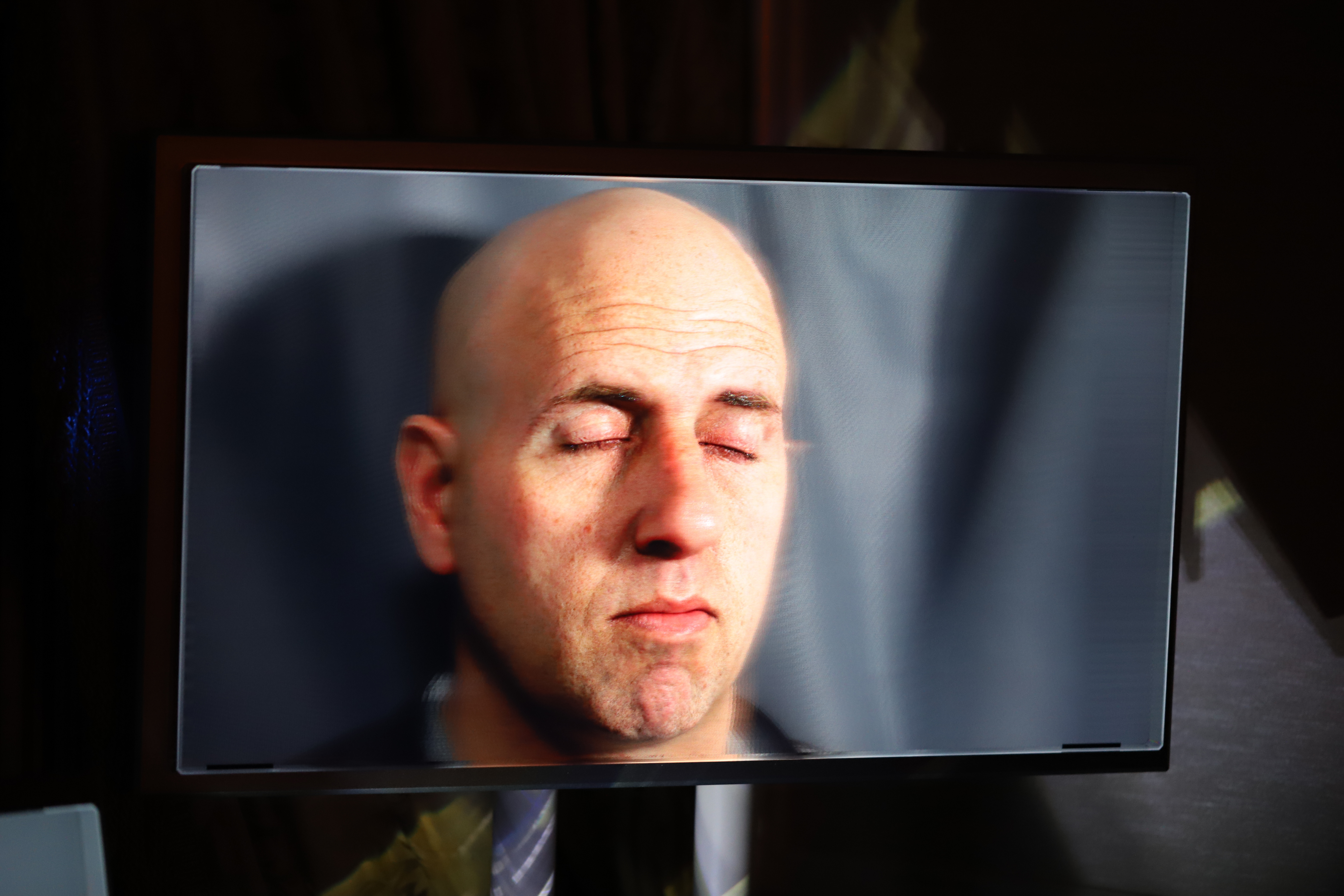
The first thing you need to note when writing about Looking Glass is that it’s incredibly difficult to photograph convincingly. It’s really exactly as you might assume, attempting to capture a 3D image in a 2D photo.

The second is that it’s really cool. I don’t want to be the “you gotta see it in person” guy, but, well, you gotta see it in person, guy (or lady). Lucas called it “bizarrely fascinating” when he looked at the Looking Glass box last year, comparing it to a “fishbowl of pixels.” Announced in November, the 8K display is a little more straightforward, at least as far as form factors are concerned. Instead of a box, it’s a screen, offering an animated 3D image.

The system has 33.2 million pixels, utilizing a 45-element light field to offer a truly impressive holographic effect. Though, there is a pretty clear range when the effect really looks good. Straight on to about 45-degrees is the Goldilocks zone. Beyond that, things get fuzzy. They also get a bit out of focus when the hologram extends too far out, as in the case of a 3D image of a man’s face. His nose extending out about six inches was pretty fuzzy.

The four-year-old company has raised around $14 million, with its Series A arriving in early February. There are some high-profile investors on board, including SOSV, Lux Capital and Foundry Group, which led the last round. There’s a certain benefit to a technology that leaves interested parties wowed when they leave the room.

“There’s thousands of systems in the world now and a lot of the developers that have purchased those systems are with big companies,” CEO and co-founder Shawn Frayne tells TechCrunch. “In a lot of ways they’re evangelists. They develop their own apps in some cases and used the utilities we build.”

Beyond enterprise uses, the Brooklyn-based startup is exploring consumer applications, as well, including basic things like video chat. Frayne says the company has had some discussions around gaming, as well, showing an impressive demo featuring a flashlight mounted on an HTC Vive controller. When pointed at the display, the faux light had an impressive effect of depth in the picture.

The tech is pretty unpractical for such down market uses, but a quick demo is an exciting peek into a future potential of more immersive shared experiences.

CES 2020 coverage - TechCrunch

Los Angeles-based Luxury Presence raised $5.4 million for its real estate marketing services

Real estate is a big business in the sprawling city of Los Angeles and new technology tools to target the industry continue to attract investor attention.

The latest of these is Luxury Presence, which pitches digital marketing services to real estate agents and has raked in $5.4 million in financing to support the buildout of its services and sales teams to manage clients.

Previous investors Switch Ventures led the round, which included participation from new investors Bessemer Venture Partners and Toba Capital alongside previous investors Gerald Risk, Peter Kelly, Jonathan Erlich, and Blaine Vess.

“Our 2020 goal is to build a full digital marketing solution for real estate agents looking to build successful, lead-generating digital brands,” said Malte Kramer, the company’s chief executive, in a statement. “2019 was all about building the best real estate website platform in the sector and I’m so proud of what our team was able to accomplish. Our focus was on how to make beautiful, functional and lead-generating sites that were easily customizable to fit the agent’s needs and demands, and we did just that.”

According to estimates from Built in LA, there are roughly 127 companies, which have raised over $2.4 billion active in the real estate industry in Los Angeles. These companies range from co-working startups like Knotel or WeWork to companies focused on servicing the real estate industry (like Luxury Presence).

In all, the sector is growing quickly as venture investors look to find markets that were reluctant to embrace technology. The traditionally opaque world of high end real estate certainly applies.


AutoX and Fiat Chrysler are teaming up on a robotaxi for China

Autonomous vehicle startup AutoX, which is backed by Alibaba, said Tuesday that it is partnering with Fiat Chrysler to roll out a fleet of robotaxis for China and other countries in Asia.

A fleet of Chrysler Pacifica vans is going to be in service to the public in China in early 2020, according to AutoX. Passengers will be able to call a robotaxi using a WeChat mini-program and other popular apps in China.

The partnership is an important step for AutoX, which is developing a full self-driving stack. While AutoX has been operating robotaxi pilots in California and China, its real aim is to license its technology to companies that want to operate robotaxi fleets of their own.

While the partnership might not be as critical to FCA, it would theoretically give the automaker access to a robotaxi platform that can operate in China, if it were to choose to make that move.

AutoX, which is based in Hong Kong and San Jose, Calif., already tests in California and China. The company began offering public rides in downtown Shenzhen in early 2019, and in September partnered with Shanghai to launch 100 of its robotaxis to pilot a fleet there.

AutoX CEO Jianxiong Xiao said the next challenge is to remove the safety driver and go truly driverless.

“Getting hardware ready is a crucial step towards this goal,” he said. The partnership with FCA will help it get there, according to the company.

“Achieving completely driverless operation needs a very reliable vehicle platform with full redundancy of the vehicle’s drive-by-wire system,” said Xiao. “This level of redundancy is still new and rare in the auto industry. The Chrysler Pacifica platform has proven trustworthy for driverless deployment.”

AutoX is exhibiting the Chrysler Pacifica minivan at CES 2020. The vehicle is outfitted with an array of sensors.The hybrid vehicle now has 360 degrees of solid state lidar sensors, along with numerous high-definition cameras, blind spot lidar sensors and radar sensors. AutoX has tapped RoboSense and drone manufacturer DJI for its lidar sensors.


The vehicle is also equipped with a vehicle control unit, called the XCU, that AutoX developed. The XCU, pictured below, powers and integrates the self-driving stack, including sensors like lidar and radar, into the vehicle. AutoX says its XCU has faster processing speed and more computational capability, making it ideal for the complex scenarios found in China’s cities.AutoX XCU

“There are a lot more cars, pedestrians, bikers, scooters, and moving objects on the street, many of which are not following the traffic rules,” COO Zhuo Li said in a statement. “Due to the fast development speeds in China, construction and reconstruction can happen overnight. The streets can look completely different in the morning, afternoon, and at night. This requires our system to process faster and extremely accurate to recognize and track each object to guarantee safety.” 

Meanwhile, FCA’s autonomy strategy has largely hinged on partnering with AV developers. In May 2016, Waymo and FCA announced a collaboration to produce about 100 Chrysler Pacifica Hybrid minivans integrated with Waymo’s self-driving system. And last year, FCA struck a deal with Aurora to develop self-driving commercial vehicles.

Last year, AutoX announced a partnership with Swedish holding company and electric vehicle manufacturer NEVS to deploy a robotaxi pilot service in Europe by the end of 2020. It received permission from California regulators to transport passengers in its robotaxis (human safety driver required). AutoX is calling its California robotaxi service xTaxi.

CES 2020 coverage - TechCrunch

Monday, January 6, 2020

Hyundai is Uber’s newest partner for building flying taxis

A little less than three years after it first announced its vision for adding flying taxi service to its portfolio of offerings, Uber has landed its first auto manufacturing partner on the skyway to making its Air Taxis real.

The company announced at the Consumer Electronics Show that it would be working with Hyundai Motor Company as the first major auto manufacturer to join Uber’s Elevate program.

The two companies unveiled their air vehicle concept today.

As part of the partnership, Hyundai said it will produce and deploy the air vehicles with Uber providing the logistics services including airspace support, connections to ground transportation and customer interfaces through its aerial ride sharing network.

“Our vision of Urban Air Mobility will transform the concept of urban transportation,” said Jaiwon Shin, Executive Vice President and Head of Hyundai’s Urban Air Mobility (UAM) Division. “We expect UAM to vitalize urban communities and provide more quality time to people. We are confident that Uber Elevate is the right partner to make this innovative product readily available to as many customers as possible.”

There’s no word from Uber on what the new partnership means for Uber’s other announced partners which include Karem Aircraft, Aurora Flight Sciences, Embraer, Bell Helicopter, Pistrel Aircraft, and Mooney.

“Hyundai is our first vehicle partner with experience of manufacturing passenger cars on a global scale,” said Eric Allison, the head of Uber Elevate, in a statement. “We believe Hyundai has the potential to build Uber Air vehicles at rates unseen in the current aerospace industry, producing high quality, reliable aircraft at high volumes to drive down passenger costs per trip. Combining Hyundai’s manufacturing muscle with Uber’s technology platform represents a giant leap forward for launching a vibrant air taxi network in the coming years.”

The two companies have worked to develop a “PAV (Personal Air Vehicle)” that uses Uber Elevate’s common research models to develop new concepts for wing design, noise reduction, aerodynamics and simulation verification.

The concept vehicle from Hyundai — dubbed the model S-A1 — includes a design for a cruising speed up to 180 miles per hour; will be 100% electric; requires only five to seven minutes to recharge; has a distributed electric propulsion system that powers multiple rotors and propellers around an airframe (which reduces noise and increases safety by decreasing single points of failure); and seats four comfortably, according to the two companies.

[gallery ids="1930050,1930051,1930052,1930053,1930054"]

To make sure that there’s real estate to support the hub model Uber has outlined for its aerial transit the company has partnered with real estate developers including Hillwood Properties, Related, Macquire, Oaktree, and Signature. The company has also signed Space Act agreements with NASA for the development of unmanned traffic management concepts and unmanned aerial systems and another for urban air mobility.

Uber expects its first air taxi services to launch in 2023.


MediaTek says it has started to use Intel Foundry's advanced chip packaging in addition to TSMC's, as the mobile chip designer bets on AI demand for growth (Cheng Ting-Fang/Nikkei Asia)

Cheng Ting-Fang / Nikkei Asia : MediaTek says it has started to use Intel Foundry's advanced chip packaging in addition to TSMC's...