Sunday, January 5, 2020

You can buy Lovot’s undying robotic love for $3,000

How much would you shell out for the lifelong love of a robot pal? Honestly, $3,000 seems like a downright deal, all said. Japanese robotic startup Groove X returned to CES to show of Lovot, and the surprisingly advanced robot can still pull in a pretty sizable crowd amongst tech enthusiasts, a few years in.

After several years of CES appearances, the friendly little robot finally went on sale in its native Japan, roughly a month ago. It’s the latest in a long line of ‘bots designed to comfort the lonely — a list that includes notable names like Aibo. Though the four-year-old startup insists that its model is more advanced than the iconic robot dog, featuring some 50 on-board sensors and multiple CPUs (including one on-board the charging dock).
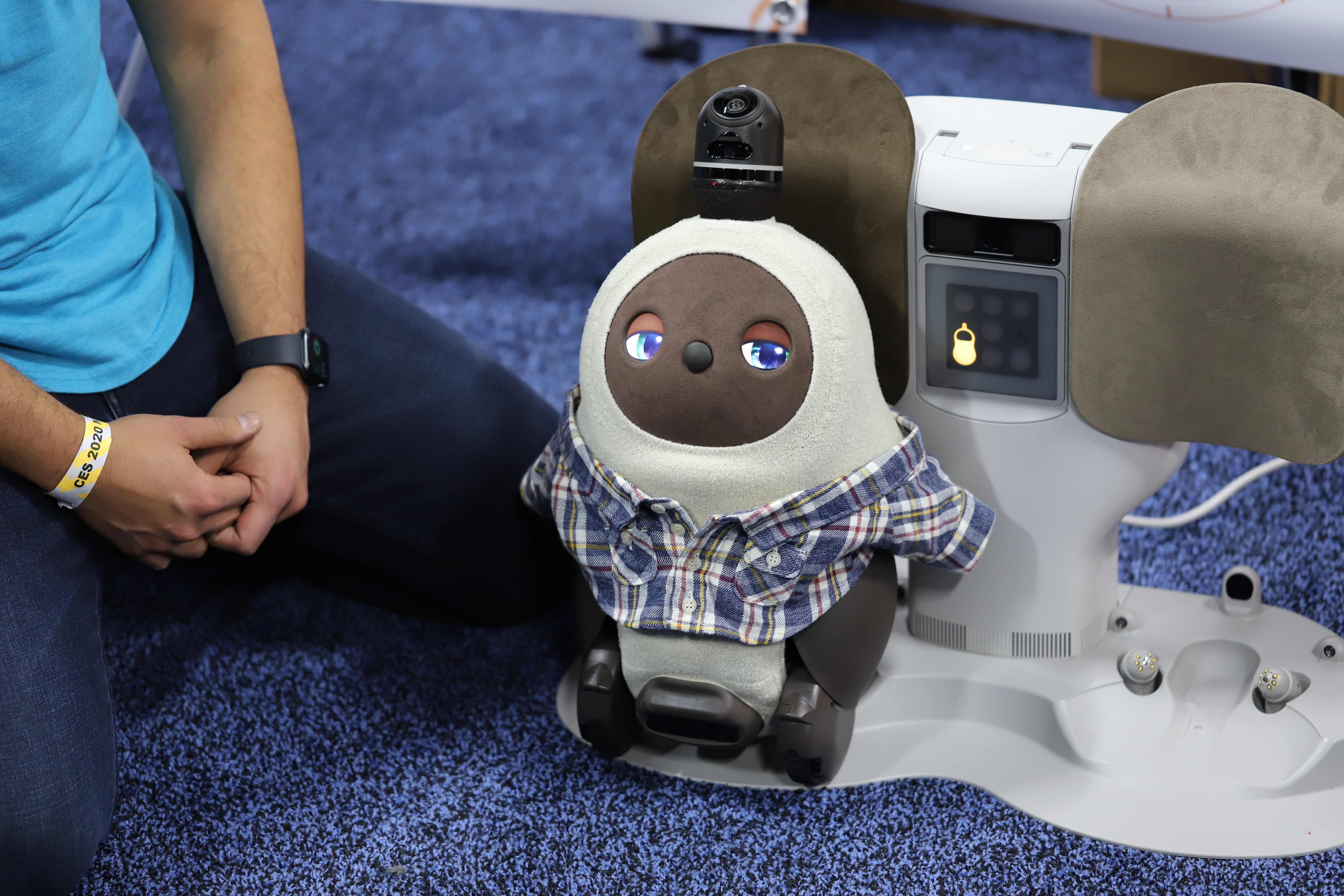
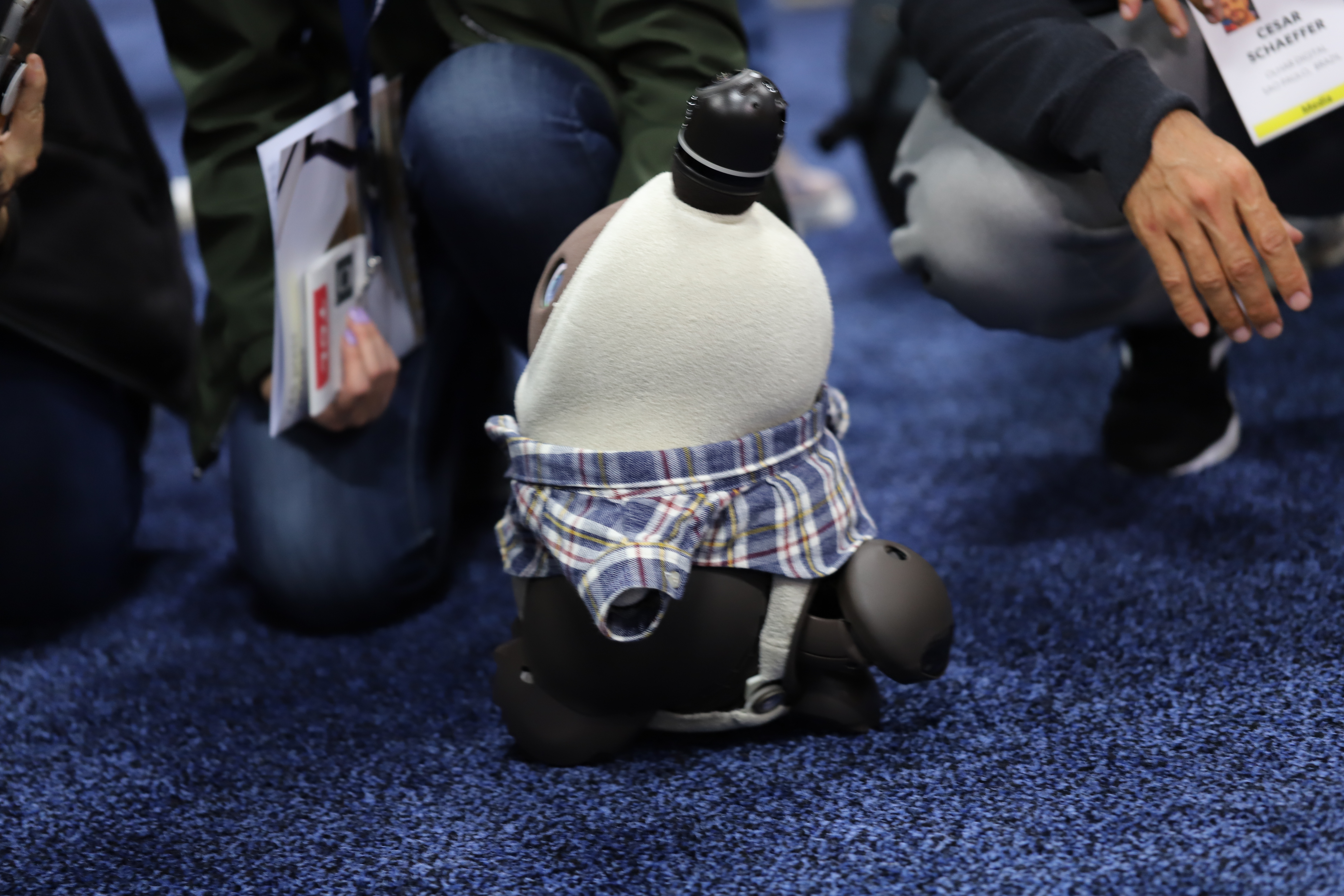
I’m not going to pretend spending a few minutes with the robot on the floor of this pre-CES event really acquainted me with the subtle ins and outs of Lovot, but I was impressed with how quickly it took to strangers. It was particularly impressive in such a chaotic setting. It’s a bold little robot who’s not afraid to approach strangers, a far cry from our experiences with Aibo, which definitely makes you work for it.

Like Aibo, Lovot’s designed to warm up over time, learning its owner’s face, greeting them when they come home and the like. The mossy cloth covering is certainly warmer and cuddle than Aibo, and the robot doesn’t shy away from a good hug.
As for U.S. availability, well, you’re guess is as good as mine on that one. The company’s Founder and CEO Kaname Hayashi tells me, “If we can find an investor, than we’ll probably come to the U.S.” Fair enough, though U.S. consumers haven’t really proven themselves excited about the pricey home robot category.

CES 2020 coverage - TechCrunch

Netatmo enters the smart door lock space with programmable NFC keys

Netatmo, the French startup that got acquired by Legrand, is announcing a new device at CES, the Netatmo Smart Door Lock. You can install it as a replacement to any cylinder door lock, which are more common in Europe than U.S.-style deadbolts.

Compared to many smart door locks, Netatmo isn’t as heavy-handed as other solutions as you can use both your phone and a physical key to open your home. You don’t have to switch to a code-based system or rely entirely on your phone.

But the key isn’t a traditional key. It’s an NFC badge shaped like a key, which means that you can program the lock to authorize the key or not. For instance, if you lose your key, you can deactivate it in the Netatmo mobile app. You can also use the same key for multiple doors — your front door, your back door, your office door, etc.

When it comes to digital keys, you can invite as many people to your home as you want so that they can unlock the door with a digital key. Home owners can also send invites to guests. This way, you don’t have to make sure that the first person to get home has the key.

And of course, digital keys are a great solution for Airbnb guests. You can grant access to a guest for a couple of days and disable the digital key when your guests are gone.

Netatmo has received three certifications that assess that its door lock can resist physical and electronic attacks — A2P*, BZ+ and SKG***. In particular, Netatmo uses Bluetooth and not Wi-Fi. This way, the lock isn’t connected to the internet directly and key data is stored on the door lock storage.

The physical keys are tamper-proof in order to make it harder to duplicate them (but you should still disable keys if you lose them of course). Finally, Netatmo has put an accelerometer in the device to detect break-in attempts.

Battery is supposed to last two years, there’s no subscription fee and the device works with HomeKit. Netatmo hasn’t shared any information when it comes to pricing and availability.

CES 2020 coverage - TechCrunch

Nvidia’s new 360Hz G-Sync displays are tailor-made for esports

Nvidia has developed new technology that enables 360Hz refresh rates on PC displays, achieving unprecedented responsiveness that’s perfectly suited to esports, where any advances in terms of refresh speeds can translate to improved performance during play.

Nvidia’s new G-sync tech that delivers the 360Hz refresh speeds will be coming to market first through a partnership with Asus, via the Asus ROG Swift 360 monitor that’s debuting at this week’s annual CES show in Las Vegas. It works in combination with Nvidia’s RTX line of GPUs, and will provide refresh rates that translate to less than 3 milliseconds of input latency, all available on a 24.5-inch, fully 1080p HD gaming panel.

Nvidia’s G-Sync tech debuted in 2013, and works by introducing Variable Refresh Rate (VRR) that syncs up the refresh rate of the display (provided it’s G-sync certified) with the GPU’s frame rate, so that you get optimized performance. Since its debut, Nvidia has been especially focused on optimizing G-Sync and its features for use by esports players and professionals, to ensure best possible reaction times in genres like shooters where every millisecond counts when it comes to aiming at and actually hitting your target.

The Asus ROG Swift 360 monitor will be coming out sometime “later this year,” and pricing isn’t yet available but you can bet it’ll be more than your average gaming monitor, given its advanced performance features and esports target market.

CES 2020 coverage - TechCrunch

A year after being banned, Lora DiCarlo returns to CES with new sex toys

It’s amazing what can happen in just one year. After being banned from the Consumer Electronics Show last year, sex tech startup Lora DiCarlo is debuting two new sex toys on the show floor. Even more, both of these new products, Baci and Onda, have received an CES Honoree Innovation award.

All three of Lora DiCarlo’s devices use microrobotics technology to mimic human touch. While Osé is designed to help produce a blended orgasm, Onda is specific to the G-spot and Baci is specific to the clitoris.

These awards are thanks to a full 180 for the Consumer Technology Association, the organizers of CES. In July, CTA announced its plans to allow sex tech startups to participate and compete for awards as part of the health and wellness category on a one-year trial bias. That came after the CTA royally messed up with sex tech company Lora DiCarlo last year. The CTA revoked an innovation award from the company, which is developing a hands-free device that uses biomimicry and robotics to help women achieve a blended orgasm by simultaneously stimulating the G-spot and the clitoris. In May, CTA re-awarded the company and apologized.

As Lora DiCarlo founder Lora Haddock previously told me at TC Disrupt 2019, that snub did the company a big favor in terms of company awareness. Late last year, Lora DiCarlo started pre-sales for its first product, Osé. Already, the company has generated $3 million in revenue, with $1.5 million generated in just the first 36 hours of launch.

48838615618 56fd7e6444 c

SAN FRANCISCO, CALIFORNIA – OCTOBER 03: Lora DiCarlo Founder & CEO Lora Haddock speaks onstage during TechCrunch Disrupt San Francisco 2019 at Moscone Convention Center on October 03, 2019 in San Francisco, California. (Photo by Kimberly White/Getty Images for TechCrunch)

“Following last year’s incident having the Innovation Award rescinded and reinstated for Osé, we became change agents, initiating a critical public conversation about gender equity and creating a safer and more inclusive environment for all CES attendees,” Lora DiCarlo founder Lora Haddock said in a statement. “After learning more about our products and our mission, people have come to realize that sexual wellness is an important part of overall well-being. This year, we are at CES to continue to reshape how people think about sex tech. It’s not about the technology. It’s not about the orgasm. It’s about how tech-enhanced experiences can lead to a greater sense of wellness, including improved sleep, reduced stress, and better mood.”

My colleague Brian Heater will catch up with Haddock this week at CES to hear more, so be on the lookout for that.

This brain-training wearable promises better sleep

CES 2020 is the year of sleep tech. I called it a few months ago, and now that the announcements are starting to trickle out, I’m re-staking that claim. Technology has played an important role in completely destroying my sleep cycle.. Yet somehow, it appears to be my only hope of saving it.

URGONight seems to be one of the more interesting takes on the space. Though it does overlap pretty significantly with the Muse S headband that was also literally just announced this very minute (I know, I wrote that story, too). The hook to this specific neurofeedback headband (a phrase I knew I would be writing at some point in 2020) is that it’s designed for daytime use for sleep training.

The headband is designed to be used for 20 minutes a day, three days a week. It has two electrodes that detect brain activity. Wearers can view their brain feedback in real-time, via the Android/iOS app. There are a bunch of different exercises, including growing leaves on trees and drawing patterns. The idea is to essentially train your brain to sleep better.

“Just as you can train your body to run faster, jump higher, swim further or become more flexible, clinical studies have shown neurofeedback therapy can help people learn how to improve the quality of their sleep,” founder Guirec said in a release. “The technology has been used in clinical sleep centers around the world for decades and now with URGOnight, we are making it more fun and accessible and conveniently usable in the comfort of the home.”

It’s interesting, for sure. I certainly can’t speak to the product’s efficacy — or any of the science here (though “sleep spindles” are a real thing, according to a very quick Google search I just did). I’m willing to give anything a shot at this point, though. You can, too, in Q2. Though it’s gonna cost you $500.

CES 2020 coverage - TechCrunch

Muse’s innovative meditation headband gets a softer, sleepier version

Maybe you remember the Muse Softband from last year’s CES. Honestly, probably you don’t. I do, but only because A. I was there and B. I actually really liked the company’s regular version. I’m still pretty skeptical about the concept of using meditation to jumpstart mindfulness, but the Muse 2 makes a compelling case for hardware as a means of quieting one’s thoughts.

After a year of silence, the rebranded Muse S is ready to launch. I like the name. It beats Softband, in that it doesn’t sound like a Japanese investment firm. “S” is for “soft” and also “sleep” — two elements that obviously go hand in hand. It’s also “s” for “savvy move on Muse’s part,” as sleep tech is all the rage this CES. And certainly meditation and sleep go hand in hand.

The fabric headband offers similar “biofeedback-enhanced meditation,” measuring brainwaves to determine where your concentration is at. Sleep is added to the mix, as well, designed to be worn for five or so minutes a night before trying to get to sleep. The system pairs up with the Muse app, which features “Go-to-Sleep Journeys” — essentially guided sleep meditations. Unlike some comparable sleep masks, however, the headphones aren’t built in.

Instead, you pair it with your headphones and put your phone away. Comfort levels will vary, of course, depending on your headphones. The sounds are impacted in real-time based on biofeedback including brain activity, movement and heart rate, adjusting the soundtrack accordingly. Compelling for sure. I’ve got it on good authority that there’s a unit waiting for me back at home. Sadly, it didn’t get to me in time — would have been nice for CES hell week.

Anyway, review soon, probably. For the rest of you, the Muse S is currently available for $350 through Muse’s site and Amazon. The Muse meditation app runs $13 a month.

Apple led global Q1 smartphone shipments for the first time with a 21% market share in Q1 2026; overall smartphone shipments fell due to memory chip shortages (Counterpoint Research)

Counterpoint Research : Apple led global Q1 smartphone shipments for the first time with a 21% market share in Q1 2026; overall smartphone...