Tuesday, December 3, 2019

Setting politics aside, Sequoia raises $3.4 billion for US and China investments

Noted Silicon Valley venture capital fund Sequoia Capital has raised nearly $1 billion for later-stage U.S. investments and roughly $2.4 billion for venture and growth deals in China, according to paperwork filed with the U.S. Securities and Exchange Commission on Tuesday.

The firm, famous for its investments in U.S. companies like Google, Instagram, Dropbox, LinkedIn, Snap and WhatsApp, is also an investor in some of China’s most successful startups.

These are companies like Alibaba, China’s e-commerce answer to Amazon; Ant Financial, a multibillion-dollar financial services powerhouse; JD.com, another e-commerce powerhouse; ByteDance, the owner of America’s latest social media sensation, TikTok; and Yitu, one of the national leaders in the development of machine learning applications.

These investments have not come without their share of controversy abroad. Yitu has been linked to the technology dragnet currently in place in Xinjiang, where an estimated 1 million religious and ethnic minorities are currently interned. Meanwhile, TikTok’s popularity in the U.S. has come with accusations of censorship in its treatment of posts that were supportive of both Xinjiang’s imprisoned population and the dissidents protesting mainland China’s increasing control over Hong Kong politics.

U.S. senators have already called for an investigation into TikTok, and Yitu was blacklisted by the U.S. Department of Commerce in October for its role in human rights violations in Xinjiang.

Setting politics aside, Sequoia has brought in $1.8 billion for its Sequoia Capital China Growth Fund V and about $550 million for Sequoia Capital China Venture Fund VII, per filings with the Securities and Exchange Commission.

It’s a sign that when valuations are concerned (ByteDance alone is now worth $78 billion, according to some reports), investors can overlook the potential political pitfalls of dealing with China.

Sequoia, led by Doug Leone, Michael Moritz, Roelof Botha and others, recently sought $8 billion for a global fund, its largest-ever fundraise, holding a first close of $6 billion in June 2018. In addition, the firm operates Sequoia Capital India, with offices in Menlo Park, Bengaluru, Mumbai, New Delhi, Singapore, Tel Aviv, Beijing, Hong Kong and Shanghai.

News of the fund comes at the tail end of another strong year for venture capital fundraising in the U.S. Firms, including 41-year-old NEA, filed to raise as much as $3.6 billion for a single fund. Meanwhile, Norwest Venture Partners, DCVC and Accel all closed new vehicles exceeding $500 million.

Fronted, from former Bud, Monzo and Apple employees, wants to make life easier for renters

Fronted, a new London-based startup aiming to make life easier for renters, is breaking cover today.

The company, founded by Jamie Campbell, Simon Vans-Colina, and Anthony Mann — former employees at Bud, Monzo and Apple, respectively — will launch early next year with a fintech product to help renters finance their rental deposits.

The plan is get accepted into the FCA “sandbox” program (run by the U.K. financial services regulator) to begin lending cash that can only be used for a rental deposit.

The thinking is that by using Open Banking and other financial technology and offering a credit product designed to finance deposits directly, Fronted can lend more cheaply than existing options, such as credit cards, pay-day lenders, and overdrafts, or insurance-backed membership schemes, and at lower risk.

“Renting sucks — anyone who rents knows it,” Fronted CEO Jamie Campbell tells me. “There are so many problems to solve and we intend to tackle them all bit by bit. But first, we are going to pay people’s rent deposits for them so they can pay us back in bite-size manageable amounts. Deposits are a large upfront expense and most people either use mum and dad to sort it out or stay where they are (in the worst cases they do to pay-day lenders)”.

In a call late last week with Campbell and CTO Vans-Colina, the pair explained that renters that apply to use the Fronted service will be asked to link their bank using Open Banking, therefore sharing their recent transaction data, and provide details of the property they wish to rent. Then, once Fronted has run the required checks and agreed to provide credit, the startup sends the money directly to the estate agent to be placed in the U.K.’s Deposit Protection Scheme, meaning that the loan never touches the renter’s hands (or wallet).

“Customers will have a direct debit to pay us back over a set schedule, or they can pay it all off when they have the money to do so, [and] we don’t charge any fees,” says Campbell. There is also a planned “holiday mode” that will allow customers to temporarily reduce their monthly payments in order to help avoid falling into financial difficulty.

“Ultimately this first product is designed to be very convenient and we believe people will opt for this more manageable alternative to a normal deposit,” adds Campbell. “There are customers of ours that will be in ‘hidden households’ unable to move because of the upfront fees… Deposits can [also] sometimes take a long time to be returned from the schemes (something the government recently launched an enquiry into). Fronted wants to serve people who might otherwise be ‘double-exposed’ by deposits. We hope this first product increases social mobility by providing liquidity when people need it”.

Initially, Fronted will generate revenue through interest charged. It then plans to extend its fintech product offering with additional money-advance services “to help smooth out the bumps of renting”.

“We also intend on rolling out a ‘turn up and turn on’ service for utilities and internet,” says the Fronted CEO.

Plant-based burgers are “ultra-processed” like dog food, meat-backed ads say

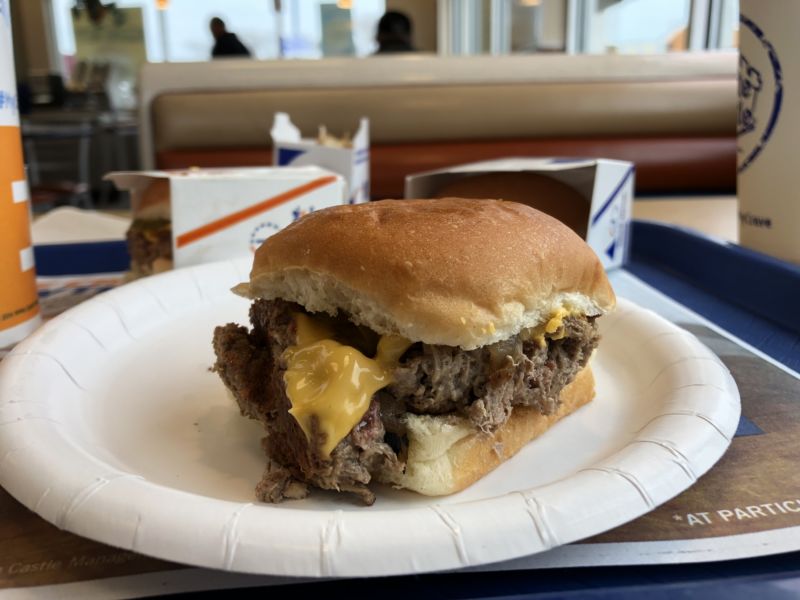
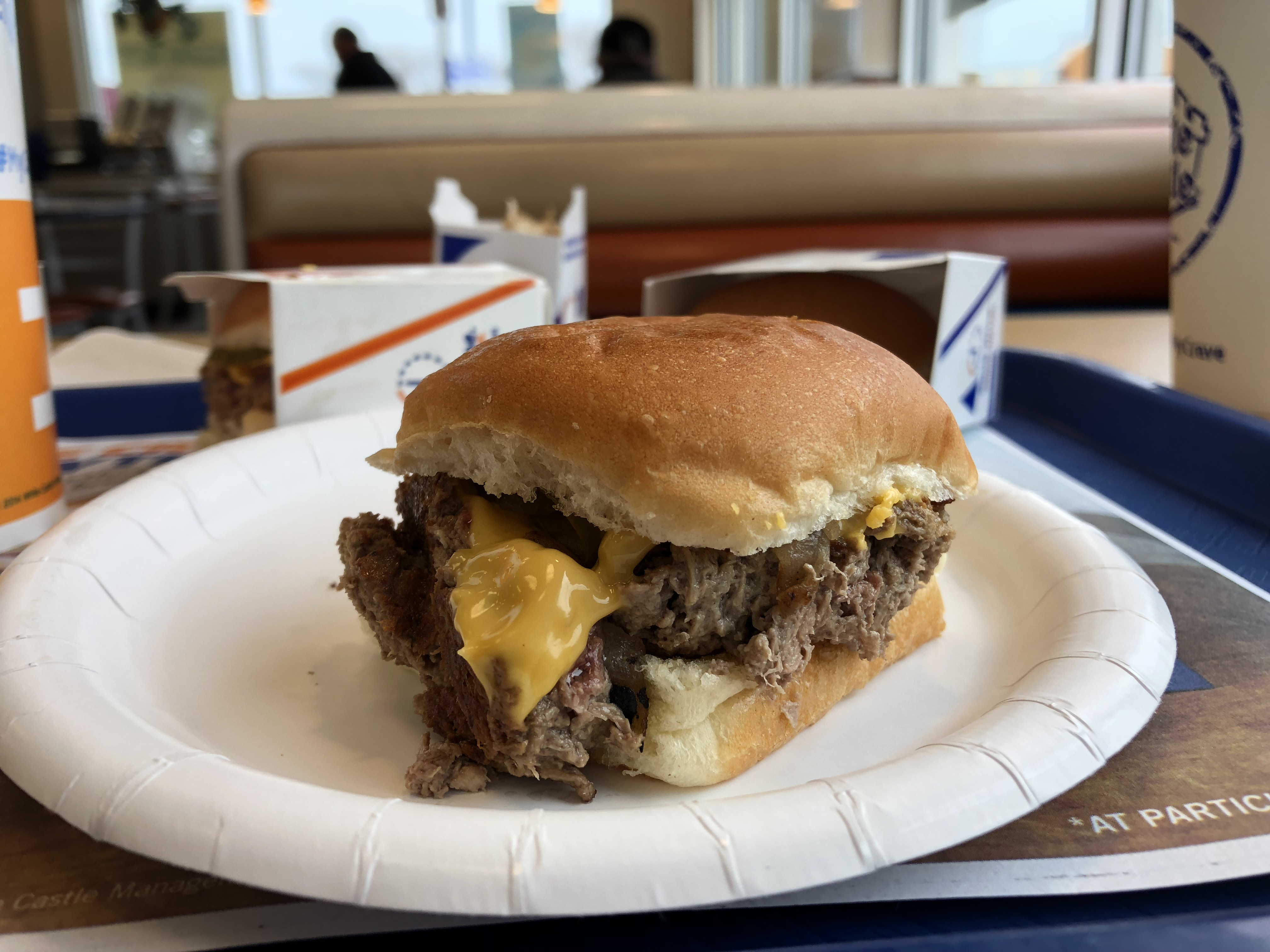
The White Castle Impossible Slider is significantly heftier than the White Castle Beef Slider.

Enlarge / The White Castle Impossible Slider is significantly heftier than the White Castle Beef Slider. (credit: Eric Bangeman)

A public-relations firm backed by meat producers has unleashed a savage marketing campaign that claims plant-based meat alternatives are unhealthy, "ultra-processed imitations" similar to dog food.

The campaign rolled out in recent weeks from the industry-funded firm Center for Consumer Freedom, according to The New York Times. So far, it has included full-page ads and opinion pieces in mainstream newspapers, including The New York Times, USA Today, and The Wall Street Journal. All the marketing material raises health concerns about trendy meat alternatives, such as the Impossible Burger and Beyond Burger.

One ad posed the question "What's hiding in your plant-based meat?" Another directed readers to take the quiz "Veggie Burger or Dog Food?"

Read 9 remaining paragraphs | Comments

https://arstechnica.com

Late-stage Indian startups bulk up its boards with independent hands

Oyo, Ola, Freshworks, Flipkart and Paytm are among leading home-grown technology ventures that have brought in known industry veterans over the course of the year. https://ift.tt/360GJ88 https://ift.tt/eA8V8J

Consumers will soon be able to use UPI for cash withdrawals

Public sector lender Bank of India has introduced this facility for its own customers, in partnership with Mumbai-based payments company AGS Transact Technologies. https://ift.tt/33HyNal https://ift.tt/eA8V8J

Monday, December 2, 2019

Wide-ranging interview with AWS CEO Andy Jassy on the future of the cloud, the competition, market shifts, changing customer requirements, and more (John Furrier/SiliconANGLE)

John Furrier / SiliconANGLE:
Wide-ranging interview with AWS CEO Andy Jassy on the future of the cloud, the competition, market shifts, changing customer requirements, and more  —  In an exclusive one-on-one conversation, Amazon's cloud chief reveals how he views the future of the cloud, the competition, market shifts, customer demands and controversies


Mass media vs. social media

In the waning years of the last millennium, at my university, one of the cause célèbres of the progressive left was a concept known as “Manufacturing Consent,” the title of a book and film, by and starring Noam Chomsky. Its central thesis was that US mass media “are effective and powerful ideological institutions that carry out a system-supportive propaganda function, by reliance on market forces, internalized assumptions, and self-censorship.”

It’s fair to say that history has been pretty kind to this theory. Consider the support drummed up by mass media for the invasion of Iraq in 2003. To quote the public editor of the New York Times, “To anyone who read the paper between September 2002 and June 2003, the impression that Saddam Hussein possessed, or was acquiring, a frightening arsenal of W.M.D. seemed unmistakable. Except, of course, it appears to have been mistaken.” Consider the September 2002 dossier published by the UK government “to bolster support for war” which turned out to be full of spectacularly incorrect information, and the media’s failure to interrogate those claims.

It’s hard to overstate just how cataclysmic these errors were. If the mass media had pushed back against the false claims of weapons of mass destruction, we might have avoided the Iraq war, which killed hundreds of thousands and cost trillions of dollars. Saddam Hussein was not exactly a tough act to follow, but the US still managed to follow its falsely motivated war with a botched occupation which turned Iraq, and arguably the larger Middle East to this day, into a bloodbath.

An interesting question is: what would have happened if today’s social media had been around in 2003? Today, if a wrong assertion is promoted by the mass media, it doesn’t take long for subject-matter experts to appear on Facebook and Twitter, correcting them, and either going viral themselves or becoming the subjects of countervailing media stories.

This doesn’t necessarily mean catastrophe would have been averted. But at least a possible corrective to the collective hysteria of the mass media would have existed, unlike in 2002-3. (Yes, those were the days of Blogspot and LiveJournal, but they didn’t have anything like the reach or significance of today’s social media.)

Consider a more recent event: the 2016 American presidential election. It has become an article of faith, in certain quarters, that it was won and lost by the diabolical use of Facebook ads, especially in conjunction with the psychographic superscience of Cambridge Analytica. This is ridiculous. First, no one credible thinks CA’s purported ability to mind control Facebook users by showing them “psychographically” targeted ads was anything other than snake-oil nonsense.

Second, as Nate Silver points out, the impact of social-media ads was enormously less than the impact of mass media. Remember the months of hysteria about Hillary Clinton’s emails? Remember how it turned out to be a complete non-story? Doesn’t this remind you of Iraq’s WMDs?

“The media’s coverage of Hillary Clinton’s email scandal was probably literally 50 times more important to the outcome of the 2016 election than Trump ads on Facebook.” Perhaps, my fellow mass media, the fault lies not in our psychographic bullshit artists, but in ourselves

Social media has many downsides. You don’t have to go particularly deeply into my own back catalog to discover that I am a harsh critic of Facebook myself. But let’s not pretend that mass media, just because it’s older, is therefore perfect. It has its own catastrophic failure modes itself. In fact — whisper it — maybe we’re a lot better off, net, with social media and mass media, in that each can act as a counterbalancing corrective on the other’s flaws and failure modes.

The progressive left may have gone from “mass media is the enemy” to “Big Tech social media is the enemy,” but maybe, and I know this sounds crazy because it’s on the Internet, but hear me out here, maybe there’s room for a little nuance; maybe they both have good and bad aspects, and could possibly balance one another out. If you don’t think mass media needs a corrective, let me remind you once again of the Iraq War and But Her Emails, to name but two of many, many examples. Maybe there exists a future in which social and mass media are each a cure for what ails the other.

FBI wants Americans to delete these apps from their phones

The Federal Bureau of Investigation considers any mobile app developed in Russia to be a "potential counterintelligence threat," it said on Monday, responding to a U.S. lawmaker's query about face-editing photo app FaceApp. https://ift.tt/383PQqy

Samsung Galaxy S10 Lite Briefly Sighted on Company Website: Report

Samsung Galaxy S10 Lite is expected to be a slightly more powerful phone than the Galaxy S10e, and is expected to pack 8GB RAM. https://ift.tt/3801yCe

Technical snag hits HDFC website and mobile application

With a customer base of 50 million, HDFC Bank is the largest private sector bank in the country and one of the largest retail banks in the world. https://ift.tt/33NKzjz https://ift.tt/eA8V8J

Billie Eilish, Lizzo and Lil Nas X are the winners of the first Apple Music Awards

Apple now has its own music awards, with winners picked by Apple Music’s editorial team or based on streaming data from the service. The first recipient of its top award, Global Artist of the Year, is Billie Eilish. The Apple Music Awards will be streamed live on Dec. 4 at 6:30PM Pacific Standard Time from the Steve Jobs Theater in Apple’s Cupertino headquarters, with a performance by Eilish.

The Apple Music Awards has five categories. Its editorial team picks the winners for Global Artist of the Year, Songwriter of the Year and Breakthrough Artist of the Year. Album of the Year and Song of the Year are awarded based on streaming data. Eilish also won the Album of the Year and (along with her brother Finneas) the Songwriter of the Year awards, for “WHEN WE ALL FALL ASLEEP, WHERE DO WE GO?”, Apple Music most played album of the year, with more than a billion streams.

Breakthrough Artist of the Year went to Lizzo, for “Cuz I Love You,” while the first Song of the Year is “Old Town Road” by Lil Nas X, the service’s most streamed track this year.

Winners will be given an trophy that contains “Apple’s custom silicon wafer suspended between a polished sheet of glass and a machined and anodized aluminum body… in a symbolic gesture, the same chips which power the devices that put the world’s music at your fingertips sit at the very heart of the Apple Music Awards,” read the company’s press release.

The launch of Apple Music Awards underscores the company’s increasing focus on services, as revenue from hardware slows. This year, it launched new subscription services like Apple TV+ and Apple Arcade, both of which emphasize exclusive content.

Apple Music competitor Spotify also recently announced its own music awards, with winners picked based on streaming and user engagement data. The first Spotify Awards event will be held in March 5 in Mexico City (the service’s biggest single market) and broadcast live on TNT in all Spanish-language countries in the region.

“The Apple Music Awards are designed to recognize the passion, energy and creativity of the world’s favorite artists. The musically diverse group of inaugural winners have sparked deep social conversation, influenced culture and inspired our customers around the world. We couldn’t be more excited to celebrate them,” said Oliver Schusser, vice president of Apple Music and International Content, in its press release.

With mAadhaar app, you can leave your Aadhaar card at home; Here’s how

With the mAadhaar app, users can now carry the soft copy of Aadhaar card and can leave the original physical copy at home. https://ift.tt/2rS2doE

All You Need to Know About Inside Edge Season 2

Inside Edge 2 cast, Inside Edge season 2, Inside Edge season 1, Inside Edge review, Inside Edge web series, Inside Edge IMDb, Inside Edge 2 release date, Inside Edge trailer, Inside Edge 2 poster,... https://ift.tt/2OIVVRq

NASA Finds Vikram Lander on Moon, Releases Images of Impact Site

NASA has found the crash site and debris of Chandrayaan-2 Vikram moon lander following a tip from an Indian space enthusiast who examined pictures of the area of the moon taken by a US orbiting... https://ift.tt/2P25vOg

Airtel new mobile charges: New plans vs old plans; talktime, validity and other benefits

https://ift.tt/2sEyMqN

Russian cryptocurrency payment network A7 expands to Africa, as Moscow builds an alternative payments system amid western sanctions after its Ukraine invasion (Financial Times)

Financial Times : Russian cryptocurrency payment network A7 expands to Africa, as Moscow builds an alternative payments system amid weste...