Friday, November 22, 2019
How a number of initiatives are breaking the language barrier in teaching science

OnePlus website yet again breached, says affected users might receive spam emails
In this day and age of connected systems and online transactions, cybersecurity is of paramount importance. Unfortunately, systems are designed by people and are prone to vulnerabilities and flaws. OnePlus has now disclosed a data breach incident, wherein it says some users' order information was “accessed by an unauthorized party.” This was disclosed in a blog post where OnePlus’ security team staff member Ziv C. posted the information. As per the company, breached information doesn’t include any payment information and passwords, and says that all the accounts are safe. However, names, contact info, email and shipping address ‘may’ have been revealed.
As for the effects of this data breach, OnePlus says affected users could receive phishing emails or get spammed as a result. However, it has not disclosed how many users were actually affected. “We took immediate steps to stop the intruder and reinforce security. Before making this public, we informed our impacted users by email. Right now, we are working with the relevant authorities to further investigate this incident,” OnePlus writes in its blog post. The company has apologised and says it has inspected its website for similar flaws and has sent out emails to all affected users. The weird bit is that the company has not disclosed any further details like what vulnerability led to information disclosure.
As mentioned earlier, this isn’t the first time OnePlus has suffered from a security incident. Back in January 2018, the smartphone manufacturer revealed that about 40,000 customers' credit card information was stolen from its website. This apparently happened due to a malicious script that was inserted on the company’s web pages. It is said to have read and sent sensitive financial data directly from a user’s browser.
While the credit card information leak was a big blow to the company’s security, it again slipped up with user’s data. In June this year, the company’s Shot On OnePlus app was found to have a flaw that was leaking email IDs of thousands of OnePlus smartphone users. OnePlus was reportedly using an API to connect its server with the Shot on OnePlus app and the API was hosted on open.oneplus.net, which was said to be not secure. Anyone with an access token, which could be retrieved easily, could enter the server. You can read more about it here.
 https://ift.tt/2s2Jzur
Airbnb business outside US, China had $46 million profit in 2018
SC notice on plea challenging law on private entities using Aadhaar
Govt asks Snapdeal, Paytm Mall to give business details
Over 500 hotels in 100 cities may have checked out of Oyo since April
Pegasus attacked 121 in India, breached 20: WhatsApp to government
Snap witnessing rapid growth in India: Report
Amazon filed its formal protest over JEDI on Friday, citing a Fox News segment and a Trump rally as evidence of improper political pressure from the White House (Monica Nickelsburg/GeekWire)


Amazon filed its formal protest over JEDI on Friday, citing a Fox News segment and a Trump rally as evidence of improper political pressure from the White House — Amazon filed its formal protest over Microsoft's victory in a $10 billion Pentagon cloud computing contract …
Winners of the Dreamforce 2019 Mega Demo Jam impress the crowd with a rap
About 200 Googlers protest placing of two of their colleagues on administrative leave over the actions they took opposing some of Google management's decisions (Mark Bergen/Bloomberg)

About 200 Googlers protest placing of two of their colleagues on administrative leave over the actions they took opposing some of Google management's decisions — - Company denies wrongdoing with two employees placed on leave — Culture of openness battered by Google's staff rebellion
More than 1 million T-Mobile customers exposed by breach
T-Mobile has confirmed a data breach affecting more than a million of its customers, whose personal data (but no financial or password data) was exposed to a malicious actor. The company alerted the affected customers but did not provide many details in its official account of the hack.
The company said in its disclosure to affected users that its security team had shut down “malicious, unauthorized access” to prepaid data customers. The data exposed appears to have been:
- Name
- Billing address
- Phone number
- Account number
- Rate, plan, and calling features (such as paying for international calls)
The latter data is considered “customer proprietary network information” and under telecoms regulations they are required to notify customers if it is leaked. The implication seems to be that they might not have done so otherwise. Of course some hacks, even hacks of historic magnitude, go undisclosed sometimes for years.
In this case however it seems that T-Mobile has disclosed the hack in a fairly prompt manner, though it provided very few details. When I asked, a T-Mobile representative indicated that “less than 1.5 percent” of customers were affected, which of the company’s approximately 75 million users adds up to somewhat over a million.
The company reports that “we take the security of your information very seriously,” a canard we’ve asked companies to stop saying in these situations.
The T-Mobile representative stated that the attack was discovered in early November and shut down “immediately.” They did not answer other questions I asked, such as whether it was on a public-facing or internal website or database, how long the data was exposed, and what specifically the company had done to rectify the problem.
The data listed above is not necessarily highly damaging on its own, but it’s the kind of data with which someone might attempt to steal your identity or take over your account. Account hijacking is a fairly common tactic among cyber-ne’er-do-wells these days and it helps to have details like the target’s plan, home address, and so on at one’s fingertips.
If you’re a T-Mobile customer, it may be a good idea to change your password there and check up on your account details.


Maryanna Saenko and Steve Jurvetson of Future Ventures talk SpaceX, the Boring Company, and . . . ayahuasca
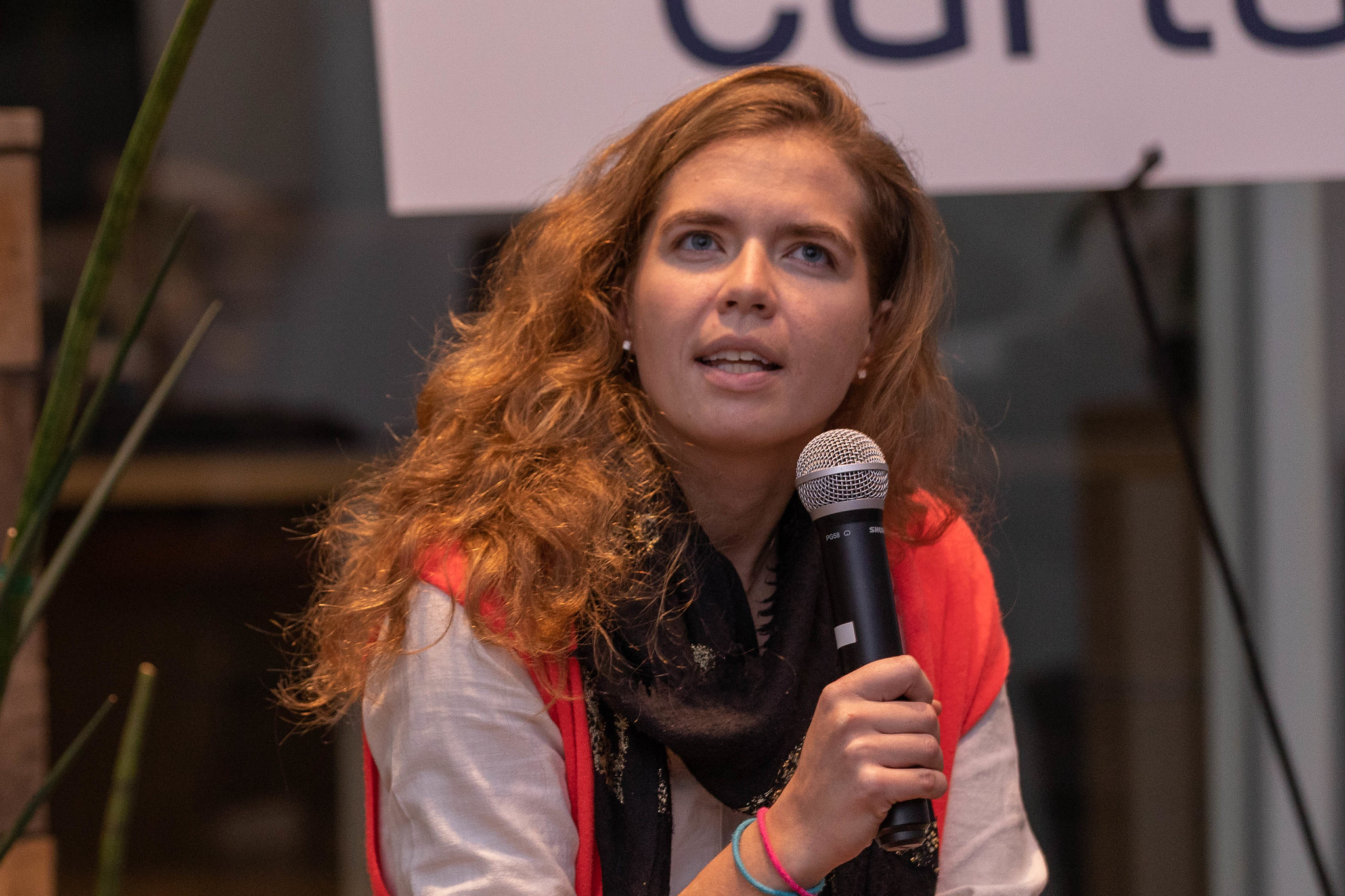
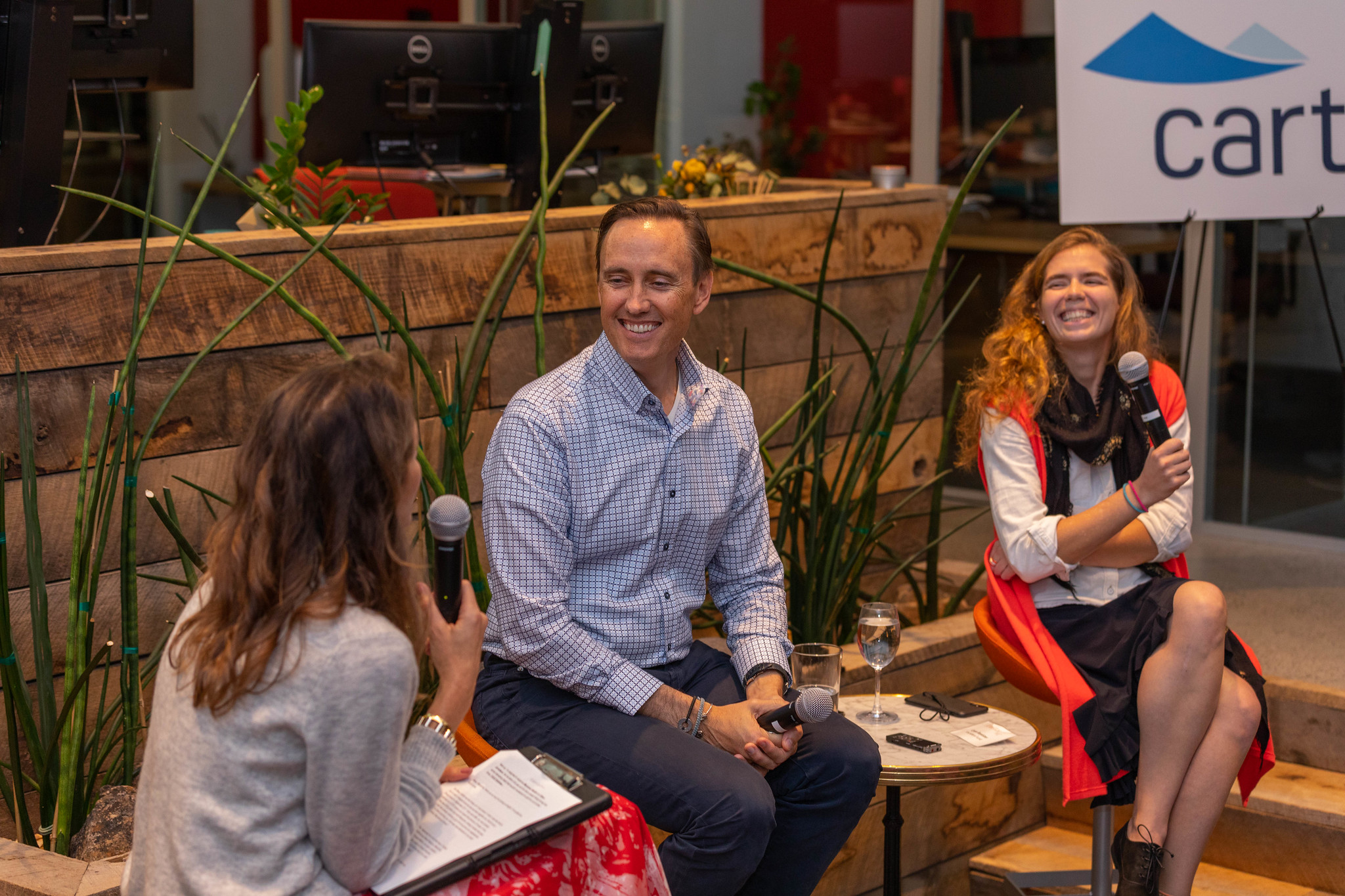
Last week, at a StrictlyVC event in San Francisco, we sat down with Maryanna Saenko and Steve Jurvetson, investors who came together to create the investment outfit Future Ventures roughly one year ago. It was their first public appearance together since announcing their $200 million fund, and we started by asking Jurvetson about his very public transition out of his old firm DFJ. (He said of the experience that “sometimes life forces a dislocation in what you’re doing, and it got me to become an entrepreneur for the first time in a long time.”)
We also talked about how the two came together and where they’re shopping, as they have fewer constraints than most firms. It was a wide-ranging chat that covered SpaceX and to a lesser extent Tesla, whose boards of directors Jurvetson sits on. We also talked about The Boring Company, in which Future Ventures has a stake, the profound dangers of the AI race between companies (and countries), and whether the powerful psychedelic ayahuasca — or something like it — might become represent an investment opportunity. Included in the mix was the “biggest money-making opportunity” that Jurvetson said he has “ever seen in my life.”
Read on to learn more. Our conversation has been edited lightly for length.
You’ve come together to build this new fund that has a 15-year investing horizon. Your interests overlap quite a bit. Maryanna, you’re a robotics expert; you were with Airbus before joining DFJ then heading later to Khosa Ventures. Who is better at what?
SJ: I think we’re better as a pair. The beauty of small team is you’re better than you would be on your own. I knew when I set off that I didn’t want to do it alone. I know that the people I’ve worked with over the last 20 years have made me better. The best investments I did at DFJ I largely attribute to the junior partner I was working with at the time, and I might not have done those best deals if I was on my own.
There’s something about the dialectic, the discussion, the debates with someone you respect whose opinion is valuable, so rather than thinking, ‘You handle this, I’ll handle that’ and partitioning it, it’s more of a [back and forth]. So we have partner meetings all the time, just not any scheduled meetings.
Certainly, Maryanna’s deep background in robotics is a vein of interest, as is all the aerospace stuff. But just a reminder, when I first interviewed her [Jurvetson originally hired her at DFJ], I was blown away that she had already invested in several of the quirky sectors from quantum computer to phasor antennas for satellites to [inaudible but relating to space].
Of course you would be investing [in this thing I’ve never heard of before].
MS: It’s going to become relevant, I promise.
Speaking of aerospace, you two have invested in SpaceX, a company that DFJ had also backed. Is this company ever going to go public?
SJ: I think the official last tweet on this matter was that the company will go public after there are regularly scheduled flights to Mars.
Which is when?
SJ: It might not be that far off. Probably within the 15-year [investing] cycle that we have now. Clearly the business is much more dramatic than just that. That’s the big storm on the horizon [that captures a lot of interest] but in the near term, there are multiple billions of dollars in revenue. They’re a profitable business. And frankly, they’re about to launch what may be the biggest money-making opportunity I’ve ever seen in my life, which is the broadband satellite data business [Starlink, which is a constellation being constructed by SpaceX to provide satellite Internet access].
So there’s plenty of good stuff happening before we get to Mars. That was just a way to put all the investment bankers off. They’re continuously hounding the company, ‘When are you going public? When are you going public?’
It is 17 years old. Have you made money off it [as an investor] thus far?
SJ: Oh, yeah, at our prior firm, they’ve [enjoyed] well over $1 billion in profit [through secondary sales].
What do you think of scientists’ concerns that these satellites going to ruin astronomy because they’re so bright? I know SpaceX has tried to paint them. I also know SpaceX isn’t alone and that Amazon is also trying to put up a constellation, for example. But you’re a mission-driven firm. Should we be worried that we’re littering the sky with these things?
MS: One of the fundamental questions when you invest in technology is what are the second-order effects that we’re aware of and what are the second-order effects that we’re not clever enough to foresee ahead of time [and] to look holistically at these problems.
So first and foremost, right, it’s not just Space X. Many companies these days are trying to put up a constellation whether in [Low Earth Orbit] or [Medium Earth Orbit] or increasingly in [Geostationary Orbit]. We need to think mindfully and work with the scientific communities and say, ‘What are the needs?’ Because the reality is that the communication is going to go up, and if it’s not from U.S. companies, it’ll be from European or from Asian companies. So I think the scientific community needs to wake up, unfortunately, to the reality that the Luddite form of saying, ‘Technology isn’t going up to space; the sky isn’t going to continue to get brighter, and we should just hope for the best,’ they should say say, ‘Here’s a set of metrics that we’d like to continue moving forward with.’
Ideally we can design to those specs and beyond that, I fundamentally believe we’ll find ways to shine brighter lights and move further [out]. Honestly, most of the interesting imaging happens well past [Low Earth Orbit] and I think when we start building a lunar base, we’ll solve a lot of these problems.
At StrictlyVC’s last event, we played host to a supersonic jet company called Boom. There are a handful of companies with which it competes, too–
MS: Oh, more than [a handful]. If you count just pure electric aircraft companies, I’ve met with 55 of, I would guess, around 200 or 300. Within that, supersonic is smaller, but it’s still in the dozens.
Whoa, that many? Does the world need supersonic jets — again?
MS: [As a] recovering engineer and scientist, the way that I look at the space is does the business model fundamentally [make more sense] than when we tried this the last time in the ’80s. If the answer is, ‘This time, we’re a bunch of clever software kids building an aerospace device and don’t worry about it, we’ll figure out how to build an aircraft,’ I’m going to tell you all the reasons that isn’t necessarily going to work.
I think on the electric aircraft side, we have a bunch of questions to answer about what is the timeline of battery density versus what is a mission profile for these flights that actually makes sense. On the long-range side, we can look at what SpaceX might do with point-to-point capsules, and then question whether or not this intermediate stage of hypersonic club flight through fixed-wing aircraft is even the right trajectory at all, because I think we might be able to bypass the whole thing.
I have not yet seen an engineering trajectory matched with a business model that I think closes in this space, at all, so I’m not sure what the bankers are doing,
SJ: Also, the FAA regulatory cycle is very long. But [in addition to these reasons], our life becomes very simple the moment we know there are 55 to maybe 200 companies in a sector, and this is true for small sat launch or eVTOL aircraft — huge swaths of the landscape. Whenever there’s more than one or two [companies in a space], we don’t even want to meet unless we’re just trying to understand what’s going on. Why would anyone invest in the 130th small sat launch company? We try to look for companies are unlike anything that’s been seen before at the time.
There’s only one new company that I know of that’s digging tunnels, Boring Company. It’s another investment of Future Ventures. Did it come with a board seat?
SJ: No. We’re in the first round of investment.
Is this a real company? I’ve read it takes $1 billion to tunnel through a mile.
SJ: Historically. It depends where you’re digging. That’s the worst case, but it can be up there, like when Boring Company won this contract in Las Vegas for a very short segment, the competition was bidding like $400 million for just a mile. It was like, really?
If you think about the pattern across aerospace with SpaceX, [the motor] issue with Tesla, and now potentially in construction, fintech, and agriculture, there are industries that haven’t [seen major innovation] in a long time. So the top four companies in America that are digging tunnels all started in the 1800s. That’s an especially long time ago. And the whole point, too, with Boring is switching diesel to electric, to do continuous digging, to reengineer the entire thing with a software and simulation mindset, to dramatically increase the speed and lower the cost. Think two orders of magnitude cheaper at least.
Steve, you’d said once before that in most of the deals you’ve funded across your career, yours was the only check, that there just wasn’t any competition. But more people are focused on the ‘future’ as an investment theme now. Is it harder to find those outliers?
SJ: It’s a little harder. We usually use that as a signal to look to a new market. Whenever there are multiple checks. When it’s a category, when there are conferences about it, when other venture firms are talking about it, that’s usually a sure-enough sign that we already should have moved on to something else.
MS: The simple reality, too, is the industry is focused on a handful of sectors — enterprise software, consumer internet, and the like — and often there are fantastic funds with one or two edge-case investments, and that’s great, because we love those funds and we want to work with them. But there are very few funds where that trajectory is the straight and narrow of their fundamental thesis.
You raised $200 million for this fund from tech CEOs and hedge funds and VCs; do you have the same constraints that other firms have?
MS: I don’t think we have particularly fine constraints on anything, but we do have the constraint of our own conviction, our word and the quality of our characters, so one of the theses when we raised the fund was that we don’t prey on human frailty, so no addictive substances, no [social media influencers] — and not just because we’re bad at being cool hunters. But that’s not our intention; that’s not what we’re trying to create in the world.
I know you’re interested in AI. What does that mean? Are you funding drug development?
SJ: What have you heard? That’s a really good guess.
There are so many companies — hundreds of them — using AI to try and uncover drug candidates, but they don’t seem to be getting very far or maybe they’re aren’t getting far enough along as fast as I’d expected.
SJ: [We have a related deal in process]. Interestingly, we’ve done ten deals that have closed; we have three more that are in the process, two in the signed term sheet phase. Four are in the area of edge intelligence . . .
MS: I’ll often come at things from how would I build this robot in the world to do some critical task and Steve often looks at it more from the chip and power and processing and how you lay the algorithm onto the silicon. And between those two, we arrive at a really interesting thesis up and down the stack.So we’ve done Mythic, an edge intelligence chip company, but we’ve also looked at this idea that we’re going to send out these AIs into the world but we basically bake them into these edge devices that are terrible [because they don’t work well].
The real issue is an AI that’s getting trained somewhere in some cloud then getting pushed to your edge device and then good luck. But increasingly [we’re thinking] about continuous improvement of those AIs as they’re running in real time and be mindful of how we shuttle the data back to the mother ship data centers to enable that continuous improvement and acceleration of that learning and we have a number of portfolio companies up and down that stack that I’m incredibly excited about.
That all sounds comfortably pedestrian compared to the very big picture, wherein a small group of companies is amassing all the richest data to train AI and are growing more powerful by the day. Steve, you’ve talked about this before, about your concerns that one day there could be very few companies, which would exacerbate income inequality. You said this could be a bigger threat to society than climate change. Do you think these companies — Facebook, Amazon, Google — should be broken up?
SJ: No, I don’t think they should be broken up, but I do think it’s an inexorable trend in the the technology business that there are power laws within firms and between firms . . . If you want to maintain capitalism and democracy, it’s not self-rectifying and it’s only going to get worse. Compared to when we last spoke about this [in 2015], it’s gotten a lot worse. The data concentration, the usage of it.
Think, for example, of SenseTime in China . . . it recognizes faces better than any other algorithm on earth right now . . . So you have the U.S. power laws and power laws between countries as well. That’s just one new pejoration as AI and quantum computing escalates.
So everyone in technology and who invests in it should be thoughtful about what this means and think about entrepreneurial paths to the future we want to live in . . . how we get from here to there is not obvious. The markets [will handle some but not all of these things]. So it’s very worrisome and when I said it’s worst than climate change, I meant it will have more impact on whether humanity makes it through the next 20 years. Climate change [may do us in] 200 years from now but there’s some serious pressing issues over the next 20 years.
And breaking up these companies isn’t part of the solution.
It’s almost like this notion of controlling an AI that’s greater than human intelligence. How would you ever imagine you would control such a thing? How would you even imagine understanding its inner workings? So the notion that through regulation you could break up a natural monopoly when everything that fixes the industry creates a natural monopoly, it’d be like whack-a-mole.
What’s the answer? Looking around the corner, what are you funding that’s going to blow people’s minds? Ayahuasca? Is there a market for that? I know it’s everywhere.
SJ: [Looking shocked.] There are two companies, one we wired funds earlier today and the other is a signed term sheet and they relate to your questions.
MS: We should check if the office is bugged [laughs].
SJ: There’s a lot going on. Curing mental illness. Alternative modalities.
MS: The largest rising global epidemic is depression. Adolescent suicide rates are up 300 percent in the U.S. in the last 10 years. And we don’t have the resources, the skills, the technologies and the licensed therapists available. We know there are medicinal compounds, often from plant vines, that have shown incredible value in addressing treatment-resistant depressions and addiction and abusive substances. And often participation in those things is is a privilege of particular groups in society and so how do we democratize access to mental health.
Wait, I can’t believe I guessed it. You’re investing in an ayahuasca-related startup!?
SJ: It’s close, not exactly. [Laughs.]


Facebook built a now discontinued internal app, report says between 2015 and 2016, that let employees identify colleagues and friends via facial recognition (Queenie Wong/CNET)

Facebook built a now discontinued internal app, report says between 2015 and 2016, that let employees identify colleagues and friends via facial recognition — The discontinued app could identify employees and their friends who had enabled facial recognition, Facebook said.
UK accountancy regulator FRC says auditors can't blame AI for audit failures, after it published what it called the world's first guidance on auditor AI usage (Ellesheva Kissin/Financial Times)
Ellesheva Kissin / Financial Times : UK accountancy regulator FRC says auditors can't blame AI for audit failures, after it published...

-
The first project we remember working on together was drawing scenes from the picture books that our mom brought with her when she immigrate...
-
http://bit.ly/2XqNIDz
