Sunday, October 27, 2019

Meet Utah’s next unicorn

Weave, a developer of patient communications software focused on the dental and optometry market, was the first Utah-headquartered company to graduate from Y Combinator in 2014. Now, it’s poised to enter a small but growing class startups in the ‘Silicon Slopes’ to garner ‘unicorn’ status.

The business announced a $70 million Series D last week at a valuation of $970 million. Tiger Global Management led the round, with participation from existing backers Catalyst Investors, Bessemer Venture Partners, Crosslink Capital, Pelion Venture Partners and LeadEdge Capital.

The company was founded in 2011 and fully bootstrapped until enrolling in the Silicon Valley accelerator program five years ago. Since then, it’s raised a total of $156 million in private funding, tripling its valuation with the latest infusion of capital.

“Our aim with this funding round is to exceed our customers’ expectations at every touchpoint, investing heavily in the products we create, the markets we serve and the overall customer experience we provide,” Weave co-founder and chief executive officer Brandon Rodman said in a statement. “We will continue to invest in our customers, our products and our people to build a solid, sustainable, and scalable business.”

Weave charges its customers, small and medium-sized businesses, upwards of $500 per month for access to its Voice Over IP-based unified communications service. Rodman previously launched a scheduling service for dentists and realized the opportunity to integrate texting, phone service, fax and reviews to facilitate the patient-provider relationship.

While his second effort, Weave, has long been targeting the dentistry and optometry market, Rodman told Venture Beat last year the opportunities for the company are endless: “Ultimately, if a business needs to communicate with their customer, we see that as a possible future customer of Weave.”

Based in Lehi, Weave added 250 employees this year with total headcount now reaching 550. The company claims to have doubled its revenue in 2018, too. While we don’t have any real insight into its financials, given the interest it’s garnered amongst Bay Area investors, we’re guessings it’s posting some pretty attractive numbers.

“Weave has some of the best retention numbers we’ve ever seen for an SMB SaaS company,” Catalyst partner Tyler Newton said in a statement. “We’re continually impressed by their accelerated growth and results.”

The rise of Indian internet content creators abroad

Children of Indian immigrants are going against the tide and becoming internet content creators, even if it means giving up stable and well-paying jobs. https://ift.tt/2WipKKC https://ift.tt/eA8V8J

Wedding service providers tap into social media platforms to grow their business

With millennials taking on to social media to fish for wedding ideas, several wedding service providers have also turned social-media savvy to market their services https://ift.tt/2MR0YhJ https://ift.tt/eA8V8J

How NYC, where 1.5M packages are delivered daily, is dealing with worsening congestion, road safety, and pollution, exacerbated by the rise of online commerce (New York Times)

New York Times:
How NYC, where 1.5M packages are delivered daily, is dealing with worsening congestion, road safety, and pollution, exacerbated by the rise of online commerce  —  The push for convenience is having a stark impact on gridlock, roadway safety and pollution in New York City and urban areas around the world.


Week in Review: You break it, you buy it

Hey everyone. Thank you for welcoming me into you inbox yet again.

Last week, I talked about Zuckerberg’s quest to tell us that Facebook has governing principles when he’s really just building the stairs one step at a time.

If you’re reading this on the TechCrunch site, you can get this in your inbox here, and follow my tweets here.


The big story

Plenty of ink has been spilled on WeWork and SoftBank and WeWork’s Adam Neumann, and yet it still feels like not nearly enough people are talking about it.

The startup’s post-S1 saga has just been just so messy that it’s understandable one could only grab a sneaking glance of headlines before having to look way.

One reason everyone is talking about it because Neumann’s maneuverings have created an anthology of sketchy founder dealings that’s nearly cartoon villain worthy. He’s got the eccentricities of Jack Dorsey, the frattiness of Evan Spiegel and the “change the world” delusions of Elizabeth Holmes. Critiques of WeWork weren’t all that sparse preceding its S-1, and yet many of venture capital’s talking heads had some kind of founder-friendly admiration for someone that seemed to had bent the world’s heftiest venture capital fund to his will.

It’s far beyond the pleasantries now, what happens to WeWork could deeply shape how late-stage venture capital operates. SoftBank was raising the second vision fund just as WeWork’s shit hit the fan and now it’s the fund’s deepest embarrassment and a financial commitment they’ve poured $18.5 billion into. If WeWork craters, that second vision could fall far short of its aspirations. Plenty of Silicon Valley’s investors would be happy to see control shift to more even-handed institutional forces who did not have capital commands that could set terms with a glance. Nevertheless, there are an awful lot of unicorns that have depended on SoftBank’s growth capital up to this point who would be in danger of being left high and dry.

At this point, SoftBank’s sunk costs have led the desperate fund to go all-in on a sans-Neumann WeWork. They will have to shape the business on their own. They enabled Neumann and now they are left with the task of reverse engineering a disaster into a great turnaround story.

Send me feedback
on Twitter @lucasmtny or email
lucas@techcrunch.com

On to the rest of the week’s news.

Facebook CEO Mark Zuckerberg Testifies Before The House Financial Services Committee

(Photo by Chip Somodevilla/Getty Images)

Trends of the week

Here are a few big news items from big companies, with green links to all the sweet, sweet added context:

  • Extra! Extra!
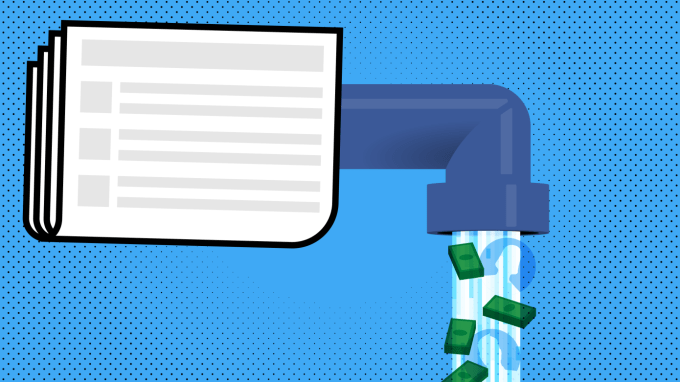
    Facebook is getting into the news game once again, paying publishers and building an Apple News-like product called Facebook News that is determined to give America access to trusted news. Facebook is doing great fresh out of the gate by giving Breitbart the distinction as a trusted news source. Kudos, Mark. What could go wrong?
  • Netflix keeps racking up the bills
    Hit TV shows don’t feel like they should be as expensive as building a quantum computer and yet Netflix’s hefty original content spending is still chugging along. The streaming company announced this week they’re raising $2 billion in debt to fund its next efforts, which may or may not include another 14 seasons of Stranger Things.
  • Antitrust attorneys general
    This week was another rough one for Facebook, a New York antitrust investigation picked up the support of a whole lot of other states as the probe seeks out anticompetitive practices. There are now 47 attorneys general taking part.

facebook newspaper dollars

GAFA Gaffes

How did the top tech companies screw up this week? This clearly needs its own section, in order of badness:

  1. Facebook is still publisher enemy #1:
    [Why the Facebook News Tab shouldn’t be trusted]
  2. Google’s emoji puritanism:
    [Google’s Play Store is giving an age rating finger to Fleksy, a Gboard rival]

Disrupt Berlin

DISRUPT SF 530X350 V2 berlin

It’s hard to believe it’s already that time of the year again, but we just announced the agenda for Disrupt Berlin and we’ve got some all-stars making their way to the stage. I’ll be there this year, get some tickets and come say hey!

Sign up for more newsletters in your inbox (including this one) here.

New York-based Blueground, a platform that leases apartments and upgrades them with various tech gadgets for long-term corporate rentals, raises $50M Series B (Mary Ann Azevedo/Crunchbase News)

Mary Ann Azevedo / Crunchbase News:
New York-based Blueground, a platform that leases apartments and upgrades them with various tech gadgets for long-term corporate rentals, raises $50M Series B  —  New York-based Blueground, a tech-equipped apartment rental company, announced today it has raised $50 million in a Series B round co-led by WestCap and Prime Ventures.


Mice with disrupted microbiomes don’t forget their fear as they should

A mouse.

Enlarge / A mouse. (credit: Berit Watkin / Flickr)

The gut-brain axis is officially a thing. Evidence is accumulating that the gut microbiome, and perturbations in it, can affect behavior—at least in mice. New work is starting to unravel how.

Extinguishing fears

Normally, animals can adapt to changes in their environments with corresponding changes in their behaviors. One well-studied example is what's called "fear extinction learning." Animals can be taught to associate harmless things like a sound or lights with a negative outcome. But, if that association changes over time, they can also forget it.

To be more specific, animals can be trained to associate a tone with a painful shock; when they hear the tone, they freeze in fear. But they can be retrained by exposure to the tone without the shock. Eventually, they learn that the tone is OK, and when they hear it, they just blithely go about their business.

Read 9 remaining paragraphs | Comments

https://arstechnica.com

Watchmen and the golden era of the single-season series

Screenshot from premiere of Watchmen TV series.

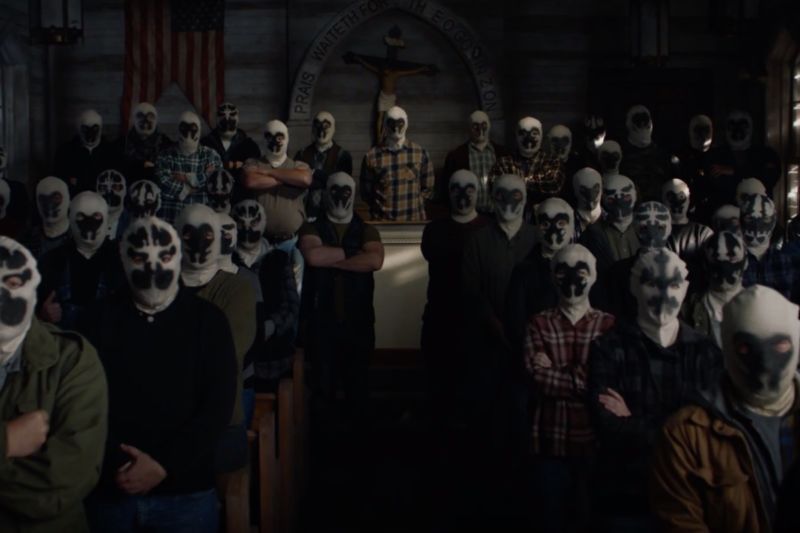
Enlarge / A small army of Rorschachs. (credit: YouTube/HBO)

HBO's choice to adapt two critically acclaimed book series, Game of Thrones and Watchmen, may seem like a case of two peas in a pod. They're game-changing works in their respective fields with cult followings and "unadaptable" reputations.

But GoT and Watchmen differ in a key respect: where they sit on the "epic television" spectrum. Arguably, both examples prove, in very different ways, that TV series needn't last multiple seasons to be considered "great."

When Game of Thrones ended in May of this year, a small cottage industry of worriers fretted that this was somehow the end of HBO. But the channel is already back with a new high-profile series, inspired by Alan Moore's comic classic Watchmen. Showrunner Damon Lindelof insists that, like its source comic, he plans to stick to a "limited series" run, instead of any intention to run the series for multiple seasons.

Read 10 remaining paragraphs | Comments

https://arstechnica.com

The Vast of Night is a masterclass in small budget sci-fi

A festival circuit trailer for Amazon's The Vast of Night.

AUSTIN, Texas—Everyone kinda, sorta knows the story of The Vast of Night before they even hear of this movie. Filmmaker Andrew Patterson readily admits he partially based his debut feature on a real-life event—the 1955 Kecksburg incident—and even the initial idea that led him to researching Kecksburg struck Patterson as familiar. “I have a document in my phone of three or four dozen single line movie ideas,” he told Ars. “This one said, ‘1950s, black and white, New Mexico, UFO film.’”

But The Vast of Night ultimately doesn’t hinge on how its plot plays out. This small budget, tightly scoped sci-fi film has wowed festival audiences enough to attract Amazon money largely on its spectacle—individual images you’d gladly frame for the office wall, dialogue that draws you in no matter the subject, sonic flourishes that stick with you long after the credits roll. Talking to the filmmaker after a recent Fantastic Fest screening, it becomes hard to shake the feeling he’ll be managing a much larger studio budget of his choosing in the very near future.

“We knew we were working in a genre that was shop-worn, nothing new,” Patterson says. “We wanted to let people know, ‘OK this is an abduction in New Mexico—we know this story, you know this story. How can we find a way in and do something special, to make something new?' I wanted to make it like the films I enjoy, which are usually about people learning about each other, their dynamics and relationships. So, OK, I want to start this like it’s a Richard Linklater movie… then we get side-swiped into something extraordinary.”

Read 14 remaining paragraphs | Comments

https://arstechnica.com

London-based LabGenius, which uses AI and "robotic automation" for protein drug discovery, raises $10M Series A led by Lux Capital and Obvious Ventures (Steve O'Hear/TechCrunch)

Steve O'Hear / TechCrunch:
London-based LabGenius, which uses AI and “robotic automation” for protein drug discovery, raises $10M Series A led by Lux Capital and Obvious Ventures  —  LabGenius, a London-based startup applying AI and “robotic automation” to protein drug discovery, has raised $10 million in Series A funding.


A health care algorithm offered less care to black patients

A close-up of an Ebola vaccine being injected into the arm of a doctor

Enlarge (credit: Getty | JUNIOR KANNAH)

Care for some of the sickest Americans is decided in part by algorithm. New research shows that software guiding care for tens of millions of people systematically privileges white patients over black patients. Analysis of records from a major US hospital revealed that the algorithm used effectively let whites cut in line for special programs for patients with complex, chronic conditions such as diabetes or kidney problems.

The hospital, which the researchers didn’t identify but described as a “large academic hospital,” was one of many US health providers that employ algorithms to identify primary care patients with the most complex health needs. Such software is often tapped to recommend people for programs that offer extra support—including dedicated appointments and nursing teams—to people with a tangle of chronic conditions.

Researchers who dug through nearly 50,000 records discovered that the algorithm effectively low-balled the health needs of the hospital’s black patients. Using its output to help select patients for extra care favored white patients over black patients with the same health burden.

Read 14 remaining paragraphs | Comments

https://arstechnica.com

Zamna raises $5M to automate airport security checks between agencies using blockchain

Zamna — which uses a blockchain to securely share and verify data between airlines and travel authorities to check passenger identities — has raised a $5m seed funding round led by VC firms LocalGlobe and Oxford Capital, alongside Seedcamp, the London Co-Investment Fund (LCIF), Telefonica, and a number of angel investors.

Participation has also come from existing investor IAG (International Airlines Group), which is now its first commercial client. The company is also changed its name from VChain Technology to Zamna.

When VChain-now-Zamna first appeared, I must admit I was confused. Using blockchain to verify passenger data seemed like a hammer to crack a nut. But it turns out to have some surprisingly useful applications.

The idea is to use it to verify and connect the passenger data sets which are currently silo-ed between airlines, governments and security agencies. By doing this, says Zamna, you can reduce the need for manual or other checks by up to 90 percent. If that’s the case, then it’s quite a leap in efficiency.

In theory, as more passenger identities are verified digitally over time and shared securely between parties, using a blockchain in the middle to maintain data security and passenger privacy, the airport security process could become virtually seamless and allow passengers to sail through airports without needing physical documentation or repeated ID checks. Sounds good to me.

Zamna says its proprietary Advance Passenger Information (API) validation platform for biographic and biometric data, is already being deployed by some airlines and immigration authorities. It recently started working with Emirates Airline and the UAE’s General Directorate of Residency and Foreigners (GDRFA) to deliver check-in and transit checks.

Here’s how it works: Zamna’s platform is built on algorithms that check the accuracy of Advanced Passenger Information or biometric data, without having to share any of that data with third parties, because it attaches an anonymous token to the already verified data. Airlines, airports and governments can then access that secure, immutable and distributed network of validated tokens without having actually needing to ‘see’ the data an agency, or competing airline, holds. Zamna’s technology can then be used by any of these parties to validate passengers’ biographic and biometric data, using cryptography to check you are who you say you are.

So, what was wrong with the previous security measures in airports for airlines and border control that Zamna might be fixing?

Speaking to TechCrunch, Irra Ariella Khi, co-founder and CEO of Zamna, says: “There is a preconception that when you arrive at the airport somehow – as if by magic – the airline knows who you are, the security agencies know who you are, and the governments of departure and destination both know that you are flying between their countries and have established that it is both legitimate and secure for you to do so. You may even assume that the respective security authorities have exchanged some intelligence about you as a passenger, to establish that both you and your fellow passengers are safe to board the same plane.”

“However,” she says, “the reality is far from this. There is no easy and secure way for airlines and government agencies to share or cross-reference your data – which remains siloed (for valid data protection reasons). They must, therefore, repeat manual one-off data checks each time you travel. Even if you have provided your identity data and checked in advance, and if you travel from the same airport on the same airline many times over, you will find that you are still subject to the same one-off passenger processing (which you have probably already experienced many times before). Importantly, there is an ‘identity verification event’, whereby the airline must check both the document of identity which you carry, as well as establish that it belongs to your physical identity.”

There are three main trends in this space. Governments are demanding more accurate passenger data from airlines (for both departure and destination) – and increasing the regulatory fines imposed for incorrect data provided to them by the airlines. Secondly, Airlines also have to manage the repatriation of passengers and luggage if they are refused entry by a government due to incorrect data, which is costly. And thirdly, ETA (electronic transit authorizations, such as eVisas) are on the rise, and governments and airlines will need to satisfy themselves that a passenger’s data matches exactly that of their relevant ETA in order to establish that they have correct status to travel. This is the case with ESTAs for all US-bound travelers. Many other countries have similar requirements. Critically for UK travelers – this will also be the case for all passengers traveling into Europe under the incoming ETIAS regulations.

The upshot is that airlines are imposing increased document and identity checks at the airports – regardless of whether the passenger has been a regular flier, and irrespective of whether they have checked-in in advance.

Zamna’s data verification platform pulls together multiple stakeholders (airlines, governments, security agencies) with a way to validate and revalidate passenger identity and data (both biographic and biometric), and to securely establish data ownership – before passengers arrive at the airport.

It doesn’t require any new infrastructure at the airport, and none of these entities have to share data, because the ‘sharing without sharing’ is performed by Zamna’s blockchain platform in the middle of all the data sources.

Remus Brett, Partner at LocalGlobe, says: “With passenger numbers expected to double in the next 20 years, new technology-driven solutions are the only way airlines, airports and governments will be able to cope. We’re delighted to be working with the Zamna team and believe they can play a key role in addressing these challenges.” Dupsy Abiola, Global Head of Innovation at International Airlines Group, adds: “Zamna is working with IAG on a digital transformation project involving British Airways and the other IAG carriers. It’s very exciting.”

Zamna is a strategic partner to the International Air Transport Association (IATA) and an active member of IATA’s “One ID” working group.

Australian digital lending platform Athena Home Loans raises $70M Series C at a $230M valuation to expand into home loans after an initial focus on refinancing (Mary Ann Azevedo/Crunchbase News)

Mary Ann Azevedo / Crunchbase News:
Australian digital lending platform Athena Home Loans raises $70M Series C at a $230M valuation to expand into home loans after an initial focus on refinancing  —  Athena Home Loans, a fast-growing Australian fintech startup, has raised a $70 million Series C in its third round of funding in less than 18 months.



Russian cryptocurrency payment network A7 expands to Africa, as Moscow builds an alternative payments system amid western sanctions after its Ukraine invasion (Financial Times)

Financial Times : Russian cryptocurrency payment network A7 expands to Africa, as Moscow builds an alternative payments system amid weste...