Sunday, September 29, 2019

Facebook’s plan for our post-web future

Let us connect some dots. Five years ago, Facebook acquired VR pioneers Oculus for $2 billion. This week, it snapped up neural-interface pioneers CTRL-Labs for somewhere north of $500 million, and announced that its own massively multiplayer VR shared universe Horizon will launch early next year.

Oculus became (somewhat creepily named) Facebook Reality Labs, headed by Andrew Bosworth, one of the company’s first 15 engineers, who also headed the company’s transition from desktop to mobile advertising. It doesn’t take much imagination to see that he’s now in charge a much more interesting, and longer-term, transition: from the World Wide Web to whatever lies beyond.

Their big multibillion-dollar bet, the vision floating in Mark Zuckerberg’s crystal ball, is clearly that this new frontier is “cyberspace,” to use William Gibson’s term, or “the Oasis,” to borrow from READY PLAYER ONE, a copy of which was once issued to every new Oculus employee. Virtual reality, in other words, and/or maybe “mixed reality,” which combines our real world with virtual artifacts.

I can see your eyes rolling already. I admit mine are twitching skywards as well. AR/VR, like nuclear fusion and Brazil, have been the future for so long that it’s become a little hard to take that future seriously. Neuromancer was published in 1984. Jaron Lanier demo’d the first real VR headset and motion capture wearable, the EyePhone and DataGlove, more than thirty years ago. No wonder the notion of a shared global VR space increasingly feels like a retro-future.

But to Zuck’s credit, the path to change here is obvious and therefore plausible: use gaming as the bridge. Create the world’s first and best massively multiplayer online VR game. (The theory being it will be more immersive, and therefore more compelling, than Magic Leap’s mixed reality.) Use Facebook’s power, scale, and wealth to bring gamers in until there’s a thriving community of many million monthly users.

Then, transition to the larger vision, of VR slowly supplanting the Web itself; replace laptops with headsets, phones with overlays on smart glasses, and keyboards with neural interfaces. Not all at once, but bit by bit, as the Horizon gameworld gradually, over a period of years, becomes a platform for socializing and messaging and work as well as play. Then the Internet’s denizens won’t just visit Facebook’s web site, or launch its app; instead they will, literally if virtually, live in Facebook’s walled garden.

Is that vision more than a little creepy? You betcha. Is it one that’s likely to come to fruition? Well, no, I wouldn’t say likely. But I’ll concede it has a chance, one sufficiently nonzero, and sufficiently potentially spectacularly lucrative, that Facebook’s ongoing multibillion-dollar bet makes sense. Lucrative in terms of both money and implicit power. Like I said: more than a little creepy.

Of course this isn’t Facebook’s only vision of the future. It’s just one of their bets. Another is to essentially pivot from social-media advertising to messaging and transactions. You have to grudgingly admire their willingness to explore abandoning their current fantastically successful business model in favor of the untried and untested. Anything to disrupt the innovator’s dilemma.

Will this bet pay off? Will Facebook Horizon, plus VR and neural interfaces, be the gateway to “a consensual hallucination experienced daily by billions,” to quote William Gibson? While the odds are against it, it still seems to have a better chance than anything else on our collective horizon.

Week in Review: Corporate wickedness and mango Juul pods

Hey everyone. This is Week-in-Review, where I give a heavy amount of analysis and/or rambling thoughts on one story while scouring the rest of the hundreds of stories that emerged on TechCrunch this week to surface my favorites for your reading pleasure.

Last week, I talked about how streaming networks were undoing their advantages and making way for a renewed era of piracy.


Screen Shot 2019 09 27 at 3.15.38 PM

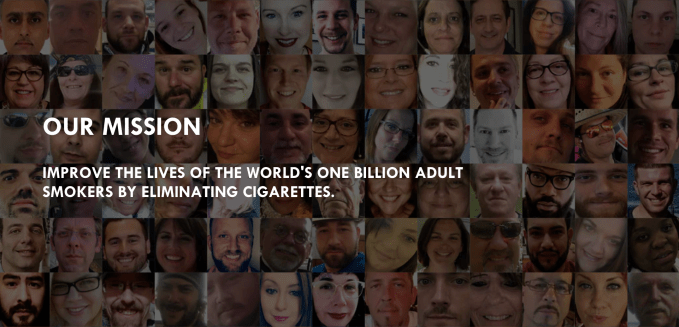
Some mission statements leave an awful lot of room for collateral damage

The big story

In the startup world, moral relativism seems to be a guiding force. But in order for this system to work, you need some sort of north star for wrongdoing. That can be hard to find though, so often missteps from Uber or Facebook of some other startup are said to be drowning in nuance and plagued by numerous stakeholders.

But, thankfully, there’s Juul, a company that’s website is devoted to its values so that its real world impact doesn’t have to be.

This week, the startup’s CEO stepped down and was replaced by a Big Tobacco exec, a truly fitting development for a company that has long tried to maintain a moral high ground based on the alternative facts of the reality at hand. Things aren’t looking too good for Juul these days, but it’s not because the startup had a come to Jesus moment on its own, it’s because the White House and FDA are pissed and threatening to pull a nuclear option and ban flavored cartridges, which account for 80% of Juul’s sales.

Why? Because Juul’s fruity flavors were heading straight into teenagers’ hands, because they were too good not to traffic, addictive, some might say. Over the course of last year, high school student use of tobacco surged 38% thanks to a 78% surge in e-cigarette use, according to a report by the CDC. That, aligned with some unfortunately-timed mystery vaping disease possibly caused by counterfeit THC cartridges, has plunged the company into a regulatory crisis and Altria into into an identity crisis.

In December of last year, Altria bought 35% of Juul for $12.8 billion, in a deal that valued the startup at $38 billion. Following the deal, employees got massive bonuses, divvying up $2 billion in Altria cash, in large part to lessen the sour taste of a deal with Big Tobacco.

In the deal’s aftermath, then-CEO Kevin Burns tried to soften the optics, “We understand the controversy and skepticism that comes with an affiliation and partnership with the largest tobacco company in the US. We were skeptical as well,” he wrote in a statement. “But over the course of the last several months we were convinced by actions, not words, that in fact this partnership could help accelerate our success switching adult smokers.”

The deal was a hail mary for Altria, and one that increasingly appears to be heading to a receiver-less end zone. In the past five months, Altria has seen its share price slide 30 percent to a five-year low, largely as its redemption bet on Juul has faded as the regulatory environment has shifted in an extremely hostile direction. This all leads to this week, when the Burns stepped down as CEO and was replaced by Altria exec K.C. Crosthwaite.

In the case of Juul, the mission may have differed from the reality at hand, but it always made for a great story, a good one for execs and investors and recruiters and marketers and engineers and interns to tell when their ethics were called into question, but eventually the charade lifts and you get to see that the soul of your startup isn’t so metallic, sleek and full of Silicon Valley ideals, it’s just a different kind of tar black.

Send me feedback
on Twitter @lucasmtny or email
lucas@techcrunch.com

On to the rest of the week’s news.

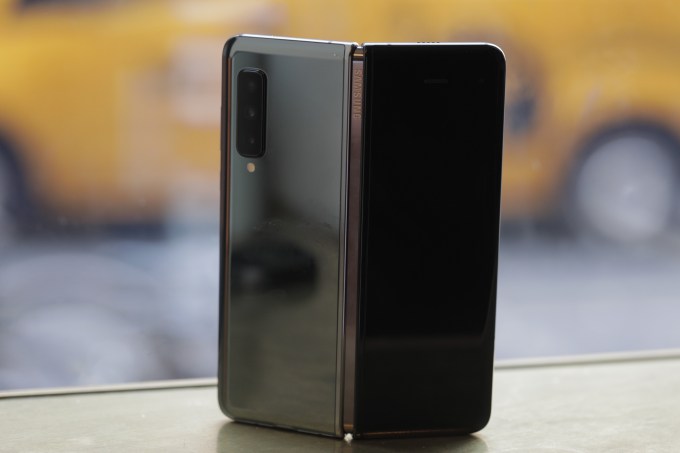
Samsung Galaxy Fold

Trends of the week

Here are a few big news items from big companies, with green links to all the sweet, sweet added context:

  • TechCrunch’s Galaxy Fold gets damaged after one day
    TechCrunch escaped a busted Galaxy Fold unit the first time around, though other reviewers’ issues led to a lengthy delay and a product rethinking, but in reviewing our “new-and-improved” Galaxy Fold unit, we suffered a damaged screen after just over one full day with the device. We were pretty generous in noting the things that it could have been the cause, but at the end of the day you shouldn’t have to handle your $2,000 smartphone with kids’ gloves. Read more here.
  • Amazon launches more Alexa devices
    Amazon’s annual event — where they toss a bunch of Alexa-enabled junk into the wild — has come! Alexa glasses and Alexa rings, Alexa Echos and glow-y orb things. See them all here.
  • Facebook is officially preparing to ditch like counts (in Australia)
    Facebook is ready to make a big change to how users see other people’s content, hiding how many likes posts have received in a test taking place in Australia. Read more here.
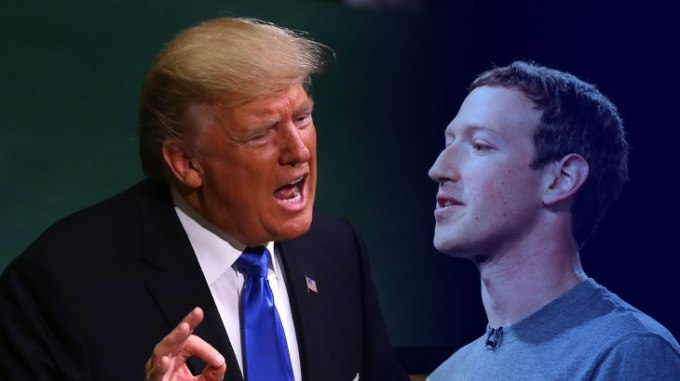
trump zuckerberg 1

(Photo by David Ramos/Getty Images)

GAFA Gaffes

How did the top tech companies screw up this week? This clearly needs its own section, in order of badness:

  1. Facebook gives the politicians of the world a free pass:
    [Facebook promises not to stop politicians’ lies and hate]
  2. Apple gives keyboard apps a bit too much access:
    [Apple says a bug may grant ‘full access’ to third-party keyboards by mistake]

GettyImages 1028573760

(Photo by Kimberly White/Getty Images for TechCrunch)

Disrupt SF

Our biggest event of the year is right around the corner and we’re bringing in some of the most important figures in the tech industry. Here’s who’s coming to Disrupt SF 2019.

In addition to taking in the great line-up of speakers, you can roam around Startup Alley to catch the more than 1,000 companies showcasing their products and technologies. And of course the Startup Battlefield competition that launched the likes of Dropbox, Cloudflare and Mint will once again be one of the biggest highlights of Disrupt SF.

Sign up for more newsletters in your inbox (including this one) here.

A profile of Denmark-based independent consumer review platform Trustpilot, which has raised €162M and has 65M reviews of businesses worldwide (Mimi Billing/Sifted)

Mimi Billing / Sifted:
A profile of Denmark-based independent consumer review platform Trustpilot, which has raised €162M and has 65M reviews of businesses worldwide  —  With 65m reviews, Trustpilot is learning to spot the fakes and fight back with the help of algorithms.  —  Would you ever book an Airbnb stay without checking the scores of the host?


Peloton, Endeavor duds give IPO bankers another black eye

This trend, notable in the declines of Uber and Lyft, has accelerated in recent weeks, with SmileDirectClub posting the worst opening trade for a big IPO in more than a decade and WeWork forced to delay its listing because of tepid demand. https://ift.tt/2nFBWI6 https://ift.tt/eA8V8J

iPhone 11 review: The sweet-spot iPhone

The iPhone 11

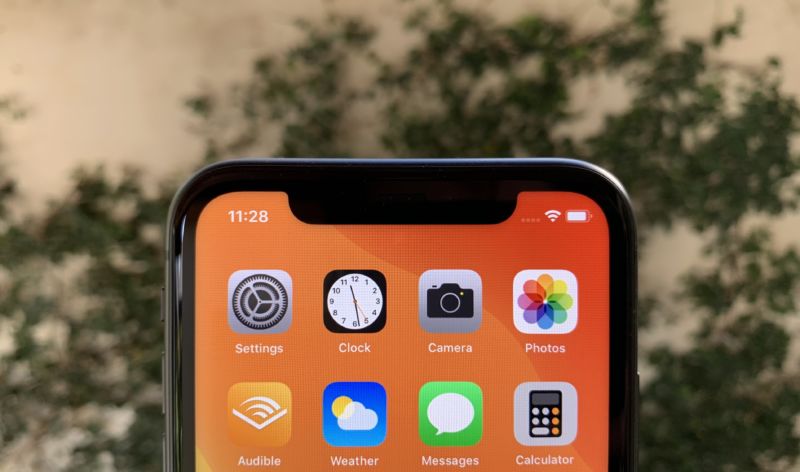
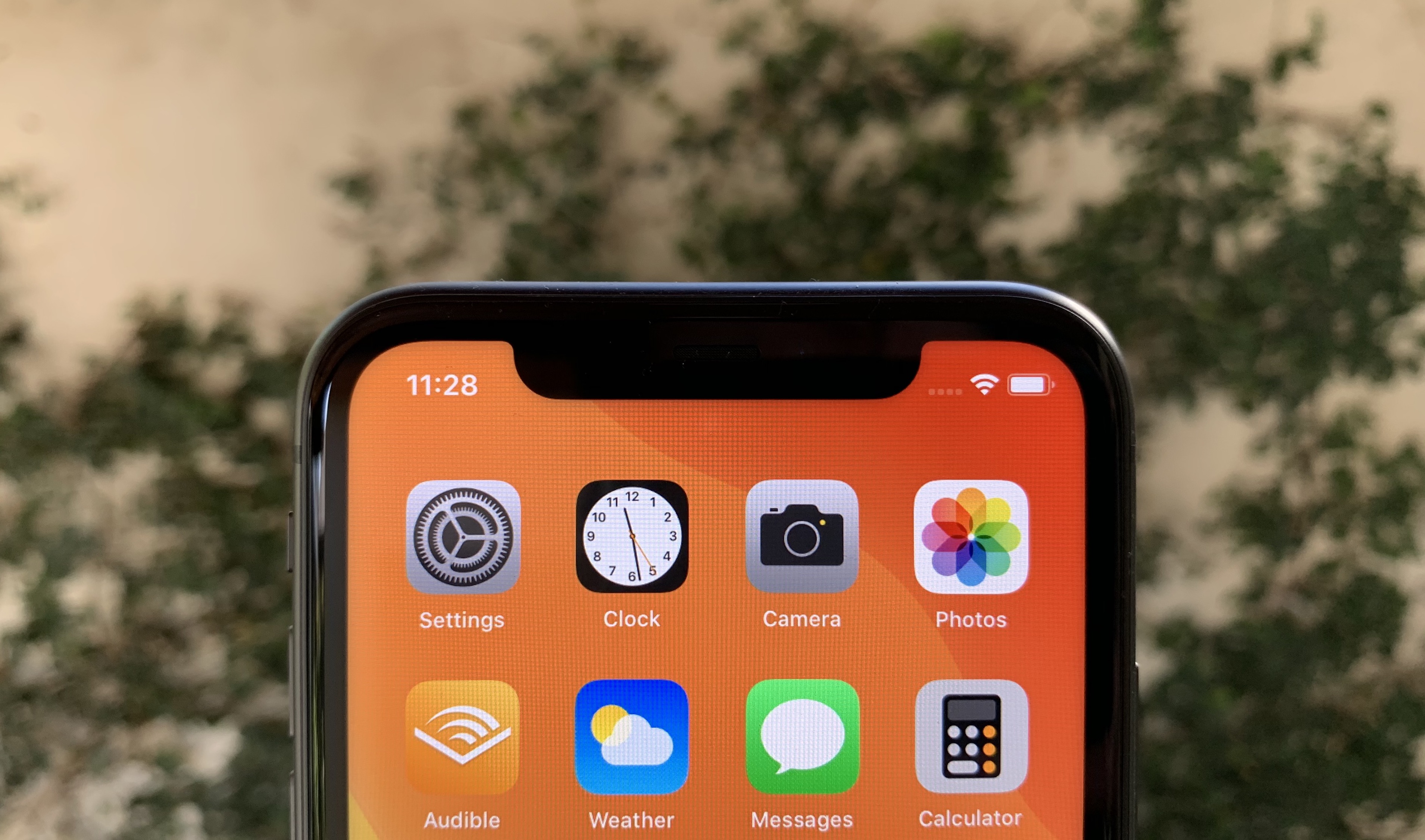
Enlarge / It still has a notch! (credit: Samuel Axon)

Like the iPhone XR before it, the iPhone 11 is the default iPhone. It's priced where flagship phones used to be priced, and it offers almost all the same features as the expensive iPhone 11 Pro models that also launched this year.

Apple's iPhone lineup today is stacked with great phones at varying price points, though. So where does the iPhone 11 fit in?

That's what we'll be looking to answer in this review. And we're dubbing this a mini-review because we recently published an in-depth article on the iPhone 11 Pro and 11 Pro Max, and last year we published a full review of the iPhone XR. This year's changes from the iPhone XR to the iPhone 11 are quite modest, so today we'll focus on how this phone is different from this year's flagships and its direct predecessor.

Read 43 remaining paragraphs | Comments

https://arstechnica.com

NASA wants to send nuclear rockets to the Moon and Mars

Nuclear rockets could be used to cut the travel time to Mars in half.

Enlarge / Nuclear rockets could be used to cut the travel time to Mars in half. (credit: NASA)

Just north of the Tennessee River near Huntsville, Alabama, there’s a six-story rocket test stand in a small clearing of loblolly pines. It’s here, in a secluded corner of NASA’s Marshall Space Flight Center, that the US Army and NASA performed critical tests during the development of the Redstone rocket. In 1958, this rocket became the first to detonate a nuclear weapon; three years later, it carried the first American into space.

The tangled history of nukes and space is again resurfacing, just up the road from the Redstone test stand. This time NASA engineers want to create something deceptively simple: a rocket engine powered by nuclear fission.

Read 11 remaining paragraphs | Comments

https://arstechnica.com

How NSA and US Cyber Command undertook the largest and longest offensive cyber operation in US military history to disrupt ISIS's media operations in 2016 (Dina Temple-Raston/NPR)

Dina Temple-Raston / NPR:
How NSA and US Cyber Command undertook the largest and longest offensive cyber operation in US military history to disrupt ISIS's media operations in 2016  —  Toggle more options  —  The crowded room was awaiting one word: “Fire.”  —  Everyone was in uniform; there were scheduled briefings …


Amazon Great Indian Festival Sale: Best 5 SSD deals

Amazon’s Great India Festival sale is now live and amongst the thousands of items that are on sale, there are some hefty discounts on SSDs as well. If you’ve been on the fence about upgrading your laptop or desktop computer’s storage from a regular hard drive to an SSD, this may just be the perfect time to do so. While you may have specific requirements in terms of storage space or form factor, we’ve picked out some of our favourite deals for you.

Western Digital Blue m.2 SSD (500GB)

Western Digital is a staple name when it comes to storage devices. After their acquisition of Sandisk, the company has been ramping up its portfolio in the SSD segment. The WD Blue SSD is a budget-friendly SSD that is seeing a decent price drop during Amazon’s Great Indian Festival sale. With a claimed read/write speed of 3800mbps, you can definitely expect to see a marked improvement in your boot-times, if you’re coming from a hard disk. You can buy the WD Blue m.2 SSD here.

Samsung 860 Evo m.2 SSD (250GB)

Samsung is known to make some of the best SSDs in the market, with many enthusiasts choosing their storage solutions over anybody else’s. The 860 Evo is a SATA SSD in the m.2 form factor and also comes in a 2.5-inch form factor. With a claimed read/write speed of up to 550/520 MB/s, the Samsung 860 EVO SSD is a good choice of SSD, especially if you just need one to function as your boot drive. You can buy the Samsung 860 EVO m.2 SSD here.

Crucial MX500 m.2 SSD (500GB)

Crucial may not be one of the first names that come to mind when you think about SSDs, but don’t let that fool you. The MX500 boats of read/write speeds of up to 560/510 MB/s and a maximum write tolerance of 180TBW for the 500GB model. Seeing a pretty decent price cut on Amazon, if you want to add an m.2 SSD to your machine, the Crucial MX500 would be a good choice. You can buy the Crucial MX500 m.2 SSD here.

ADATA Ultimate 2.5 inch SSD (480GB)

ADATA has been making rugged portable hard drives for years, but they make SSDs as well. Their SU650 series of 2.5-inch SSDs is seeing a price cut on amazon, with the 480GB variant being available for just Rs 4737. If you’ve been struggling to free up space on your existing 250GB SSD, or have been frustrated with the slow speeds of your hard disk, the ADATA Ulimate SU650 offers both speed and capacity at a pretty good price. You can buy this drive here.

Crucial BX500 2.5 inch SSD (960GB)

For those looking for a major storage space upgrade, the Crucial BX500 is here just or that. The 960GB variant of the SSD is currently available for Rs 8,322, along with a further 5 percent discount coupon being available for the drive. The BX500 can hit read/write speeds of up to 540/500 MB/s and has a total write tolerance of 120TB. You can buy the Crucial BX500 2.5 inch SSD here.

https://ift.tt/2mCjkcc

Elon Musk, Man of Steel, reveals his stainless Starship

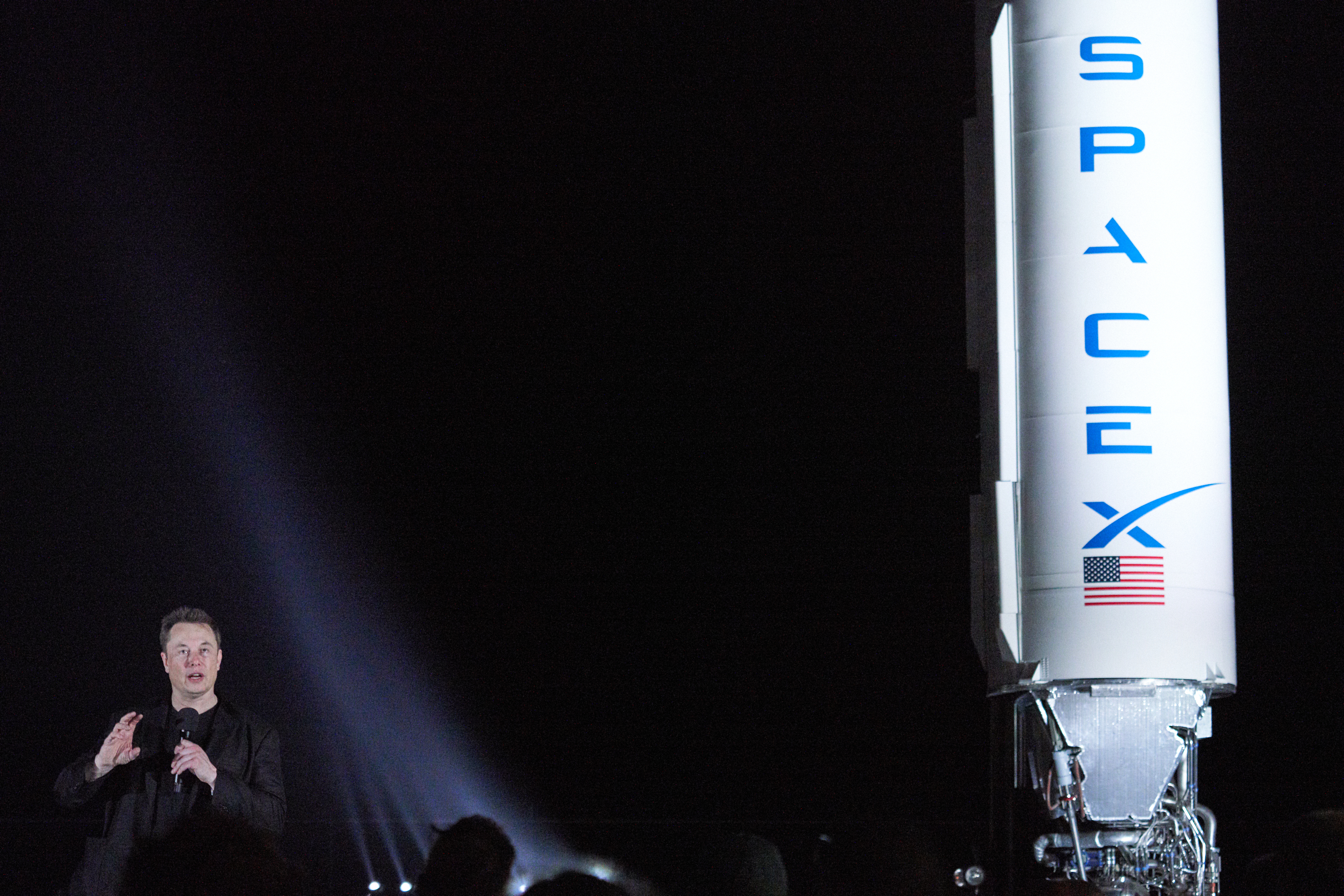
BOCA CHICA BEACH, Texas—Elon Musk spoke about his vision of a brighter future for humanity on Saturday evening, in South Texas.

Musk acknowledged that there are a lot of problems here on Earth, and it is important for those to get fixed. But it also is important to give people hope for the future, and sense of optimism. He believes the exploration of space, and human expansion into the Solar System, provides this kind of a hopeful vision.

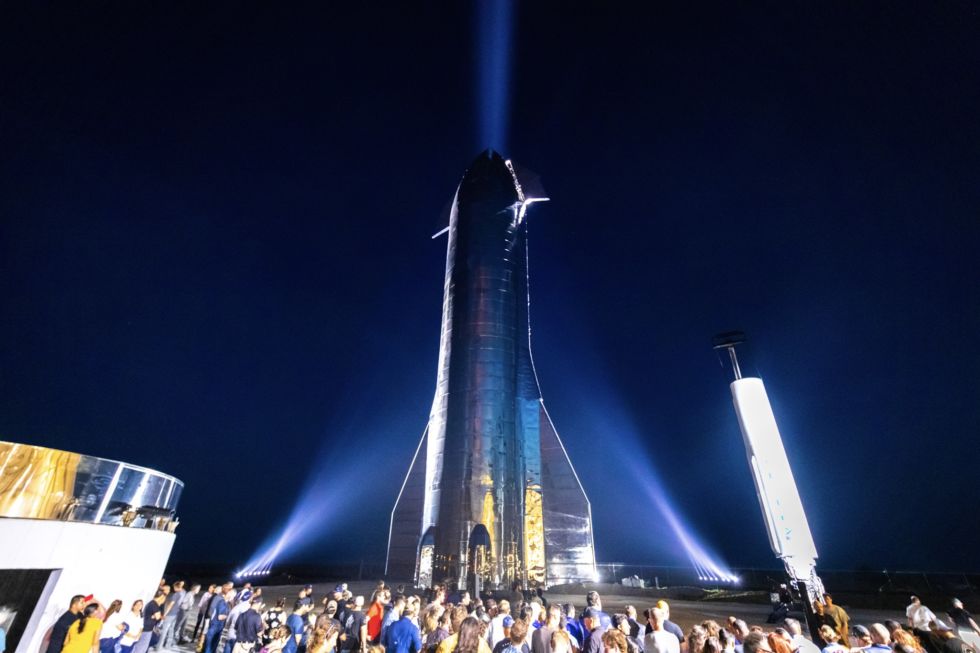
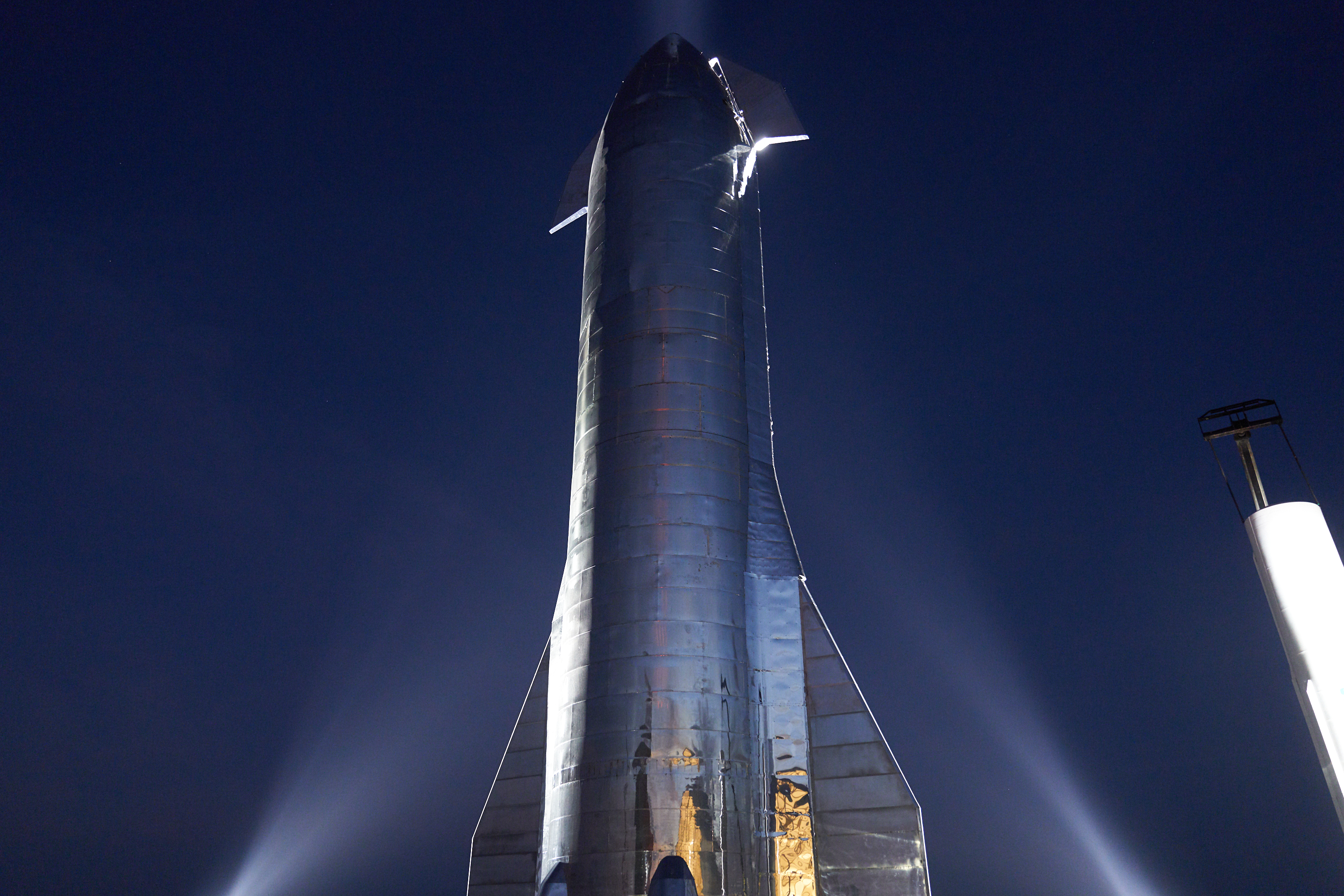
And so, beneath a big Texas sky full of stars, he offered hope in the form of a large spaceship. Mere hours after a team of SpaceX engineers, technicians, and contractors completed assembly of a prototype of the Starship vehicle, Musk revealed it to the world. He did so in an open-air shipyard, hard by the Rio Grande River, where he intends to build dozens if not hundreds of Starship spacecraft.

Read 35 remaining paragraphs | Comments

https://arstechnica.com

Amazon and Flipkart Sales, OnePlus 7T, iPhone 11, and More News This Week

Amazon Great Indian Festival sale, Flipkart Big Billion Days sale, iPhone 11 India availability, OnePlus TV launch, OnePlus 7T price reveal, Samsung Galaxy A70s price in India reveal, and other top... https://ift.tt/2mMVg6b

Snowden's revelations exposed the breadth and scale of NSA's surveillance and likely contributed to the NSA losing a significant portion of its capabilities (Matthew Green/A Few Thoughts ...)

Matthew Green / A Few Thoughts on Cryptographic Engineering:
Snowden's revelations exposed the breadth and scale of NSA's surveillance and likely contributed to the NSA losing a significant portion of its capabilities  —  Edward Snowden recently released his memoirs.  In some parts of the Internet, this has rekindled an ancient debate: namely, was it all worth it?


Saturday, September 28, 2019

Paytm Mall Maha Cashback Carnival gadget deals round-up

Paytm Mall Maha Cashback Carnival sale kicked off tonight, September 29. It will be live till October 6. Paytm is offering money-saving deals to the gadget lovers onboard. Deals range from mobile phones to computer peripherals and accessories. Hence, here is a round-up of the gadget deals offered during the Paytm Mall Maha Cashback Carnival sale.

Deals on smartphones

For smartphone lovers, the Maha Cashback Carnival has brought about offers on a range of smartphones, including iPhones. The e-commerce platform is extending bumper cashback, free smart speakers with iPhone 7 (with effective down to Rs 24,400), and savings of flat Rs 31,000 on MRP on iPhone XR. The latter is selling for Rs 49,999 with cashback offers applied.

The e-retailer is selling phones like Samsung Galaxy A30 and A50 for a discount of up to 14 percent. Users can apply cashback offers to further bring down the deal price to Rs 14,406 and Rs 19,986 respectively. To recall, the MRP of Galaxy A30 and Galaxy A50 on Paytm is Rs 18,000 and Rs 24,000 respectively.

Paytm is also providing 3-IN-1 savings on exchanging your old phone, i.e. flat cashback, exchange benefits up to Rs 17,000, and 10 percent instant discount on HDFC Bank Cards & Easy EMI on Vivo, Oppo, Redmi and Nokia smartphones. Paytm Mall’s Maha Cashback Carnival will also feature the latest market launches including Oppo A9 2020, Vivo Y Series, Oppo Reno, Vivo V17 Pro, and Samsung A50s, A30s and Samsung Galaxy Note10. Deals on popular models of Redmi and Realme are available from as low as 6,299 for budget option seekers.

You can browse more mobile phone deals here.

Deals on speakers, accessories, and smartwatches

Moreover, JBL Go 2 Bluetooth Speaker is available at Rs 1,899 with offers applied. Boat BassHeads 220 in-ear wired earphones are selling for a discounted price of Rs 559, down from Rs 999. Further, Boat Stone portable Bluetooth speakers are selling for Rs 2,799, down from Rs 6,990. You can checkout more deals on speakers here.

Coming to computer accessories, SanDisk Ultra dual 32 GB USB 3.0 OTG pen drive can be purchased for Rs 499 with an additional 10 percent cashback. Fitness enthusiasts can log onto Paytm and get Garmin, Fitbit, Noise & Apple Watches at savings up to 50 percent on MRP. 

Deals on laptops

Gaming enthusiasts will further be able to save up to Rs 24,000 on latest gaming laptops by Dell, MSI, and Asus. The e-commerce platform will also provide budget laptops for as low as Rs10,000. Cashbacks up to Rs. 20,000 on lightweight laptops from Asus, Lenovo, and Microsoft can also be purchased with bank offers, no-cost EMIs, and unbelievable discounts during the festive sale.

The Asus ROG GL504 (i5-8th Gen/ 8 GB/ 1 TB + 128 GB SSD/ 15.6" FHD/ Windows 10/ 4 GB graphics) gaming laptop is can be purchased for as low as Rs 71,586, down from Rs 1,01,999. More such deals can be browsed here.

All offers are subject to stock availability.

https://ift.tt/2of8AAJ

Elon Musk says Starship should reach orbit within six months – and could even fly with a crew next year

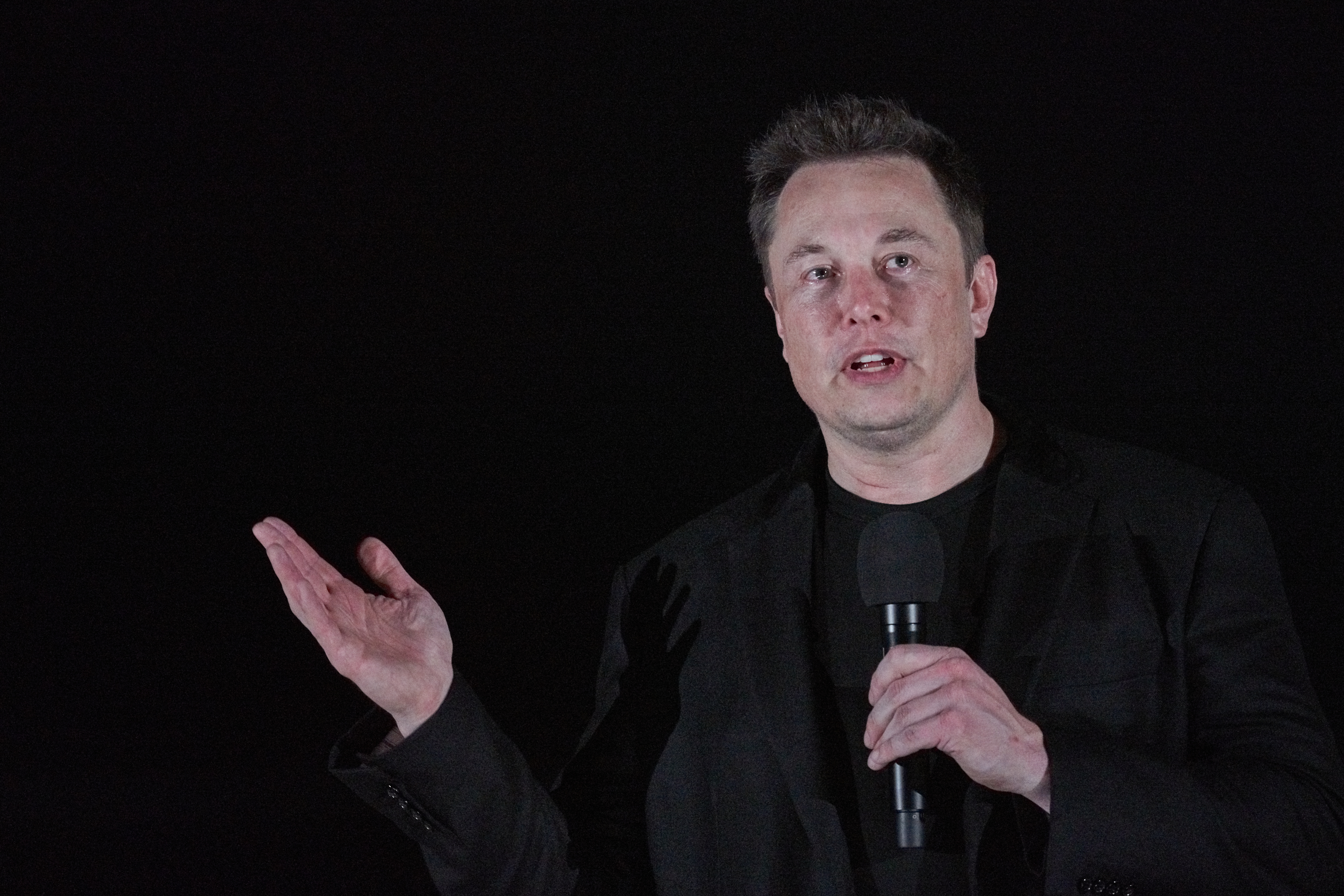
SpaceX CEO Elon Musk delivered an update about Starship, the company’s nest generation spacecraft, which is being designed for full, “rapid reusability.” Musk discussed the technology behind the design of Starship, which has evolved somewhat through testing and development after its original introduction in 2017.

Among the updates detailed, Musk articulated how Starship will be used to make humans interplanetary, including its use of in-space refilling of propellant, by docking with tanker Starships already in orbit to transfer fuel. This is necessary for the spacecraft to get enough propellant on board post-launch to make the trip to the Moon or Mars from Earth – especially since it’ll be carrying as much as 100 tons of cargo on board to deliver to these other space-based bodies.

Elon Musk

These will include supplies for building bases on planetary surfaces, as well as up to 100 passengers on long-haul planet-to-planet flights.

Those are still very long-term goals, however, and Musk also went into detail about development of the current generation of Starship prototypes, as well as the planned future Starships that will go to orbit, and carry their first passengers.

The Starship Mk1, Mk2 and the forthcoming Mk3 and Mk4 orbital testers will all feature a fin design that will orient the vehicles so they can re-enter Earth’s atmosphere flat on their ‘bellies,’ coming in horizontal to increase drag and reduce velocity before performing a sort of flip maneuver to swing past vertical and then pendulum back to vertical for touch-down. In simulation, as shown at the event, it looks like it’ll be incredible to watch, since it looks more unwieldy than the current landing process for Falcon boosters, even if it’s still just as controlled.

SpaceX Starship Mk1 29

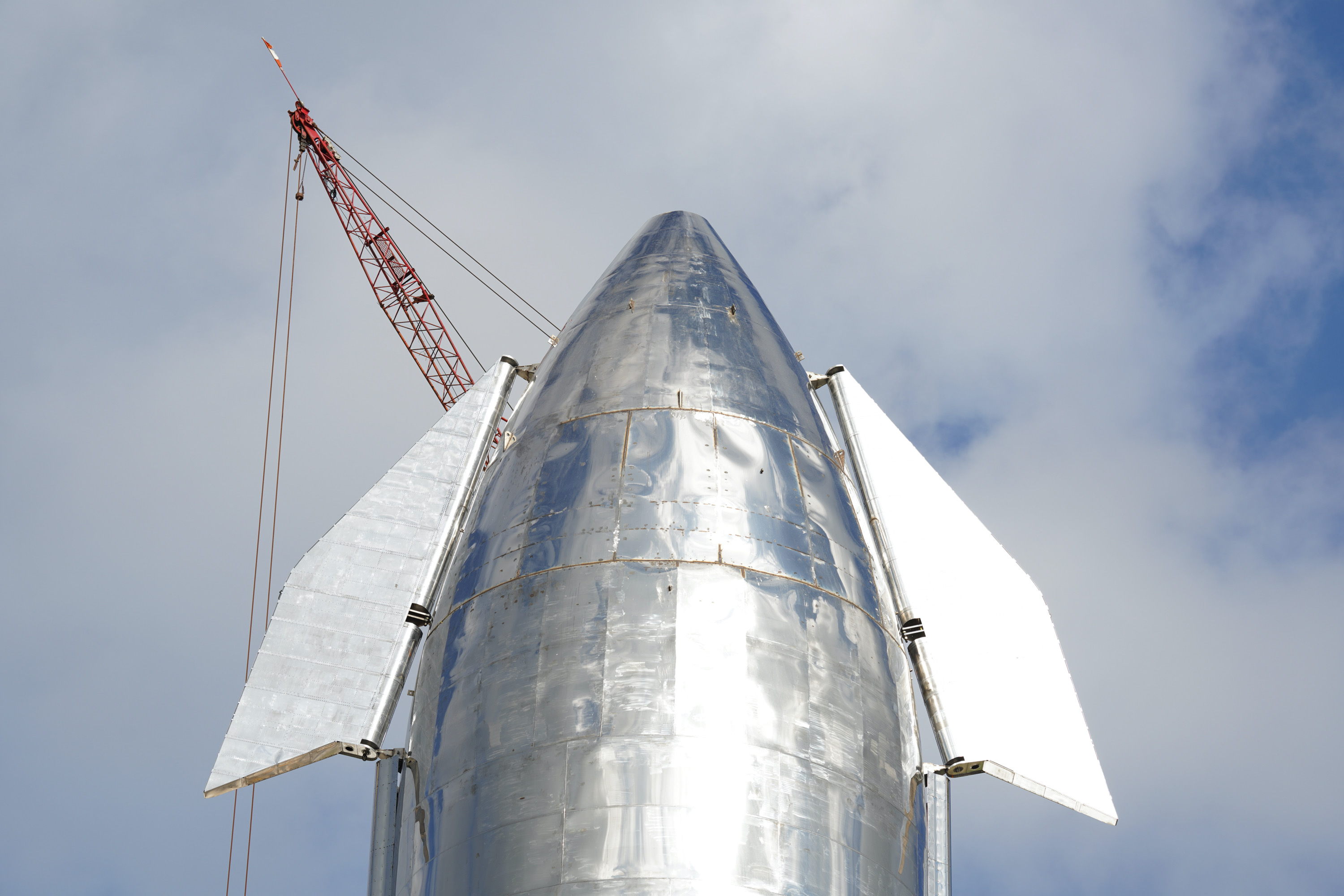
The front fins on the Starship prototype will help orient it for re-entry, a key component of reuse.

Musk also shared a look at the design planned for Super Heavy, the booster that will be used to propel Starship to orbit. This liquid-oxygen powered rocket, which is about 1.5 times the height of the Starship itself, will have 37 Raptor engines on board (the Starship will have only six) and will also feature six landing legs and deployable grid fins for its own return trip back to Earth.

In terms of testing and development timelines, Musk said that the Starship Mk1 he presented the plan in front of at Boca Chica should have its first test flight in just one to two months. That will be a flight to a sub-orbital altitude of just under 70,000 feet. The prototype spacecraft is already equipped with the three Raptor engines it will use for that flight.

Next, Starship Mk2, which is currently being built in Cape Canaveral, Florida, at another SpaceX facility, will attempt a similar high altitude test. Musk explained that both these families will continue to compete with each other internally and build Starship prototypes and rockets simultaneously. Mk3 will begin construction at Boca Chica beginning next month, and Mk4 will follow in Florida soon after. Musk said that the next Starship test flight after the sub-orbital trip for Mk1 might be an orbital launch with the full Super Heavy booster and Mk3.

Elon Musk 1

Musk said that SpaceX will be “building both ships and boosters here [at Boca Chica] and a the Cape as fast as we can,” and that they’ve already been improving both the design and the manufacture of the sections for the spacecraft “exponentially” as a result of the competition.

The Mk1 features welded panels to make up the rings you can see in the detail photograph of the prototype below, for instance, but Mk3 and Mk4 will use full sheets of stainless steel that cover the whole diameter of the spacecraft, welded with a single weld. There was one such ring on site at the event, which indicates SpaceX is already well on its way to making this work.

This rapid prototyping will enable SpaceX to build and fly Mk2 in two months, Mk3 in three months, Mk4 in four months and so on. Musk added that either Mk3 or Mk5 will be that orbital test, and that they want to be able to get that done in less than six months. He added that eventually, crewed missions aboard Starship will take place from both Boca Chica and the Cape, and that the facilities will be focused only on producing Starships until Mk4 is complete, at which point they’ll begin developing the Super Heavy booster.

Starship Mk1 night

In total, Musk said that SpaceX will need 100 of its Raptor rocket engines between now and its first orbital flight. At its current pace, he said, SpaceX is producing one every eight days – but they should increase that output to one every two days within a few months, and are targeting production of one per day for early in Q1 2019.

Because of their aggressive construction and testing cycle, and because, Musk said, the intent is to achieve rapid reusability to the point where you could “fly the booster 20 times a day” and “fly the [starship] three or four times a day,” the company should theoretically be able to prove viability very quickly. Musk said he’s optimistic that they could be flying people on test flights of Starship as early as next year as a result.

Part of its rapid reusability comes from the heat shield design that SpaceX has devised for Starship, which includes a stainless steel finish on one half of the spacecraft, with ceramic tiles used on the bottom where the heat is most intense during re-entry. Musk said that both of these are highly resistant to the stresses of reentry and conducive to frequent reuse, without incurring tremendous cost – unlike their initial concept, which used carbon fibre in place of stainless steel.

Musk is known for suggesting timelines that don’t quite match up with reality, but Starship’s early tests haven’t been so far behind his predictions thus far.

Medvi, glorified by the NYT as a two-employee startup with $1B+ in revenue, is a warning about how AI can be misused for shady business and marketing practices (Gary Marcus/Marcus on AI)

Gary Marcus / Marcus on AI : Medvi, glorified by the NYT as a two-employee startup with $1B+ in revenue, is a warning about how AI can be...