Tuesday, July 16, 2019

Xiaomi Redmi K20, Redmi K20 Pro to be launched in India today: How to watch livestream, expected specs, price, and more

Xiaomi is all set to launch the new Redmi K20 series phones in India today. Both phones were released in China a couple of months ago. They feature a new 3D four-curved large arc body and a front camera module that is housed in a pop-up module. Moreover, the Redmi K20 Pro is the new Xiaomi flagship device powered by the Qualcomm Snapdragon 855 chipset, whereas, the Redmi K20 houses the mid-range Snapdragon 730 SoC. The launch event starts at 12pm today. It will be livestreamed on Xiaomi’s official website, social media accounts, and its YouTube channel.

The price and availability of both smartphones could be announced at the event today. However, the pricing is expected to be similar to the Chinese model, that is, CNY 2,499 (approx Rs 24,900) for the Redmi K20 Pro basic variant, 6GB RAM + 64GB storage, and CNY 2,599 (approx Rs 25,900) for the 6GB RAM + 128GB storage variant. The pricing of 8GB RAM variant could start at Rs 27,900, and could go up to Rs 29,900 for the 256GB storage variant. 

In contrast to the Redmi K20 Pro, its younger sibling, the Redmi K20 is expected to be priced at Rs 19,900 for the 6GB RAM + 64GB internal storage variant, which could go up to Rs 25,900 for the 8GB RAM + 256GB storage variant.

Alongside these devices, a special variant of the Redmi K20 Pro is expected to be launched at Rs 4,80,800. Why the massive price tag? Well, it could come with gold and diamond in it.

As for the specifications, both devices have many similarities, including a 6.39-inch full-HD+ AMOLED panel with 19.5:9 aspect ratio and 91.9-percent screen-to-body ratio. They also have an in-display fingerprint scanner and run on MIUI 10. They could be launched with up to 8GB RAM and 256GB of internal storage.

The main difference is in the processor. As mentioned at the beginning of this article, the Redmi K20 Pro is powered by the Snapdragon 855 SoC, while the Redmi K20 comes with the Snapdragon 730 chipset. The other dissimilarity is in the optics department. While both the phones feature a triple camera setup with a 48MP primary sensor, the Redmi K20 Pro includes a Sony IMX586 sensor, and the Redmi K20 sports the Sony IMX582 sensor. Both phones feature a 13MP secondary sensor with wide-angle lens, and an 8MP tertiary sensor with a f/2.4 lens. 

Both the phones pack a 4000mAh battery. While the Redmi K20 has 18W fast-charging support, the Redmi K20 Pro comes with 27W fast-charging.


https://ift.tt/2GeV7zd

A look at privacy-focused DuckDuckGo, which has ~1% share of the search engine market but says it handles ~40M searches a day, up 3x over the past two years (Nathaniel Popper/New York Times)

Nathaniel Popper / New York Times:
A look at privacy-focused DuckDuckGo, which has ~1% share of the search engine market but says it handles ~40M searches a day, up 3x over the past two years  —  PAOLI, Pa. — Gabriel Weinberg is taking aim at Google from a small building 20 miles west of Philadelphia that looks like a fake castle.


Huawei's Latest Smartwatch in India Offers Two-Weeks Battery Life

Huawei has announced the availability of its Watch GT Active in India starting today. The smartwatch will be available exclusively on Flipkart in India, priced at Rs. 15,990. https://ift.tt/2XKJmLE

How to connect AirPods to a Mac

Apple's AirPods are surprisingly convenient. In addition to serving as wireless headphones for your iPhone, you can also use AirPods with your Mac. Here's how.

Visa invests in Indonesian ride-hailing firm Go-Jek

The two companies will work together to provide more options for cashless payments for consumers across Indonesia and Southeast Asia https://ift.tt/2NZrHLM https://ift.tt/eA8V8J

Elon Musk’s Neuralink looks to begin outfitting human brains with faster input and output starting next year

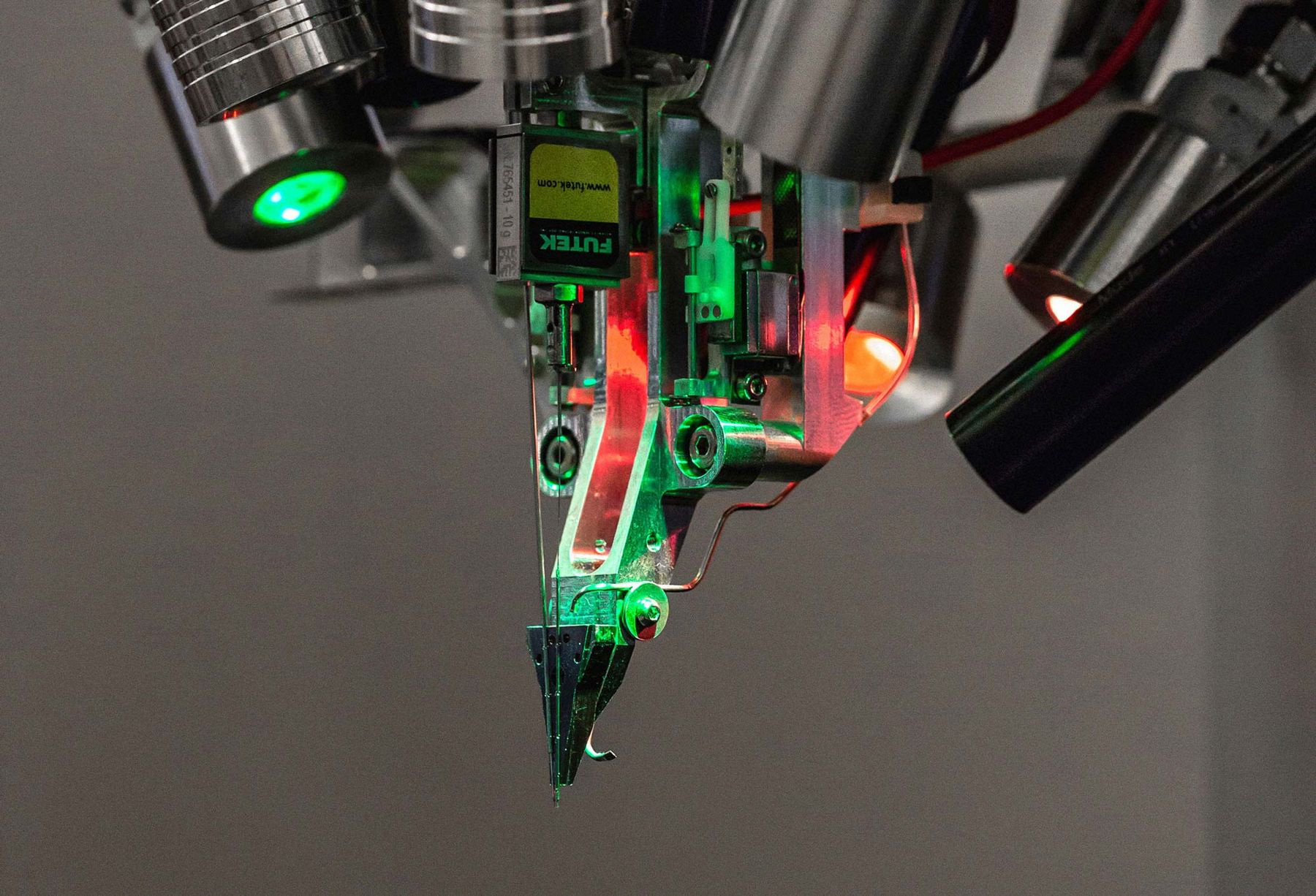
Neuralink, the Elon Musk-led startup that the multi-entrepreneur founded in 2017, is working on technology that’s based around ‘threads’ which it says can be implanted in human brains with much less potential impact to the surrounding brain tissue vs. what’s currently used for today’s brain-computer interfaces. “Most people don’t realize, we can solve that with a chip,” Musk said to kick off Neuralink’s event, talking about some of the brain disorders and issues the company hopes to solve.

Musk also said that long-term Neuralink really is about figuring out a way to “achieve a sort of symbiosis with artificial intelligence.” “This is not a mandatory thing,” he added. “This is something you can choose to have if you want.”

For now, however, the aim is medical and the plan is to use a robot that Neuralink has created that operates somewhat like a “sewing machine” to implant this threads, which are incredibly thin I(like, between 4 and 6 μm, which means about one-third the diameter of the thinnest human hair), deep within a person’s brain tissue, where it will be capable of performing both read and write operations at very high data volume.

All of this sounds incredibly far-fetched, and to some extent it still is: Neuralink’s scientists told The New York Times in a briefing on Monday that the company has a “long way to go” before it can get anywhere near offering a commercial service. The main reason for breaking cover and talking more freely about what they’re working on, the paper reported, is that they’ll be better able to work out in the open and publish papers, which is definitely an easier mode of operation for something that requires as much connection with the academic and research community as this.

Neuralink1

Neuralink co-founder and president Max Hodak told the NYT that he’s optimistic Neuralink’s tech could theoretically see use somewhat soon in medical use, including potential applications enabling amputees to regain mobility via use of prosthetics and reversing vision, hearing or other sensory deficiencies. It’s hoping to actually begin working with human test subjects as early as next year, in fact, including via possible collaboration with neurosurgeons at Stanford and other institutions.

The current incarnation of Neuralink’s tech would involve drilling actual holes into a subject’s skull in order to insert the ultra thin threads, but future iterations will shift to using lasers instead to create tiny holes that are much less invasive and essentially not felt by a patient, Hodak told the paper. Working on humans next year with something that meets this description for a relatively new company might seem improbable, but Neuralink did demonstrate its technology used on a laboratory rat this week, with performance levels that exceed today’s systems in terms of data transfer. The data from the rat was gathered via a USB-C port in its head, and it provided about 10x more what the best current sensors can offer, according to Bloomberg.

Neurlalink’s advances vs. current BCI methods also include the combined thinness and flexibility of the ‘threads’ used, but one scientist wondered about their longevity when exposed to the brain, which contains a salt mix fluid that can damage and ultimately degrade plastics over time. The plan is also that the times electrodes implanted in the brain will be able to communicate wirelessly with chips outside the brain, providing real time monitoring with unprecedented freedom of motion, without any external wires or connections.

Elon Musk is bankrolling the majority of this endeavour as well as acting as its CEO, with $100 million of the $158 million its raised so far coming from the SpaceX and Tesla CEO. It has 90 employees thus far, and still seems to be hiring aggressively based on its minimal website (which basically only contains job ads). Elon Musk also noted at the outset of today’s presentation that the main reason for the event was in fact to recruit new talent.

Apple reportedly planning to fund creation of exclusive original podcasts

Apple is said to be planning to bankroll the creation of original podcasts from third-parties that it will offer exclusively on its own streaming services, Bloomberg reports. The report says that Apple’s plans to land podcast exclusives will help the company compete with similar offerings from streaming rivals including Spotify and Sticher, both of which are funding exclusive podcast content, and in some cases, wholly original shows to run on their own streaming audio offerings.

The report says that Apple execs have been reaching out to media companies that produce audio content to talk about the possibility of buying exclusive rights to some podcasts, albeit in a “preliminary” way, which suggests that this plan may be in the very early stages. It seems unlikely, then, that we would see any kind of Apple exclusive original podcast content ahead of other media efforts soon to launch from the company, including its Apple TV+ subscription video service coming this fall.

Apple has recently made a number of improvements to its podcast product offerings, both on the consumer and the creator side, including more detailed analytics for podcasters, and a full-fledged standalone Podcasts app for its macOS computers, which is launching alongside macOS Catalina this fall. Still, it’s largely been hands-off when it comes to content, aside from informally meeting with podcasters on occasion and sharing best practices.

Meanwhile, Spotify in particular has been especially aggressive about acquiring its own podcast media companies, including Gimlet, which makes popular podcast ‘Reply All”; Anchor, which creates podcast making tools for publishing and monetization; and Parcast, another podcast creation network with a deep library of true-life and other content.

Apple still enjoys a strong majority of audience when it comes to overall podcast listenership by all accounts, but Spotify is definitely chipping away by focusing effort and investment both on the product and on the content side. Apple considering funding content of its own definitely makes sense given its tactics in video, and the changed landscape of the podcast business.

Isro wants ‘made-in-India GPS’ tech in smartphones: What you must know

https://ift.tt/32tU9IC

Google has banned Chinese app developer CooTek from its ad platforms and Play Store, removing 60+ CooTek Android apps for bombarding users with disruptive ads (Craig Silverman/BuzzFeed News)

Craig Silverman / BuzzFeed News:
Google has banned Chinese app developer CooTek from its ad platforms and Play Store, removing 60+ CooTek Android apps for bombarding users with disruptive ads  —  Google is banning CooTek, a publicly traded Chinese app developer, from its Play store and ad platforms after BuzzFeed News …


Justice John Paul Stevens, dead at 99, promoted the Internet revolution

US lawmakers take jabs at Amazon & other Big Tech companies in antitrust hearing

Legislators demanded explanations from Apple about charges for apps and in-app purchases, Facebook for its rapidly changing privacy policy and Alphabet's Google over whether its rivals are demoted in search results. https://ift.tt/2NY6rWN https://ift.tt/eA8V8J

ETtech Top 5: Payment firms seek reimbursement for MDR loss, Rivigo layoffs & more

A closer look at today's biggest tech and startup news and why they matter. https://ift.tt/32wdTeD https://ift.tt/eA8V8J

AI photo editor FaceApp goes viral again on iOS, raises questions about photo library access

FaceApp. So. The app has gone viral again after first doing so two years ago or so. The effect has gotten better but these apps, like many other one off viral apps, tend to come and go in waves driven by influencer networks or paid promotion. We first covered this particular AI photo editor  from a team of Russian developers about two years ago.

It has gone viral again now due to some features that allow you to edit a person’s face to make it appear older or younger. You may remember at one point it had an issue because it enabled what amounted to digital blackface by changing a person from one ethnicity to another.

In this current wave of virality, some new rumors are floating about FaceApp. The first is that it uploads your camera roll in the background. We found no evidence of this and neither did security researcher and Guardian App CEO Will Strafach or researcher Baptiste Robert.

The second is that it somehow allows you to pick photos without giving photo access to the app. You can see a video of this behavior here:

While the app does indeed let you pick a single photo without giving it access to your photo library, this is actually 100% allowed by an Apple API introduced in iOS 11. It allows a developer to let a user pick one single photo from a system dialog to let the app work on. You can view documentation here and here.

IMG 54E064B28241 1

Because the user has to tap on one photo, this provides something Apple holds dear: user intent. You have explicitly tapped it, so it’s ok to send that one photo. This behavior is actually a net good in my opinion. It allows you to give an app one photo instead of your entire library. It can’t see any of your photos until you tap one. This is far better than committing your entire library to a jokey meme app.

Unfortunately, there is still some cognitive dissonance here, because Apple allows an app to call this API even if a user has set the Photo Access setting to Never in settings. In my opinion, if you have it set to Never, you should have to change that before any photo can enter the app from your library, no matter what inconvenience that causes. Never is not a default, it is an explicit choice and that permanent user intent overrules the one-off user intent of the new photo picker.

I believe that Apple should find a way to rectify this in the future by making it more clear or disallowing if people have explicitly opted out of sharing photos in an app.

IMG 0475

One good idea might be the equivalent of the ‘only once’ location option added to the upcoming iOS 13 might be appropriate.

One thing that FaceApp does do, however, is it uploads your photo to the cloud for processing. It does not do on-device processing like Apple’s first party app does and like it enables for third parties through its ML libraries and routines. This is not made clear to the user.

I have asked FaceApp why they don’t alert the user that the photo is processed in the cloud. I’ve also asked them whether they retain the photos.

Given how many screenshots people take of sensitive information like banking and whatnot, photo access is a bigger security risk than ever these days. With a scraper and optical character recognition tech you could automatically turn up a huge amount of info way beyond ‘photos of people’.

So, overall, I think it is important that we think carefully about the safeguards put in place to protect photo archives and the motives and methods of the apps we give access to.

Xiaomi to Launch Mi A3 Today: Everything You Need to Know

Mi A3 is all set to be launched today. Xiaomi will be unveiling the smartphone in Spain at 3pm CEST. In addition to the Mi A3, the Chinese smartphone maker is also expected to announce the new Mi A3... https://ift.tt/30zI0jz

PCI seeks compensation for losses that may incur due to govt's zero MDR proposal

In the Union Budget for 2019-20, the government announced that there would be no charges levied on merchants processing digital payments as well as on consumers opting to pay digitally. https://ift.tt/32teNZx https://ift.tt/eA8V8J

Sources: amid the Iran war, Asian bankers say rising power prices and energy security are becoming a bigger consideration in data center financing decisions (Bloomberg)

Bloomberg : Sources: amid the Iran war, Asian bankers say rising power prices and energy security are becoming a bigger consideration in ...