Wednesday, April 3, 2019

Green New Deal doesn’t go far enough

The Green New Deal brings much-needed urgency to the national conversation around the climate crisis, which is without a doubt the biggest threat to life on this planet. The recent resolution introduced into Congress by Rep. Alexandria Ocasio-Cortez and Sen. Ed Markey rightly calls for a significant overhaul of our economic system that would drastically reduce greenhouse gas emissions and pollution, alongside a Just Transition framework that would create high-quality jobs while correcting historical racial and economic injustices.

While I applaud the direction proposed in the Green New Deal resolution, it simply does not go far enough. The hard truth is that we must keep more fossil fuels in the ground. Not only that, we must redouble our efforts to keep forests standing — a critical yet oft-overlooked factor in the only promising equations to stop climate catastrophe.

There are two promising paths toward a solution: cut off the billions of dollars still flowing into fossil fuel extraction and expansion; and strengthen the rights of indigenous and frontline communities, which has consistently been proven to be one of the most efficient ways to properly manage forests and natural resources.

On October 8, 2018, the UN Intergovernmental Panel on Climate Change’s (IPCC) report was released — and it did not pull any punches. The report clearly states that if global temperatures rise by 1.5° Celsius, the impacts will be much worse than previously predicted. The report also said that to have a reasonable chance of staying under 1.5° we must immediately embark on an unprecedented global effort to reshape our economic priorities over the next 12 years. As the biggest carbon polluter in history, the U.S. largely owns this problem — therefore we must lead in the solution.

If you’re in a hole and you want to get out, stop digging.

Regrettably, recent remarks by Senator Feinstein and House Speaker Pelosi dismissing the Green New Deal show that even those often considered allies in the fight against catastrophic climate change are unwilling to marry urgency with action. “If we wait until 2050 to make change, then our Earth is going to die. We will quite literally have an apocalypse,” said 16-year-old Isha Clarke, one of the youths who confronted Sen. Feinstein asking for her support of a Green New Deal. The bottom line is that we need politicians to stand up and fight back against the corporate special interest groups that are compromising our future.

The science is clear. Emissions just from the oil, gas and coal reserves already in production would take the world well beyond 1.5° Celsius. And standing forests, particularly tropical forests, are under constant threat of destruction for profit — despite the fact that they are some of the best protection against climate change that we have (intact forests act as critical carbon sinks, keeping carbon out of our atmosphere).

If you’re in a hole and you want to get out, stop digging. We need an immediate end to the expansion of fossil fuel extraction and infrastructure and an end to deforestation. In-depth research makes clear that Wall Street banks, insurance companies and other financiers continue to pump trillions of dollars into the same companies that have been shamelessly profiting off climate destruction for decades.

The Green New Deal calls for “achiev[ing] net-zero greenhouse gas emissions” through measures that include “meeting 100 percent of the power demand in the U.S. through clean, renewable, and zero-emission energy sources” within 10 years, and restoring and protecting natural ecosystems that would remove greenhouse gases from the atmosphere, support climate resiliency, and enhance biodiversity. The resolution requires “obtaining the free, prior, and informed consent of indigenous peoples for all decisions that affect indigenous peoples and their traditional territories, honoring all treaties and agreements with indigenous peoples, and protecting and enforcing the sovereignty and land rights of indigenous peoples.” This is a solid start to this very necessary conversation.

However, “net zero” could imply a continuation of fossil fuel production and use. For example, if corporations are allowed to cancel out their emissions with wrongheaded geoengineering schemes and tradeable carbon offsets, we will be in the same hole. Without an explicit commitment to keep fossil fuels in the ground, the resolution as currently written falls short.

Achieving the goals of the Green New Deal must also go hand in hand with transforming the financial sector. Banks like JPMorgan Chase must no longer be allowed to profit from financing the construction of tar sands pipelines and the destruction of rainforests for palm oil, endangering the livelihoods of indigenous communities in its wake. They need to be held accountable for the damage done to people and the planet. And they need to rapidly shift their financing to solar and wind power; energy storage and grid modernization; electrification of transport, heating and industrial processes; and energy efficiency, which are all key technologies in achieving the goals of the Green New Deal.

Beating back bears, Bitcoin briefly balloons beyond $4,900

Bitcoin went on a tear in early morning trading earlier today, popping up to above $4,900 and reminding some investors of the good old days of 2017.

The currency is still trading up above 15 percent at $4,782.60, which is a healthy jump for the cryptocurrency (which had been languishing at around $4,000 for the past three months). Indeed, the price was up over 25 percent over the previous month, according to Coinbase.

Bitcoin’s surge also sent the other top cryptocurrencies, including Ethereum and Litecoin, soaring.

No one can quite pin down the reason for the currency’s surge, given the string of bad news that has unspooled around the cryptocurrency business in the past few weeks.

Despite an April Fool’s Day article to the contrary, the Securities and Exchange Commission still has not approved an exchange-traded fund that would track to the cryptocurrency. And one of the big public offerings that was supposed to showcase the strength of the market seems to have been shelved as Bitmain has not renewed its application for a public listing on the Hong Kong Stock Exchange.

One analyst had a simple reason for the Bitcoin price surge; a big, $100 million order for the cryptocurrency that was placed overnight and spread across the U.S. exchanges Coinbase and Kraken and Luxembourg’s Bitstamp.

“There has been a single order that has been algorithmically-managed across these three venues, of around 20,000 BTC,” Oliver von Landsberg-Sadie, chief executive of cryptocurrency firm BCB Group, told Reuters in an interview.

Brain Corp. debuts an autonomous delivery robot for factories and retail

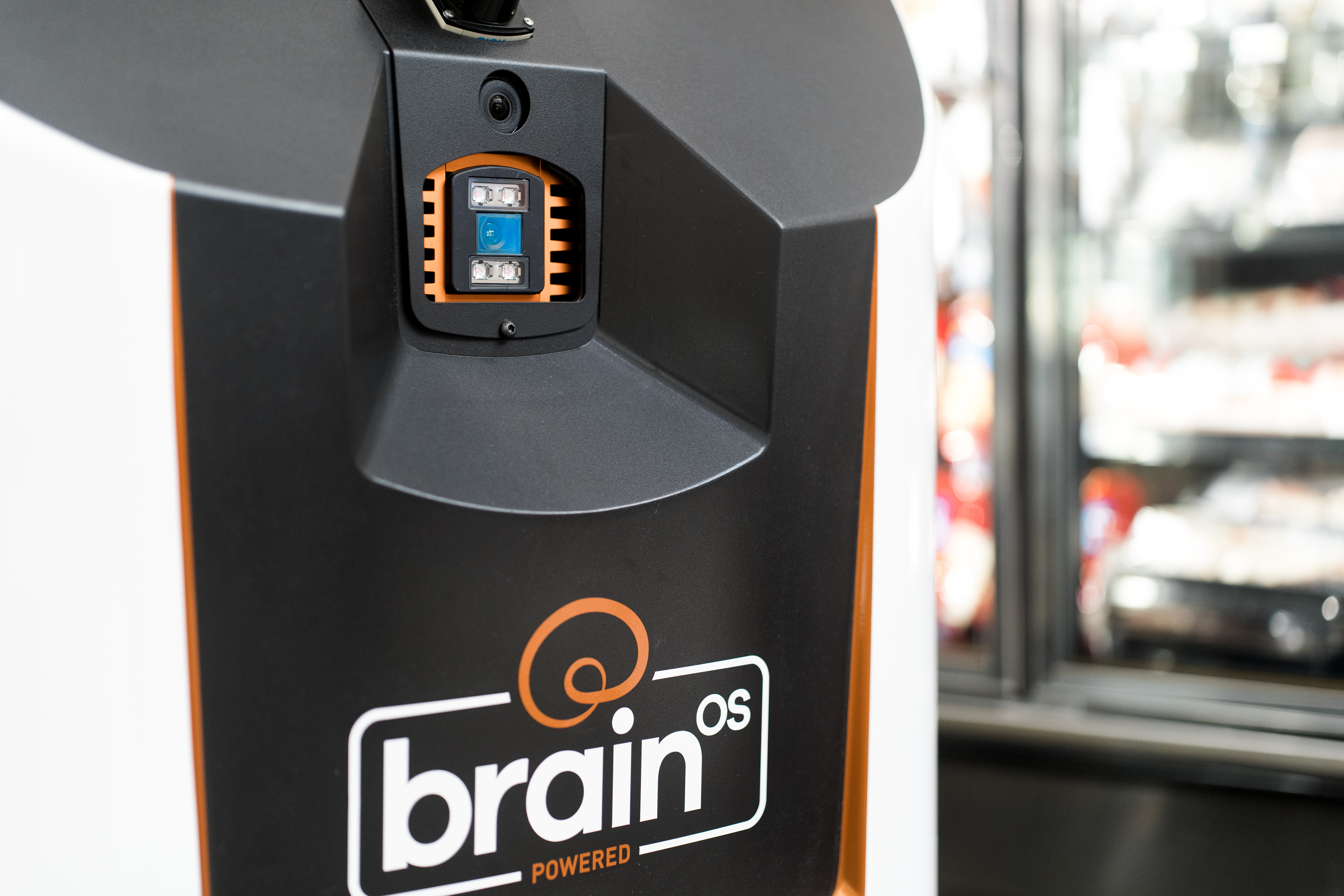
Admittedly, Brain Corp. sounds a bit like an evil corporation in some superhero comic, but the San Diego-based startup has generated some serious funding in recent years, including a $114 million Series C, led by SoftBank back in 2017.

The company’s been putting that money to work, announcing today the launch of an in-store autonomous delivery robot. AutoDelivery, which is currently still “proof of concept,” is built on the startup’s own BrainOS navigation platform, which is currently powering products from a number of companies, including Tennant, Minuteman, ICE, Nilfisk and SoftBank Robotics.

Brain Corp.’s system is an interesting one designed to fulfill a fairly wide range of case uses, from stores to factories to warehouses. That could mean everything from inventory stocking to delivery fulfillment. It’s a massive business and one positioned to get even larger in coming years, with products from Amazon Robotics and Fetch to Playground Ventures-supported Canvas, which offers up a similarly autonomous robot for factory settings.

Heck, even Boston Dynamics is getting in on the space these days, with its recent acquisition of Kinema Systems.

The Brain Corp. system appears to have some of the competition beat with its ability to tow carts, which could make it useful in a retail setting like the one in the above video. It also sports a touchscreen, so employees can input directions directly, forming a different relationship with human employees than products like Bossa Nova’s inventory-checking robot.

The robot is still in its early stages, making its debut at next week’s ProMat show in Chicago. The company expects a commercial launch early next year.

Mobileye CEO Amnon Shashua at TC Sessions: Mobility on July 10

Mobileye, the Israeli-based automotive sensor company acquired by Intel in 2017 for $15.3 billion, is one of the companies at the center of the emerging world of autonomous vehicle technology.

We’re excited to announce co-founder, president and CEO of Mobileye Amnon Shashua — who also is a senior vice president at Intel — will participate in TechCrunch’s inaugural TC Sessions: Mobility, a one-day event on July 10, 2019 in San Jose, Calif., that is centered around the future of mobility and transportation.

Shashua, who holds the Sachs chair in computer science at the Hebrew University of Jerusalem, co-founded Mobileye in 1999. He has published more than 120 papers in the field of machine learning and computational vision, holds more than 45 patents and has founded three startups in the fields of computer vision and machine learning in his career.

Mobileye’s vision chips and software interprets data from a camera to anticipate possible collisions with cars, people and other objects. These computer vision chips, which are in advanced driver assistance systems (ADAS), are used by at least two dozen automakers, including Audi and BMW. Today, more than 30 million vehicles have Mobileye technology.

These days, Mobileye is working on more than just ADAS. The company plans to launch an autonomous vehicle platform in 2021.

Shashua’s vision for the company and future cities also includes using Mobileye sensors for mapping, as well. In his view, using maps can improve operations between businesses and cities, which will in turn help bring us closer to the realization of smart cities and safer roads.

The company announced at CES 2019 that it reached an agreement with Ordnance Survey to help the U.K. mapping agency bring high-precision location data to businesses in the country. Under the agreement, Mobileye’s sensors will be retrofitted onto Ordnance’s utility fleets to collect volumes of location data on road networks and roadside infrastructure. The collected data is then cross-referenced with existing geospatial data sets to develop accurate maps of Britain’s roads and surrounding areas.

TC Sessions: Mobility will present a day of programming with the best and brightest founders, investors and technologists who are determined to invent a future Henry Ford might never have imagined. In case you missed it, Nuro co-founder and CEO Dave Ferguson was our first announced guest for TC Sessions: Mobility.

TC Sessions: Mobility aims to do more than highlight the next new thing. We’ll dig into the how and why, the cost and impact to cities, people and companies, as well as the numerous challenges that lie along the way, from technological and regulatory to capital and consumer pressures.

Early-Bird tickets are now on sale — save $100 on tickets before prices go up.

Students, you can grab your tickets for just $45.

How Japan’s new imperial era broke the internet in a very tiny way

Emperor Akihito of Japan is abdicating and passing the office to his son, Crown Prince Naruhito, and as part of the transition comes a new gengo, or era name: “Reiwa.” It’s loaded with meaning and subtext, but because of the way text is sent and displayed over the internet, the name can’t actually be displayed in a certain official way. Unicode has issued an update making it possible, but for now there’s just no character for Reiwa. It’s a strange little problem that will be fixed soon, but illustrates how the systems we rely on aren’t perfect.

Now, to be clear, you can definitely type out the kanji for it, 令和, and that’s totally fine (though there are some technical hiccups there too). But gengo get combined single characters for certain situations and contexts. For comparison, the current (soon to be former) era, Heisei, can be written 平成 but has a combined-character name as well: ㍻. Sure, it’s just the two pieces squished together, but they’re squished together in an important, official way.

Without getting too deep into the history or politics of Japanese imperium, the country has a sort of internal calendar with eras corresponding to the (largely symbolic) rule of a given emperor. It’s a big deal, used in official documents and such, but also shorthand for referring to an era — “oh, that was in Heisei year 10” or the like, the way we might say, “the last year of the Clinton presidency.” I’m probably doing it wrong, but you get the idea.

The interesting part about this practice — well, there are many interesting parts, but the most interesting for our purposes today — is that these gengo are all essentially invented from scratch. And because of the nature of how the Japanese language is written, that means there’s essentially no way to display the name properly online!

Unicode is basically a big (around 120,000 entries long) set of codes that correspond to the actual letters and images we want to type or send. So when I write “Hey! 🙋” you see the same thing on your end that I see on my end. But how can there be a symbol for something that’s kept secret until its official debut, and which is assembled from parts of other Japanese words into a single brand-new character? It’s a bit like announcing they were adding a new letter to the alphabet.

This is the first time an era change has occurred in the modern computing era, so there isn’t really any precedent, as the organization noted last year in anticipation of the event. The only thing Unicode is really able to do is reserve the space for the incoming character and give it a placeholder graphic showing its code: ㋿. (What you see in the box, assuming you view this before the character is added, is “32FF,” part of the code.)

In a way, that’s all Unicode needs to do; it’s now up to designers to put together the actual character as it will be displayed in their font. And those updates will have to go out to servers and devices individually. But that can’t be done instantly, of course — and in the meantime any headline online with the new name in it by definition can’t show it! It’s a fascinating little quandary.

As for the name itself, it has produced some tumult as people argue over the linguistic and literary subtext; the intricacies of the Japanese script and the history of the syllables and how they are represented make a variety of interpretations possible, with different political and philosophical connotations. Nick Kapur’s breakdown is the best I’ve seen, getting to the heart of what makes Reiwa uniquely difficult to translate yet setting out the meanings clearly.

It’s a unique challenge in many ways and one for which the internet is uniquely unsuited. Soon we’ll have the character and any slight inconvenience created by the delay between announcement and the ability to properly display it will be forgotten, but it’s always interesting when the world throws a curveball at systems we take for granted.

Hopefully we’ll have everything tidied up by the time the Reiwa era officially begins on May 1.

RIP Google+

That’s it for Google+, Google’s failed social network that once tried to take on Facebook and Twitter. As scheduled, the company has now started deleting user accounts and their data.

Chances are you’re not going to feel all that sad about the end of Google+ since you probably haven’t used it for years. But if you’re feeling a bit nostalgic, here’s a little chronology of some of our coverage over the years.

2011

2012

2013

2014

2015

2016

2018

DOJ reportedly warns Academy about changing Oscar rules to exclude streaming

It seems that the Department of Justice has thoughts on whether Netflix movies should be eligible for Oscars.

Variety reports that the DOJ has sent the Academy of Motion Picture Arts and Sciences a letter expressing concern about potential changes to the eligibility requirements for the awards.

Why is this something the DOJ would worry about? Apparently the letter says, “In the event that the Academy — an association that includes multiple competitors in its membership — establishes certain eligibility requirements for the Oscars that eliminate competition without procompetitive justification, such conduct may raise antitrust concerns.”

This comes after Netflix’s “Roma” was seen as a frontrunner for this year’s Best Picture award. And although it ultimately lost out to “Green Book,” the movie still took home Oscars for Best Director, Best Foreign Language Film and Best Cinematography.

Director Steven Spielberg is reportedly pushing for changes to the Oscar rules, perhaps by creating a requirement that movies play exclusively in theaters for four weeks in order to be eligible.

Spielberg hasn’t said anything publicly about these reports, and movie executive Jeffrey Katzenberg claimed that Spielberg told him, “I absolutely did not say that.” But it’s spurred a broader discussion about Netflix’s impact on the film business, and seems to have prompted Netflix to declare in a tweet, “We love cinema” — while also highlighting some of the ways the service makes movies more accessible.

Variety says the Academy confirmed that it has received a letter. (Update: The Academy has confirmed this to us as well.) Its Board of Governors will hold its annual award rules meeting on April 23.

We’ve reached out to the DOJ for comment and will update if we hear back.

Sources: amid the Iran war, Asian bankers say rising power prices and energy security are becoming a bigger consideration in data center financing decisions (Bloomberg)

Bloomberg : Sources: amid the Iran war, Asian bankers say rising power prices and energy security are becoming a bigger consideration in ...