
Highlights: Glaciers in the Hindu Kush Himalaya region could thaw by a considerable extent the end of this century. New study by the International Centre for Integrated Mountain Development (ICIMOD) reveals. If global climate efforts tank, the temperatures could be raised by five degrees by 2100. Global warming is a real and pressing issue that is considered to be the main reason for an array of problems ranging from melting glaciers, to increased average temperatures around the globe. Now, a new study by the International Centre for Integrated Mountain Development (ICIMOD) says that at least a third of the ice in the Hindu Kush Himalaya (HKH) region could thaw by the end of this century, even if the Paris Agreement goal of limiting global warming to 1.5 degrees by the end of the century is met. In case the global climate control efforts fail, the study warns that at the current emission rates, around five degrees of warming and a loss of two-thirds of the region’s glaciers would be observed by 2100. The new report takes into account some previous studies that predicted a reduction of glacier volume in the HKH region between 45 to 90 percent by the end of this century. The KHK area consists of the world's highest peaks, Mount Everest and K2, and fresh water from this region flows into ten major river basins, contributing to irrigation, drinking water, and energy requirements of around 1.9 billion people. If the changes to the melting of glaciers are of unexpected magnitude and in a lesser amount of time, it could lead to a sudden flood in the regions where water from them flows to. “This is the climate crisis you haven’t heard of,” said Philippus Wester of the International Centre for Integrated Mountain Development (ICIMOD), who led the report. “Global warming is on track to transform the frigid, glacier-covered mountain peaks of the HKH cutting across eight countries to bare rocks in a little less than a century. Impacts on people in the region, already one of the world’s most fragile and hazard-prone mountain regions, will range from worsened air pollution to an increase in extreme weather events. But it’s the projected reductions in pre-monsoon river flows and changes in the monsoon that will hit hardest, throwing urban water systems and food and energy production off kilter.” The Hindu Kush Himalayan Assessment is said to include insights by over 350 researchers and was worked upon by 210 for coming up with an understanding of the region that affects China, India, Myanmar, Nepal, Afghanistan, Pakistan, Bangladesh and Bhutan. Related Reads: NASA research suggests the Moon contains Earth materials Space technology helps predict droughts five months in advance Periodic table turns 150, UNESCO celebrates

http://bit.ly/2HVPZDg
 Highlights The new controller is priced at $69.99 (Rs 5,000 approx. directly converted) It will be avialable strating march 5. In certain regions it will come with 14-day trial memberships for Xbox Live Gold and Xbox Game Pass Xbox gamers, there us yet another controller for you to desire. Microsoft has announced the Sport Red Special Edition wireless controller for the XBox priced at $69.99 (Rs 5,000 approx. directly converted). The controller will be avialble from March 5. This is the second controller launched by Xbox under the Sports special edition. The first one was launched back in July 2018. The official Xbox Wire reads, “Inspired by the world of active wear and sports lifestyle, the Xbox Wireless Controller – Sport Red Special Edition is the second controller in the Sport Series. This red controller exudes energy–it features metallic red and silver accents on the front of the controller as well as a metallic red D-pad. The red diamond rubberized grips on the back of the controller will increase your comfort during long gaming sessions and help you stay on target. In select regions, this controller comes with 14-day trial memberships for Xbox Live Gold and Xbox Game Pass”. A matching Xbox Pro Charging Stand will also be made available from May 1 for $49.99 (Rs 3600 approx. directly converted) for those that want a matching stand for the red controller. Each Xbox Pro Charging Stand includes a battery cover, rechargeable battery, and a 6-foot power cord. The Charging Stand is compatible with all Xbox Wireless Controllers. Microsoft has a good collection of different controllers to suit gamers needs. The company launched its own pro controller called the Xbox Elite controller. The Elite controller came with options for the D-Pad, analogue sticks, trigger locks and custom button pads in the box. All these were user replaceable and adjustable. Apart from the Elite controller, Microsoft has launched various controllers themed alongside popular games launched for the console. One such controller was a limited edition one. This was the PUBG Greaseproof controller. Only 200 of these are available all over the world and as the name suggests, the controller is for those that like to eat fried chicken while fighting for their chicken dinner. Having used the Xbox One S and Xbox One X along with a few controllers made available by the company, we can say that the Xbox One controller is well built, comfortable for long hours of gaming and is durable. The only downside is that the controller still needs 2 AA batteries and investing in an official or third party rechargeable battery kit means spending more money. We hope that with the next console generation, microsoft launches a controller with rechargeable batteries built into the controller. Also read: Here's how Indian PUBG gamers are streaming their way to the bank 6 games to check out in February 2019 Crackdown 3: Behind the scenes of the Xbox exclusive action-adventure
 http://bit.ly/2UI87lt

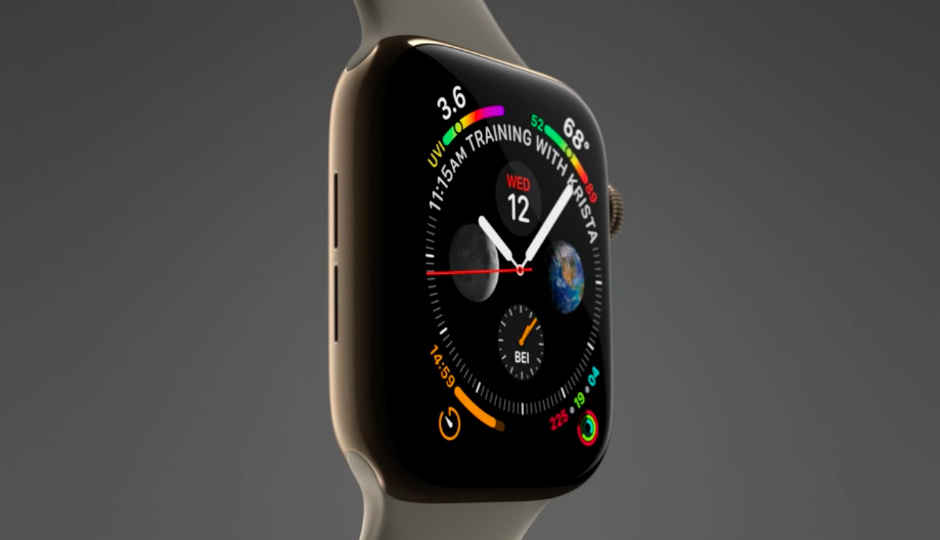 Highlights: 67-year old Norwegian man fell in the bathroom. Fall detection feature saved the man's life by alerting authorities. ECG feature still not available in India. The Apple Watch has continued to evolve since it was launched, from a fashion accessory to a fitness device to now a wrist-worn telephone. However, probably the most important feature to be added to the Apple Watch has been centered around personal safety. With the ECG feature and Fall Detection, the Apple Watch continues to save lives. The newest account comes from NRK that reported that a 67-year old Norwegian person named Toralv Østvang, who says the new Apple Watch Series 4 saved his life. According to Østvang, he took a bad fall in the bathroom, and the Apple Watch Series 4, detecting the fall intimated emergency services. The medical professionals arrived about half an hour after the fall, where they found Østvang unconscious and bleeding. Østvang fractured his face in three places from the fall. The Apple Watch Series 4 comes with a Fall Detection feature which can be set up to alert medical professionals in the event of an emergency. Apple accounted for the eventuality of severe situations, programming the feature to automatically alert medical personnel if the wearer remains immobile for more than 60 seconds. The feature is particularly designed for elderly individuals, who may not be able to help themselves in the event of a fall. This is why the Fall Detection feature is turned off by default for users below the age of 65. The other life-saving feature on the Apple Watch Series 4 that has been making news is the ECG capability of the watch. In December of 2018, a user shared his story of how the ECG app alerted him to the fact that he was experiencing Atrial fibrillation. After taking multiple readings, he visited a doctor, who confirmed that the person was indeed experiencing an a-fib. This incident occurred just a few days after the ECG app was launched. Since the launch of the Apple Watch Series 4, there have been multiple reports of users having been saved by the two new features of the Apple Watch. Unfortunately, the ECG feature requires the approval of a respective country’s Medical board, and hence, the feature is currently only limited to the US. At the time when the Apple Watch Series 4 was launched in India, we were told that the company was working with the Indian Medical Association for the requisite approvals, but refused to give any timeline as to when the feature would launch in India. Related Read: Apple could be building its own health-focussed chip
 http://bit.ly/2S9zgku
 The Nokia 8.1 higher-end version with 6GB RAM and 128GB internal memory has finally launched in India. The phone carries a price tag of Rs 29,999. It has a dual camera setup on the back and a 20MP front shooter for clicking selfies. We are comparing the device with the Samsung Galaxy A9, which also comes around with the same price in India. It is the first device by the company that features a quad camera setup on the back. So, let’s begin with a quick specs comparison to know which device would be the right one to spend money on in terms of specifications. The Nokia 8.1 features a 6.18-inch display that offers a resolution of 1080 x 2340 pixels. On the other hand, the Samsung Galaxy A9 sports a slightly bigger 6.3-inch screen, which comes with a resolution of 1080 x 2280 pixels. When it comes to the processor, the Nokia 8.1 is powered by a Qualcomm Snapdragon 710 processor, which is paired with 6GB RAM and 128GB internal memory. The Samsung Galaxy A9 is powered by Qualcomm Snapdragon 660 processor, which is coupled with 6GB RAM and 128GB internal memory that is expandable to up to 512GB via a microSD card. As far as the cameras are concerned, one of the main highlights of the Galaxy A9 is its quad camera set up on the back as the phone has 24MP + 10MP + 8MP + 5MP rear cameras with a 24MP unit on the front. The Nokia 8.1 has a dual 12MP + 13MP rear cameras with a 20MP sensor at the front. The Nokia 8.1 6GB variant is now available in India for Rs 29,999, while the Samsung Galaxy A9 is available on Amazon at a discounted price of Rs 33,990.
 http://bit.ly/2RHtf9H
 Highlights: Oppo K1 to launch today at 12PM. The smartphone sports a waterdrop notch on the display. It features an in-display fingerprint sensor. Oppo is all set to launch its new K series of phones in India at an event in New Delhi today. The company has been teasing the launch of its Oppo K1 smartphone for some time now and its launch today is slated to commence at 12PM. The smartphone is already available in China and is only making its way to India now. The Oppo K1 features an in-display fingerprint sensor and sports a waterdrop notch on the display. The only thing left to discover is the Oppo K1’s India pricing and the memory/storage configurations. Oppo will be live streaming the launch of the phone via its social media channels, but you can watch it in the video embedded below. Oppo K1 Specifications The Oppo K1 is powered by the octa-core Qualcomm Snapdragon 660 processor that can clock speeds of up to 2.2GHz. The phone sells in 4GB and 6GB RAM variants in China. It features a 6.4-inch Full HD+ 19.5:9 display with a 91 percent screen-to-body ratio. The display comes embedded with a fingerprint sensor and as mentioned earlier, it sports a waterdrop notch on the front that houses the front camera. The dual-SIM device comes with 64GB of internal storage, which can be further expanded up to 256GB via a microSD card. In terms of optics, the Oppo K1 features a 16MP primary sensor and a 2MP secondary sensor on the back, assisted by an LED flash. On the front, it comes with a 25MP selfie sensor. The phone is backed by a 3600mAh battery. Oppo K1 Pricing In China, the Oppo K1 is priced at CNY 1,599 (Rs 16,800 approx) for the 4GB RAM model, while its 6GB RAM option costs CNY 1,799 (Rs 19,000 approx). The phone sells in in Mocha Red, Silver Green, Van Gogh Blue and Black Jade colour models, but it remains to be seen which ones will be introduced in India. The Oppo K1 is expected to be priced around the same or slightly lower in India. Related Reads: Oppo K1 with in-display fingerprint sensor launching in India on February 6 Oppo Find Z spotted on European IP filings, could be company's next 5G flagship with Snapdragon 855 Oppo may soon launch F11, F11 Pro and R17 Neo phones in India: Report
 http://bit.ly/2WK5523
 Highlights: Firefox 66 will block automatically playing audible video and audio. The update is slated to be released by March 2019. One of the most annoying things while browsing the web is landing on a website that blares audio and video at you, out of the blue. To deliver a better browsing experience, Mozilla has announced that in March, its upcoming Firefox 66 for desktop and an update to Firefox for Android will implement the new autoplay blocking feature. With the new update, autoplay videos will automatically be blocked on websites and will only be enabled when a user interacts with the video by clicking on a play button or something similar. However, muted autoplay will still be allowed. There are some more additions that Mozilla states in its blog post, “Any playback that happens before the user has interacted with a page via a mouse click, printable key press, or touch event, is deemed to be autoplay and will be blocked if it is potentially audible.” Considering that there will be websites like YouTube, Skype or Netflix where a user will not want auto-playing videos to be blocked, there will be an option to disable the autoplay block from an icon in the address bar. Clicking on the icon will grant access to the site's information panel and there will be an “Autoplay sound” permission panel that can be changed from the default setting of “Block” to “Allow”. Firefox will then, by default, allow that site to autoplay audibly. This option will enable users to whitelist sites that they trust to autoplay videos. Additionally, sites are also being allowed to autoplay with sound enabled if the user has previously enabled camera or microphone permission. This is so that “sites which have explicit user permission to run WebRTC should continue to work as they do today.” The browser developers are also working on blocking autoplay for Web Audio content, but have not yet finalized their implementation. This is not the first time we have heard of Mozilla working on blocking all auto-playing content. Back in July last year, Mozilla Nightly got the ability to block pesky autoplay videos on websites. Microsoft Edge, Google Chrome and Apple Safari browsers have also taken some similar steps to place restrictions on auto-playing media. Related Reads: Mozilla Firefox will soon block all ad-traffic by implementing a "will not track" policy Firefox Nightly users can now block those pesky autoplay videos on websites
  http://bit.ly/2TsDccK
 Samsung has launched two new devices in India under its M series - Galaxy M10 and M20 among, which the Galaxy M20 is the premium one. The phone is priced at Rs 12,990 in India and features a dual camera setup on the back. On the other hand, we have the Asus Zenfone Max Pro M2, which was among the most valuable devices of the year 2018 in the mid-range segment. Both the phones are available in the country around the same price. So, it would be interesting to see whether the Samsung latest device Galaxy M20 would able to give an Asus phone a tough fight? The Samsung Galaxy M20 sports a 6.3-inch full HD+ display that offers a resolution of 2340 x 1080 pixels. On the other hand, the Asus Zenfone Max Pro M2 sports a slightly smaller 6.26-inch screen that comes with a resolution of 1080 x 2280 pixels. When it comes to the processor, the Samsung Galaxy M20 is powered by an Exynos 7885 processor, which is paired with 4GB RAM and 64GB internal memory. On the other hand, the Asus Zenfone Max Pro M2 is backed by a Qualcomm Snapdragon 660 processor, which is coupled with 3GB RAM and 32GB internal memory that is expandable to up to 2TB. The phone is also available in 4GB/64GB and 6GB/128GB variant. Coming to the cameras, the Samsung Galaxy M20 has a dual camera setup on the back along with an 8MP unit on the front for clicking selfies. The Asus Zenfone Max Pro M2 also has a dual 12MP + 5MP camera set up at the back along with a 13MP sensor on the front. The Samsung Galaxy M20 4GB/64GB variant is available in India for Rs 12,990, while the Asus Zenfone Max Pro M2 3GB variant is available at Rs 12,999.
  http://bit.ly/2S97CEm
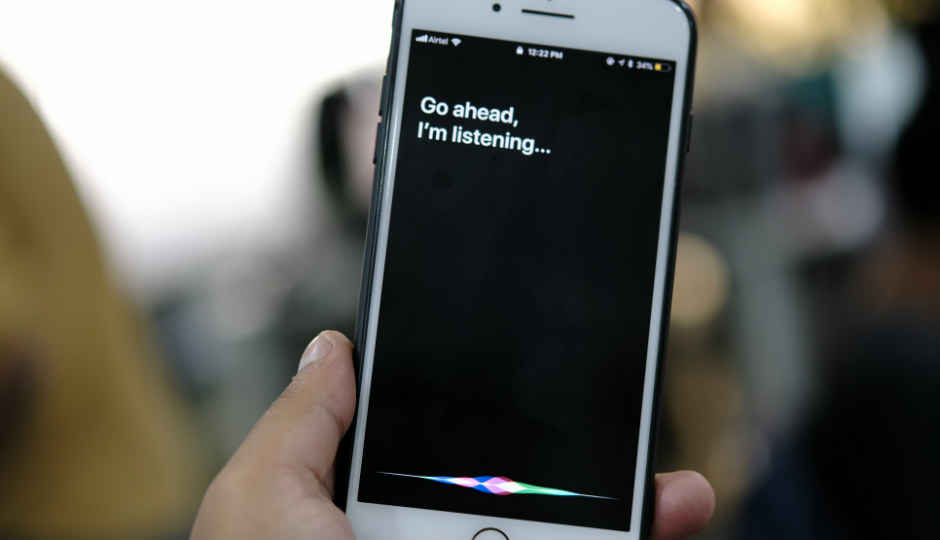 Highlights: Schoolboy detained for telling Siri, “I am going to shoot up a school” Police say the kid took a screenshot and posted it on social media thinking it’s a joke When Google introduced Duplex, its AI-powered tech that used Assistant to answer calls, it attracted criticism for allegedly being murky. However, the critics didn’t know at that time that technology could potentially paint a gloomier picture in the future. In a bizarre and worrisome incident, a middle school US boy was detained and charged with intimidation after he threatened to shoot up a school on Apple’s AI Assistant Siri. According to the police, they are investigating a general threat to school safety made today by the boy, who told Siri, “I am going to shoot up a school.” To his surprise, Siri returned with the names of multiple schools in the vicinity. The boy apparently found it interesting and posted it on his social media account for fun, however, his contacts took that ‘joke’ seriously. Here, the role of technology is more disturbing as it led to the arrest of the 13-year-old boy, who was just ‘joking’ The police say that the 'contacts' of the school kid informed the police after they saw the screenshot taken by the accused on the social media. “The male made no direct threat to a specific person, school, or school system. It has since been discovered the male has no access to weapons and posted the picture on social media as a joke. The threat is not believed to be credible at this time; however, these types of communications are taken very seriously by the Valparaiso Police Department and our community,” the police was quoted as saying. The incident comes at a time when there is a strong demand for stringent gun laws in the US. The country has seen an upward spiral in mass shootings in recent years with some of them occurring within school compounds where numerous innocent children have become victims. According to Inquirer, there were 97 school gun violence incidents in 2018 alone. This is reportedly much higher than the previous record of 59 incidents in 2006. The report says that 11 gun violence incidents have already been recorded in the US in 2019. According to a BBC report, 2018 was the ‘worst year for US school shootings’, as a total of 113 people were killed or injured in school shootings in the US. Many parts of the US have about 180 school days per year, which means that, on an average, there was a shooting incident once every eight school days. Related Read: Steam removes Active Shooter game that simulates mass school shooting
 http://bit.ly/2Gcn24p
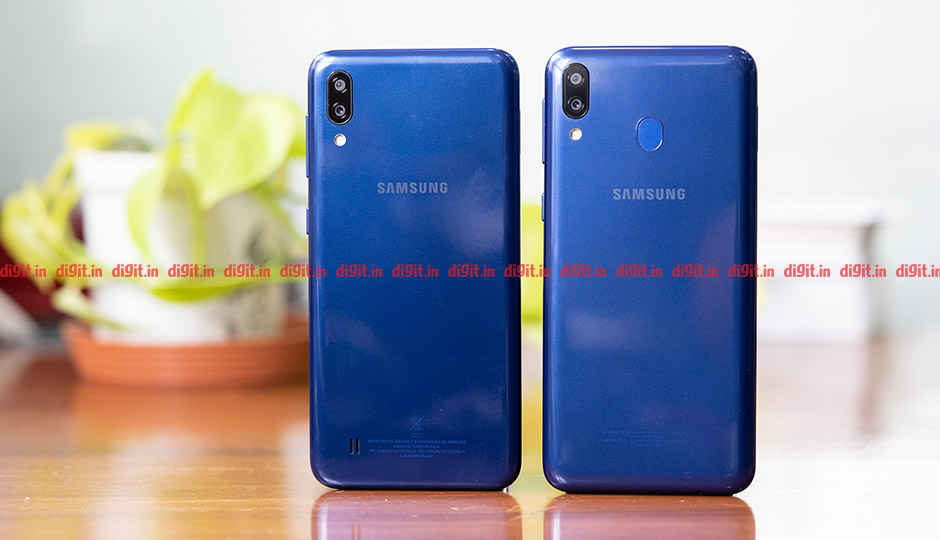 Highlights: Samsung Galaxy M10 and M20 smartphones receive new software update. The update rolls out on the phone’s first sale. The devices get January 2019 patch. Samsung recently announced its M series of smartphones in India, which consist of the Galaxy M20 and the Galaxy M10. The company has pushed new software updates for both the devices, on the same day the two handsets went up for sale. The new software update doesn't bring anything major for the phones, except the January 2019 security patch, and is almost the same for both the devices. However, the changelog states that there is an improvement to the phone’s security and stability. It also adds new and/or enhanced features, along with providing an additional boost to the performance. The update is 102 MB in size for the Galaxy M20 and 64.74 MB for the Galaxy M10. SamMobile first noticed the new updates being pushed to the phones and we confirmed the same on our units. Samsung Galaxy M20 Specifications The Samsung Galaxy M20 is more powerful of the two handsets. It is powered by the Exynos 7904 chipset and sports a 6.3-inch FHD+ LCD Infinity-V display with a 19.9:5 aspect ratio. It comes in two variants, one with 3GB RAM/32GB storage that is priced at Rs 10,990 while its 4GB RAM/64GB storage costs Rs 12,990. The phone’s internal storage can be expanded up to 512GB via a microSD Card. The smartphone runs on the new Experience UI 9.5 that is based on Android 8.1 Oreo and is backed by a 5000mAh battery. In the camera department, the phone sports a 13MP + 5MP dual rear camera setup where the primary sensor is paired with an f/1.9 aperture lens while the other sensor gets an ultra-wide lens with f/2.2 aperture. On the front is an 8MP camera with f/2.0 aperture. Samsung Galaxy M10 Specifications The Samsung Galaxy M10 features a 6.22-inch Infinity-V TFT HD+ screen and runs on the Exynos 7870 SoC. It comes in 2GB and 3GB RAM options with 16GB and 32GB of local storage respectively. In terms of optics, the Galaxy M10 features a dual rear camera setup with a 13MP primary sensor with f/1.9 aperture and a 5MP secondary ultra wide-angle sensor with f/2.2 aperture. There is a 5MP sensor on the front and as there’s no fingerprint sensor, the phone supports Face unlock. The device also runs on the new Experience 9.5 UI that is based on Android 8.1 Oreo and packs a 3400mAh battery. Related Reads: Samsung Galaxy M10, Galaxy M20 to go on sale in India at noon today [Updated] Specs comparison: Samsung Galaxy M10 vs Galaxy M20
 http://bit.ly/2D8T0KR
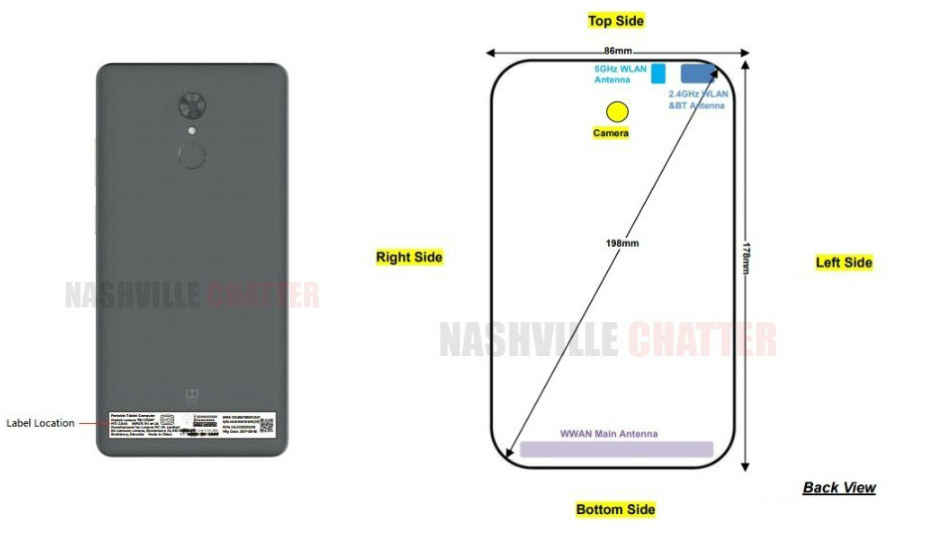 Highlights: FCC listing suggests Lenovo is working on a new tablet called Tab V7 Reportedly this tablet could actually be a phablet and named Phab 3 It is said to ship with Android 9 Pie Lenovo is reportedly working on a new device with a large display and a huge battery. From the FCC documents accessed by Nashville Chatter, a new Lenovo tablet with model numbers PB-6505M and PB-6505MC is seen housing a massive 5,180mAh battery. Preliminary assumptions suggest that the device could be the new Lenovo Phab model and reportedly, the company may launch it before the end of this quarter. The FCC listing details the dimensions of the device. It measures 178mm tall and 86 mm wide, and diagonally, it is 198 mm long suggesting that it could be equipped with a 7.8 inch display. On the back, the Tab V7 features a camera followed by an LED flash and a fingerprint scanner. The tablet carries support for dual-band Wi-Fi and is seen running Android 9 Pie. XDADevelopers claim that they found instances of a device with model number PB-6505M in the Google Play Developer Console Device Catalog. The platform says that the Google Play Developer Console Device Catalog labels the device as the Lenovo Tab V7 and reveals that this particular model will have a phone form factor. It is seen having a mid-range Qualcomm Snapdragon 450 chipset, coupled with 3GB of RAM, and its display, having an 18:9 aspect ratio with a resolution of 1080 x 2160 pixels. However, Droidshout claims that the tablet is expected to come with 4GB of RAM and two storage options. The base variant is said to have 32GB of internal storage, and the more expensive variant is expected to offer 64GB of local storage. It could come with a microSD card slot. Other specifications are not known yet. The previous Lenovo tablets were launched with model numbers having ‘TB’ as the suffix, followed by a number. Similarly, the phablets that were launched had ‘PB’ as the suffix. By this logic, the above-mentioned devices have a strong reason to be a phablet. It was in 2017 when Lenovo launched its last tablet, called the Lenovo Tab 7, and the phablet, which is called the Lenovo Phab 2 Pro. It also launched the regular variant of the phablet. Related Read: Lenovo Z5 Pro GT is world's first phone with Snapdragon 855 processor, up to 12GB RAM
 http://bit.ly/2HQ2iks
 Samsung has recently launched two new smartphones in India Galaxy M10 and M20. The Galaxy M series is currently available in India only and haven’t released in other countries yet. Samsung has kept the price of both the smartphones under Rs 15,000. On the other hand, we have the RealMe C1, which is also available in India around the same price as the Galaxy M10, which makes this RealMe device a direct competitor of the Galaxy M10. So, let’s begin with a quick specifications comparison to see which device is offering the best hardware at least on paper. Let’s begin with comparing the display of these two smartphones in detail. The Samsung Galaxy M10 has a pretty big 6.2-inch display that offers a resolution of 720 x 1520 pixels. The Samsung has provided a small water-drop notch on top of it, which houses the front-facing camera. The RealMe C1 also sports a 6.2-inch display that comes with a resolution of 720 x 1520 pixels, same as the Galaxy M10. However, the device is equipped with the old traditional notch on top, which is quite bigger than the notch that Samsung Galaxy M10 comes with. When it comes to the processor, the Samsung Galaxy M10 is powered by Samsung’s own Exynos 7870 octa-core processor, which is coupled with 2GB RAM and 16GB internal memory. The phone is also launched in 3GB/32GB variant that is available for Rs 10,999. The RealMe C1 is backed by a Qualcomm Snapdragon 450 octa-core processor that is paired with 2GB RAM and 16GB internal memory. As far as the cameras are concerned, the Samsung Galaxy M10 has a dual 13MP + 5MP rear cameras. The 5MP sensor can be used for capturing wide-angle shots. The device comes with a 5MP sensor on the front for clicking selfies. On the other hand, the RealMe C1 sports a dual 13MP + 2MP sensor on the back along with a 5MP unit on the front. The RealMe C1 is available on Amazon for Rs 7,890, while the Samsung Galaxy M10 2GB/16GB variant is available in India for Rs 7,990 and its 3GB/32GB storage model is priced at Rs 10,999
 http://bit.ly/2HUZq5T
 Highlights: OnePlus sends out invites for an event at MWC It may talk about its future products and their features Reportedly, OnePlus is unlikely to launch the OnePlus 7 at MWC The Mobile World Congress (MWC) in Barcelona may hold a lot of surprises for tech affectionados. Among several other launches, we could see Samsung’s 10th anniversary Galaxy devices (though it is unveiling the phone on February 20 in San Francisco), Motorola launching the seventh generation of its G-Series phones and Nokia bringing out the Nokia 9 PureView smartphone. Until now, there were reports that OnePlus would not make an appearance at the event, but now the Chinese company has sent out invites for a closed-door event. Given that there is no aggressive media coverage of any OnePlus device, the invitation to attend the event has come as a surprise. OnePlus isn’t likely to bring the OnePlus 7 at MWC but now we know that the Chinese company is looking to leave its mark at one of the biggest events in the technology industry. As per the invite, OnePlus is hosting a networking event and may talk to the limited audience about its future products and services. “Join OnePlus at Ultramarinos where drinks and a taste of the future will be on us. We'll be celebrating MWC 2019 at this exclusive, invite-only event,” the invite reads. There is no clarity on the nature of the event, but given the media coverage in the recent months, it could be possible that the company may give a sneak peek at its upcoming device or the talk about features of the next generation of phones. At the Annual Qualcomm Summit in December last year, OnePlus CEO, Pete Lau shared some information on the future plans and ideas, shedding light on what we can and should not expect from the company in the near future. As expected, the conversation revolved around the company’s 5G phone, but there was also talk of a smaller OnePlus smartphone. OnePlus made headlines for goofing up on stage where it initially claimed that it will the first one to launch a phone with Qualcomm Snapdragon 855 chipset. The company later came out with an explanation saying that it made a mistake during its presentation at the Snapdragon summit and it will be one of the first companies to launch a smartphone with the new Snapdragon 855 chipset. OnePlus attributed the error to a translation mistake in the slides it presented at the event. The company did not mention the name of the phone, but given the nomenclature that the company is following since its existence, it is expected that the next device will be called the OnePlus 7. Related Read: OnePlus Product Manager Challenge invites users to design upcoming features for OxygenOS
 http://bit.ly/2t7dyi7
 Highlights: Samsung Galaxy S10+ with Exynos 9820 spotted on Geekbench It scores similar to what the S10+ with Snapdragon 855 scored on Geekbench Last month, the Samsung Galaxy S10+ powered by the Qualcomm Snapdragon 855 was spotted on Geekbench. It scored 3413 points in single-core tests and 10256 points on multi-core tests. Now, the phone has again been spotted on the benchmarking platform running on the company's own Exynos 9820 mobile platform. According to the latest listing, the scores are more-or-less same as we have seen in the previous one. The phone with Exynos processor is seen scoring 4472 points in single-core tests and 10387 points on multi-core tests. The scores also suggest that the Samsung is catching up with Apple’s A12 Bionic chipset that currently powers its latest series of iPhones: the iPhones XS, the iPhones XS Max, and the iPhones XR. Samsung will unveil the phones at an ‘Unpacked’ event in San Francisco on February 20. The three US variants of the phone have already got a certification from the Federal Communications Commission (FCC). Reports have suggested that Samsung will also be launching a 5G variant of the phone in select markets, including the US. There hasn’t been any concrete proof of the device, and since it is reported to launch at a later date this year, it is possible that Samsung will get the approval for the 5G variant in the coming months. According to the documents published, the FCC has approved phones with model numbers SM-G970U, SM-G973U and SM-G975U. These model numbers correspond to the Galaxy S10e or S10 Lite, the Galaxy S10 and the Galaxy S10+ respectively. Samsung generally launches its flagship devices with different chipsets in the US. While in Asian countries it uses an indigenously developed Exynos processor, in the US Samsung’s flagships are powered by Qualcomm SoCs. The FCC listing also mentioned that all or some variants of the phones may also support the reverse wireless charging feature that can wirelessly charge other compatible devices like handsets and watches that have wireless charging support. The filing has a document titled “Wireless Power Transfer”, which mentions that the Galaxy S10 can “receive or transmit an AC power signal through magnetic induction (MI) or magnetic resonance (MR).” Related Read: Samsung Galaxy 'S10E' press renders allegedly leaked Samsung Galaxy S10 and Galaxy S10+ press renders leak in full
 http://bit.ly/2Gpr8VS
 Highlights: Xiaomi devices with MIUI 10.2.1 get Google Assistant shortcut. MIUI 10 brings navigation gesture for Xiaomi devices but this removes the standard method of invoking Google Assistant. A short press on the power button enables the Google Assistant. Xiaomi announced its MIUI 10 back when it launched the Mi 8 series of smartphones in China. The UI skin that sits on top of the Android operating system comes with full-screen gesture support. However, when one uses gestures on MIUI 10, the software navigation buttons are removed and one cannot boot up the Google Assistant in the standard way of pressing down on the home button. However, XDA Developers spotted that a new option has been added with the MIUI 10.2.1 update that enables one to use the power button to call up the smart assistant. This changes on the MIUI 10.2.1 enables bringing up the Google Assistant while using navigation gestures. One can now press and hold the power button for 0.5 seconds to invoke the company’s smart assistant, but the feature is disabled by default and one will need to enable it from the “Button and gesture shortcuts” setting menu on their phone. However, there is no option to set the delay timer. This new option is similar to the feature enabled by OnePlus with the Open Beta 3 on the OnePlus 6. As per the company’s product manager, Sudeep Sahu, the company’s focus with MIUI 10 has been on Speed, Design, Sound and AI Portrait image capturing. In terms of performance, MIUI 10 comes with two new features called “lock free critical path” and “co-dependent prioritising”, which are said to improve speed times of their devices by up to 10 percent. The recent screen is also revamped with MIUI 10 as one will now get to scroll down for viewing stacked cards of their recently used apps. One can also swipe to remove apps or long press on an app for accessing shortcuts like the split view. In terms of audio, the notification tone is said to change with every message you receive. There have also been some new changes in MIUI 10 specifically for Indian users. The web browser has a dedicated page for local services with support for Progressive Web Apps (PWA). The camera app also recognises Paytm QR codes and there’s a quick menu tab for all business messages in the Messages app. Related Reads: Xiaomi Redmi 6 Pro, Redmi 6 and Redmi 6A receive temporary price cut till February 8 Xiaomi announces MIIUI 10 roll out for 28 devices
  http://bit.ly/2TwsKRF
 Highlights: The popular belief so far was that the Moon was born out of materials from a Mars-sized impactor when it collided with Earth nearly 4.5 billion years ago. New research at NASA suggests it's Earth's materials found on the Moon and not the impactor's. More research is necessary to confirm all of this, NASA believes. For decades now, scientists have wondered how the Moon came to be and what it consists of. The most popular theory says that the Moon consists of materials from a Mars-sized celestial body from the time it collided with Earth approximately 4.5 billion years ago. However, new research data from NASA suggests otherwise. It suggests that our Moon consists of materials found on Earth and not from the Mars-sized impactor. The new research comes from analyses made recently and samples collected from the Moon nearly fifty years ago during the Apollo missions. The findings of the recent research have been published in the journal Science Advances by Kevin Righter of the Astromaterials Research and Exploration Science Division (ARES) at NASA’s Johnson Space Center in Houston, Texas. He questions the popular, long-standing theory that the Moon contains elements from the Mars-sized impacting body and believes that they’re actually from Earth. He says this after modelling the composition of the Moon while considering several deciding factors like post-impact disk processes and the formation of the Moon’s small metallic core. Righter created a “bulk Moon” model composition similar to that of our planet to compare the concentrations of 14 volatile siderophile (metal-loving) elements from the Moon samples with his calculated values. To everyone’s surprise, he found a strong correlation with 9 out of the 14 elements, suggesting that the Moon does not contain elements from the Mars-sized impactor. “By simulating the main processes contributing to the Moon’s formation and early differentiation, we were able to predict the level of each element that should be present in the Moon’s mantle,” commented Righter in a recent NASA press release. Righter firmly believes that more research is required to understand the dynamic environment of the post-impact disk better and hopes that his own research brings about a deeper dive into the matter. “Scientists in the 1970s recognized the very low levels of some of these volatile elements in lunar samples,” the scientist added. “Much lower than concentrations in the Earth. But lack of experimental data in the 1970s hindered scientists from a complete understanding of these low lunar concentrations.” Related Read: China's lunar probe lands on the dark side of the moon
 http://bit.ly/2StnaSF

