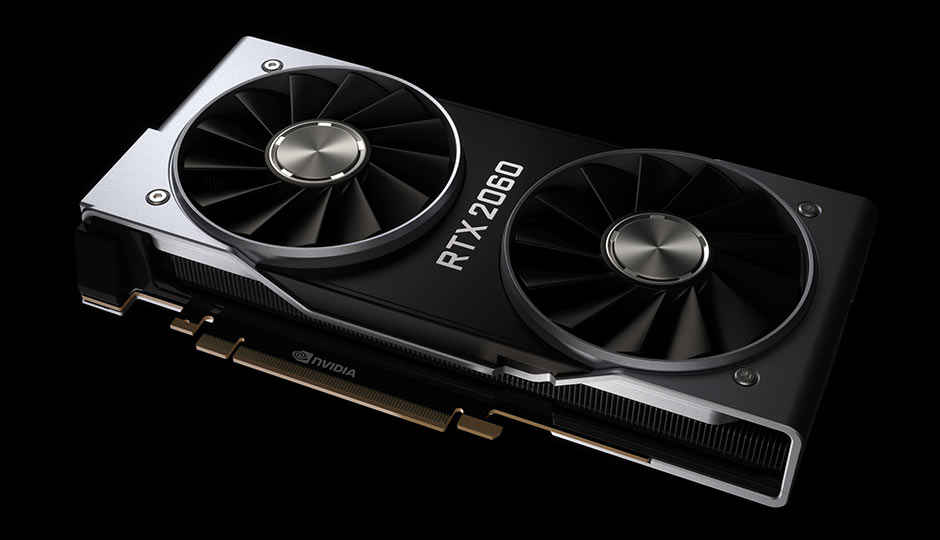
NVIDIA’s CES 2019 press conference turned out to be a bit different this year. NVIDIA CEO Jensen Huang came onto the stage and set the record straight from the get go, this year’s CES was going to be all about gaming. Jensen Huang’s keynote shared quite a few similarities with his Gamescom 2018 address, it started off with him revisiting the graphics revolution seen in the past 15 years and how it was primarily focused on rasterization in the past and the shift towards more real time processing. It wouldn’t take a rocket scientist to figure out that we were about to see the announcement of a new graphics card with real-time ray-tracing capabilities. Before getting to the juicy part, Jensen took us through some of the features such as reflections, global illumination, facial animation, area lights, character animation and super resolution, etc which according to him, are required to make video game graphics appear more realistic. These very features were part of the Turing architecture that was announced at Gamescom 2018 in the form of the RTX 2080 Ti, RTX 2080 and the RTX 2070. The demo reel that followed saw these very features put in use, in real time. One of them was the announcement for Anthem incorporating DLSS. Then there was one about how Battlefield V has made use of ray tracing and DLSS. After nearly 20 minutes of demo reels, Jensen finally let the cat out of the bag. All the demos run during the event were all on a brand new GPU, the RTX 2060. Here’s everything that NVIDIA announced at their CES 2019 keynote. NVIDIA GeForce RTX 2060 Having made a significant leap in gaming hardware with the latest Turing architecture based graphics cards, namely the RTX 2080 Ti, RTX 2080 and RTX 2070. NVIDIA CEO, Jensen Huang, at their CES 2019 press conference announced the latest member in the RTX family, the NVIDIA GeForce RTX 2060. The RTX 2060 will reportedly rival the previous gen GTX 1080 in terms of performance. Unlike predictions made by industry analysts, the RTX 2060 does indeed have 30 RT cores giving it real-time ray-tracing capabilities. Here’s the rundown of the GPU structure. GTX 1060 RTX 2060 SMs 10 30 CUDA Cores 1280 1920 Tensor Cores N/A 240 Tensor Flops N/A 51.6 RT Cores N/A 30 Texture Units 80 120 ROPs 48 48 Rays Cast 0.44 Giga Rays 5 Giga Rays RTX OPs N/A 37 Boost Clock 1708 MHz 1680 MHz Memory bandwidth 8 Gbps 14 Gbps Memory capacity 6144 MB GDDR5 6144 MB GDDR6 Memory bus-width 192-bit 192-bit Memory bandwidth 192 GB/sec 336.1 GB/sec TDP 120 Watts 160 Watts NVIDIA GeForce RTX 2060 Availability & Pricing Jensen Huang announced that the RTX 2060 will be available for sale from January 15, 2019 in all major markets. The cards should be available in India around the same time frame. As for pricing, the GeForce RTX 2060 will be priced at $349 globally. India prices have not been released but should be around Rs.29,000. Autodesk Arnold support Since gaming graphics cards have increasingly been used for use cases such as video editing, NVIDIA has finally decided to officially support enterprise editing software on the new RTX graphics cards. The only one to be announced was Autodesk Arnold, an advanced Monte Carlo ray tracing renderer. It’s assumed that NVIDIA won’t be supporting all the multimedia authoring tools on the GeForce RTX graphics cards since that would cannibalise the sales for the Quadro graphics cards. Nevertheless, this is a welcome move from NVIDIA. 8K RED Video Editing Another major announcement to the benefit of prosumers and studios is that NVIDIA RTX cards will now support 8K video editing for footage shot with RED cameras. All RTX graphics cards, not just the newly announced RTX 2060, will allow users to perform editing, colour correcting and rendering with 8K RED footage. OBS pro-quality broadcasting on single PC NVIDIA also announced that they’ll be working closely with the developers of OBS, the most popular video game streaming software to make the software more optimised on NVIDIA GPUs. Currently, running OBS can rack up quite the compute overhead leading to stuttering during game play if you’re streaming from the same machine. With the new improvements, NVIDIA promises to make it all go away. Turing VRWORKS with HTC Vive NVIDIA also announced that they’ll be working closely with HTC to improve user experience on the VR HMDs made by the company. NVIDIA 2000 series Mobility Another major announcement was the introduction of the new mobility GPU lineup based on the Turing architecture. GeForce RTX-powered laptops will be available starting Jan. 29 from the world's top OEMs, including Acer, Alienware, ASUS, Dell, Gigabyte, HP, Lenovo Legion, MSI, Razer and Samsung. The individual manufacturers will be unveiling their SKUs in the coming days.

http://bit.ly/2LV0SUe
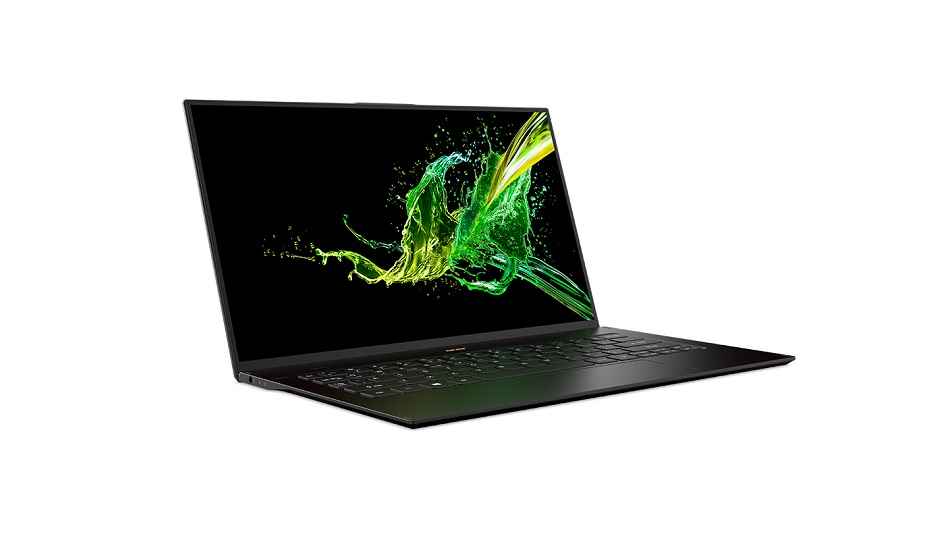 Key Highlights: Acer to launch the 2019 Swift 7 at CES this year. The new model gets an 8th-gen Intel Core i7 CPU. It also gets a new clickable touchpad and support for Thunderbolt 3. As if the Swift 7 wasn't light enough to begin with, Acer has gone and shaved off more of its skin to make the laptop lighter still. The 2019 model, which is set to launch at this year's CES in Las Vegas, comes with Intel's 8th-gen Core i7 CPU. In addition, the Swift 7 gets Thunderbolt 3 support and a new clickable touchpad. The Swift 7 will be available in North America from May for a starting price of $1,699 (Rs 1,18,157 approx). The 2019 Swift 7 is 150g lighter, bringing its total weight to 890g. According to a recent press release, Acer has gone with magnesium alloys on the laptop’s exterior to maintain a balance between low weight and high strength. The laptop is now smaller too. It now measures 12.51 x 7.53 inches, as opposed to last year’s model, which measured 12.9 x 9.3 inches. Thickness, however, is now 9.95 millimetres, which is actually one millimetre over last year’s model. Acer has also sliced the bezels to 2.57 millimetres, which gives the laptop a screen-to-body ratio of 92 percent. Under the bonnet, the Acer Swift 7 gets a fresh powertrain. It now sports an 8th-gen Intel Core i7-8500Y CPU. Storage is taken care of by a PCIe-based solid-state drive. Storage options include 256GB and 512GB while LPDDR3 RAM options include 8GB and 16GB. The 14-inch Full HD IPS display remains unchanged. What’s new though is Thunderbolt 3 support for the USB Type-C ports it had. The Swift 7 also gets a new clickable touchpad that’s covered in Corning Gorilla glass. The keyboard, though backlit, has keys with a low travel of 1.1 millimetres. This could become the Acer Swift 7’s weak point. Nonetheless, only a full review of the device will tell us what it’s like to type on the machine. The new Acer Swift 7 will be sold in two colours: Starfield Black and Moonstone White. In addition to North America, the Acer Swift 7 will be sold in EMEA and China from April for a starting price of €1,799 and ¥14,999 respectively. We’re not sure if the new Acer Swift 7 will make it to Indian shores anytime soon. Related Read: 10 Crazy gadgets to watch out for at CES 2019
 http://bit.ly/2VsoKCW

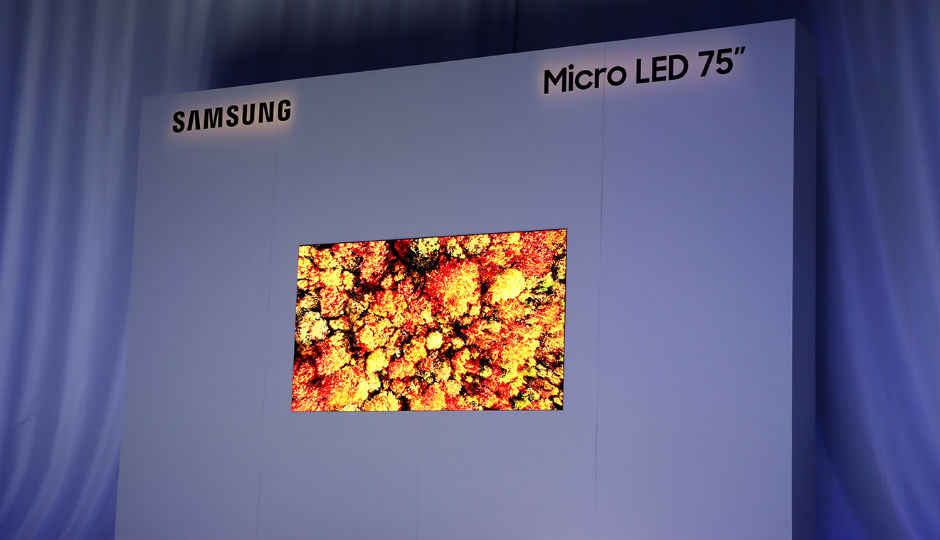 Highlights Samsung shrunk The Wall TV down to 75-inches. It is a MicroLED TV. Samsung wants to ship MicroLED TVs to customers in the US in 2019. At CES 2018 Samsung showcased a 146-inch MicroLED TV called The Wall. This year, the South Korean tech giant has shrunk the TV down to 75-inches. Samsung is betting big on MicroLED TVs and aims to ship them to customers in the US in 2019 itself. There is no launch window or model numbers, or even pricing announced for these TVs yet. As the name MicroLED suggests, the technology uses millions of MicroLEDs to create its image. The modular nature of the TV showcased at CES means that you can customise the size of the TV. MicroLED as a technology is expected to bring the benefits of OLED such as great black levels, improved viewing angles and more. However, MicroLEDs are not subject to the problems of OLED TVs like burn-ins. The first generation of The Wall was 80mm thick. This was ok for industrial use. But with the advancement in technology and focus on slim designs for home use, the Wall is now slimmed down to 30mm. Apart from the 75-inch MicroLED TV, Samsung also showcased an even larger version of The Wall at CES 2019. The one on display is a whopping 219-inches. Samsung is also displaying TVs called "The Window". As the name suggests, these TVs are tall and narrow or short and wide representing the design of actual windows. Samsung was the first to the market with the launch of its 8K TV called the Samsung Q900. The TV comes with Samsung’s one connect box. The one connect box supports HDMI 2.0 out of the box but Samsung has said that the TV’s one connect box can be upgraded to support HDMI 2.1. LG has announced that their line-up of flagship TVs will support HDMI 2.1 out of the box. Sony, TCL and more are yet to showcase their 2019 offerings at CES. Moving away from CES, Xioami has teased a large TV which we presume is a 65-inch 4K TV set to launch in India. The launch date for the TV in India is January 10 11am and if history is to be repeated, then the TV will be a Flipkart exclusive. You can read more about the upcoming Xiaomi TV here. Related Reads CES 2019: LG's 2019 TV line-up boasts of Alexa integration, HDMI 2.1 support and will be powered by the second-generation Alpha 9 processor iFFALCON 75 inches Smart Ultra HD 4K LED TV Review Panasonic LED TV TH-55FX800D Review
  http://bit.ly/2QqNXtW
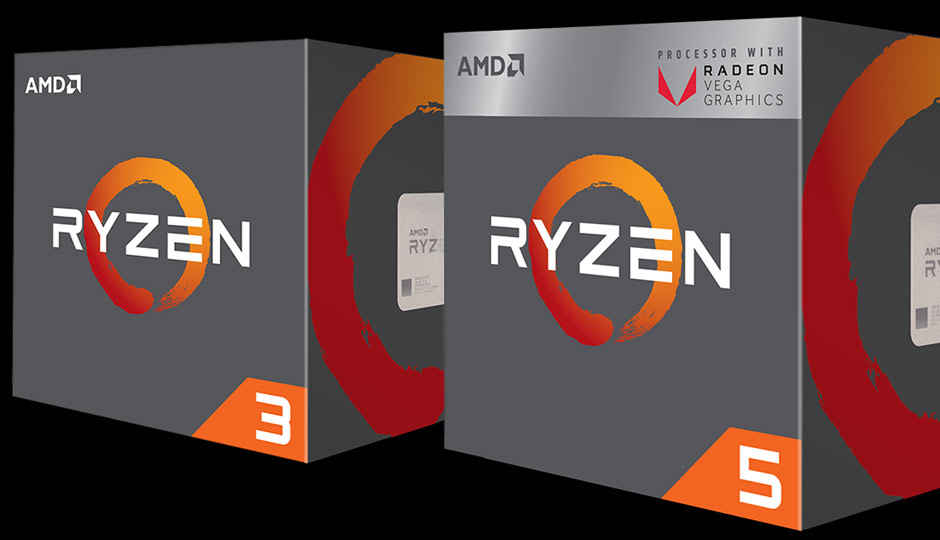 Highlights: AMD has announced an upgrade for mobile CPUs with its second-gen Ryzen 3000 series Picasso APUs. The company has also unveiled an H-series processor with higher 35W TDP for gaming notebooks. The company also announced the AMD Athlon U-series processor based on older 28nm process meant for Chromebooks. In expected lines, AMD refreshed its mobile lineup of processors with new second-gen Ryzen 3000-series Picasso APUS for the 3, 5 and 7 series. Along with that, the chipmaker also announced the AMD Athlon U-series processor. The company also has a new lineup of high-end H-series chips for gaming laptops, marking the entry of AMD in the gaming laptop market. The Athlon A-series are targeted at low-end Chromebooks. The company is also likely to announce the progress of its 7nm chips later at CES, but for now the company has revealed enough meat to fawn over. The new Ryzen Mobile 3, 5 and 7 APUs tout the company’s Zen+ CPU cores that are paired with Vega graphics. The processors are made in a SoC design and have the basic design as the first-gen Raven Ridge processors. But just like what the company did with the desktop lineup, the CPU cores themselves are newly designed. The optimised designs, according to the Red Team, offer 8 percent boost in CPU and GPU performance as compared to the first-gen Raven Ridge processors. The Zen+ CPU cores feature intelligent multi-core boost algorithms that the company claims speeds up everyday tasks on a computer. It also has less cache and memory latency. The company recently moved to Global Foundries’ 12nm nodes from 14nm that allow for an extra 100 to 200MHz of extra speed for the CPU cores. Furthermore, the new Ryzen 7 and 5 models will have four cores and eight threads. On of the Ryzen 3 APU, on the other hand is a quad-core processor with no threading. In fact, there is a separate Ryzen 3 lineup with two dual-core, quad-thread processors. The L3 cache on the new processors have been bumped to 6MB for the Ryzen 7 and Ryzen 5 lineup, while the Ryzen 3 family is split between 6GB and 5GB cache memory, based on the number of cores. The chips support dual-channel DD4-2400 memory. The company compared the chips to the Intel Core-i5 8250U with its own performance benchmark results, in office applications and gaming on integrated graphics. The most interesting annoucement was the Ryzen H-series processors meant to power gaming laptops. The chip has a TDP of 35W, and has the same number of CPU cores as the regular U-series with 6MB of L3 cache. The chip also has the same Vega graphics and the same base/boost frequencies. What’s different is the higher TDP that allows AMD to boost to higher frequencies for longer. The company expects the chip will be paired with discrete graphics in gaming laptops by OEMs. Finally, AMD is using its old 28nm Bristol Ridge processors to shake up the Chromebook market. There are two A-series processors that sports AMD’s Excavator cores indicating these were built on an older platform. Related Links: CES 2019: What to expect from Sony, Samsung, LG, Panasonic, Nvidia, Dell and others Next-gen AMD Ryzen mobile CPUs spotted on Geekbench AMD Ryzen 9 3800X flagship processor spotted online with 16 cores, 32 threads
  http://bit.ly/2H0tJaR
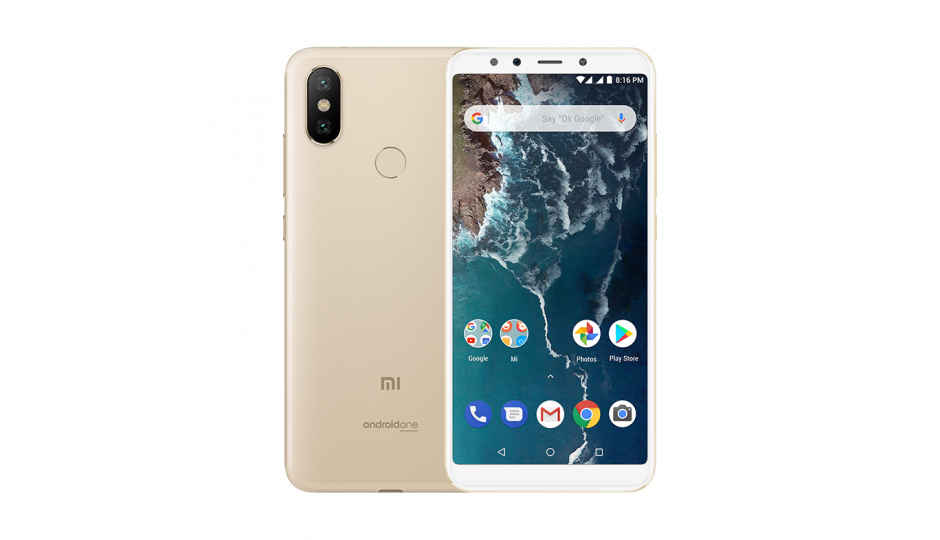 Highlights: Xiaomi Mi A2 has received a permanent price cut. The 4GB RAM version of the Mi A2 will be available at Rs 13,999. The device’s 6GB RAM variant is now priced at Rs 15,999. Xiaomi has slashed the prices of its Mi A2 smartphone once again and it will now be available starting at Rs 13,999. The company has announced that starting 12pm from January 7, the 4GB RAM + 64GB storage version of the Mi A2 will be available priced at Rs 13,999, down from its previous listing of 15,999. The 6GB + 128GB version of the phone will also be discounted and will be up for sale at Rs 15,999, down from Rs 18,999. The 4GB and 6GB RAM versions of the phones were initially launched at Rs 16,999 and Rs 19,999 respectively. This comes soon after the company discounted the Mi A2 by Rs 1,000, along with the Redmi Note 5 Pro and the Redmi Y2. Additionally, the company will be making a total of five new announcements this week to celebrate its five years in India and this price cut is the first. The Mi A2 (review) is powered by the Qualcomm Snapdragon 660 SoC and comes with 4GB and 6GB RAM options. It features a 5.99-inch full-HD+display with 403 ppi and an 18:9 screen aspect ratio. The phone was launched running on Android 8.1 Oreo and in November, was updated to Android 9 Pie. The phone is backed by a 3,000mAh battery that supports Quick Charge 4+ and it comes with a rear mounted fingerprint sensor. In terms of optics, the Mi A2 comes equipped with a dual-rear camera setup, one with a 12MP Sony IMX486 sensor with f/1.75 aperture and a secondary 20MP Sony IMX376 sensor with f/1.75 aperture. The main camera also supports 4-in-1 pixel binning tech. On the front, the device comes with a 20MP sensor, which is supplemented with a soft-light LED flash. Due to a recent reduction in GST rates, Xiaomi reduced the prices of some of its televisions. The Xiaomi Mi TV 4A 32-inch, Mi TV 4C Pro 32-inch, and the Mi TV 4A Pro 49-inch are now available at discounted prices. The 32-inch Mi LED TV 4C PRO gets a Rs 2,000 price cut and will be available at Rs 13,999, down from Rs 15,999. The price of Mi LED Smart TV 4A 32-inch is now discounted by Rs 1,500 and it is available at Rs 12,499, down from the original price of Rs 13,999. Additionally, the 49-inch Mi LED TV 4A PRO will now retail at Rs 30,999 after a Rs 1,000 price cut from Rs 31,999. Related Reads: Fake news alert: Xiaomi has not discounted any smartphones after GST reduction Xiaomi TVs get a price cut, thanks to reduction in GST rates
  http://bit.ly/2TxZFEO
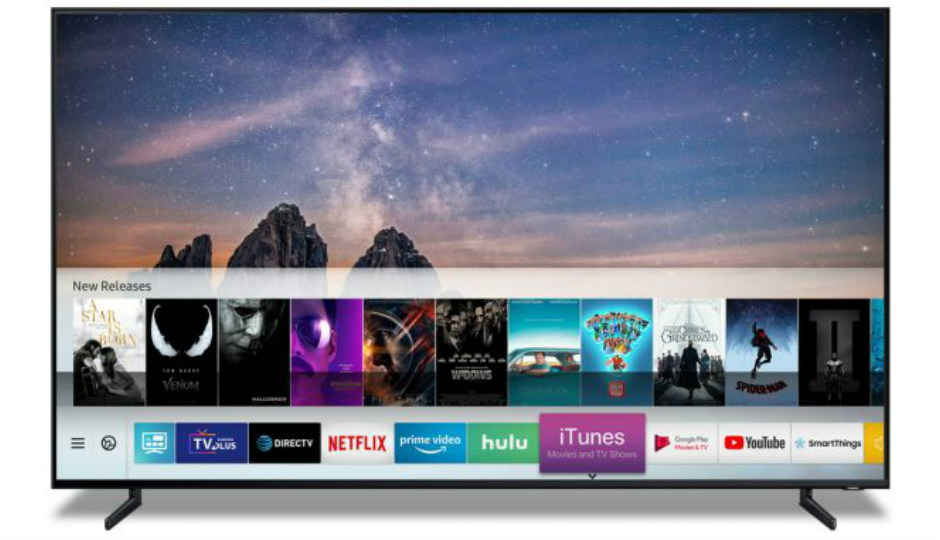 Highlights: iTune and AirPlay 2 support coming to all 2018 and 2019 Samsung Samrt TVs. Users will be able to access iTunes library on Samsung Smart TVs. 2018 Samsung Smart TVs will get support through firmware update. Samsung has announced that it will offer iTunes and AirPlay 2 support to its lineup of 2018 and 2019 Smart TVs in order to enable Apple users to watch their iTunes Movies and TV Shows on the televisions and play videos, photos, music, podcasts and more from Apple devices directly on Samsung Smart TVs. This marks quite a shift in strategy for Apple as Samsung is one of its biggest competitors and the Cupertino company is not traditionally known to offer integrations on third party devices. The announcement was made by the South Korean company via a press release on January 6. In the release, Samsung noted that a new iTunes Movies and TV Shows app will debut only on Samsung Smart TVs in more than 100 countries. AirPlay 2 support will be available on Samsung Smart TVs in 190 countries worldwide. Those with a library of content on iTunes will be able to access the same on Samsung TVs. Users will also be able to browse the iTunes Store to buy or rent movies and TV Shows directly from Samsung TVs. “iTunes Movies and TV Shows will work seamlessly with Samsung’s Smart TV Services, such as Universal Guide, the New Bixby and Search, to create a consistent experience across Samsung’s platform,” Samsung noted in its announcement. Samsung Smart TVs that will support iTunes and AirPlay 2 include all 2018 and 2019 Smart TVs, including QLED 4K and 8K TVs, The Frame and Serif lifestyle TVs, as well as other Samsung UHD and HD models. The 2018 TVs will be getting the support via a firmware update, while 2019 models will bring support out of the box. “We pride ourselves on working with top industry leaders to deliver the widest range of content services to our Smart TV platform,” said Won-Jin Lee, Executive Vice President, Service Business of Visual Display at Samsung Electronics. “Bringing more content, value and open platform functionality to Samsung TV owners and Apple customers through iTunes and AirPlay is ideal for everyone.” “We look forward to bringing the iTunes and AirPlay 2 experience to even more customers around the world through Samsung Smart TVs, so iPhone, iPad and Mac users have yet another way to enjoy all their favorite content on the biggest screen in their home,” said Eddy Cue, senior vice president of Internet Software and Services at Apple. Related Links: Samsung to unveil three new monitors at CES 2019, including 'Space Monitor'
 http://bit.ly/2CVxR7Z
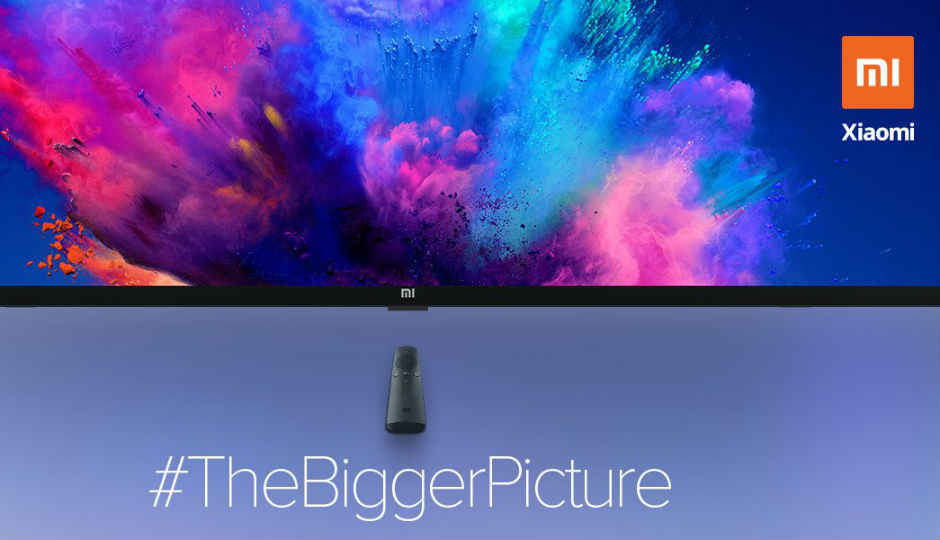 Highlights Xiaomi is set to unveil a new Mi TV on January 10 It is presumably the 65-inch Mi TV Mi TV India has tweeted, “It's time to go from small to big. Make space, #TheBiggerPicture unveiling on 10th Jan, at 11 AM.” The tweet is accompanied by a small video which shows space being made on a table that would normally house a TV. It is safe to assume that this is a teaser for the launch of the 65-inch TV that Xiaomi is rumoured to launch. On January 3, Global VP at Xiaomi & MD Xiaomi India, Manu Kumar Jain took to Twitter to tease a photo of the Mi TV with a tagline “the bigger picture”. In his tweet, he says, “I believe a bigger experience is always better.” This could be a hint that we will see a larger screen size of the Mi TV in India, presumably, a 65-inch variant of the TV. You can read more about Manu's tweet here. The family of Mi TVs in India are currently available in 32-inch, 43-inch, 49-inch and 55-inch variants. So we presume that this new variant of the TV could be the 65-inch variant of the Mi TV. Information circulating the internet suggests that the TV could be priced around Rs 60,000. There is no information about the hardware powering the TV, but it is safe to assume that the TV will support 4K and HDR and will run on the company’s PatchWall OS based on Android – similar to what we have seen on other Xiaomi TVs in 2018. Xiaomi has chosen to launch the TV locally in India at a time when the world is gathering at Las Vegas for CES 2019 to check out the new offerings in the world of TVs from Sony, Samsung LG and more. We already know about the TVs that LG will showcase at the consumer electronics show. You can read more about LGs OLED and NanoCell TVs here. A great thing is that the LG TVs will bring with them HDMI 2.1 which means higher frame rates for 4K and 8K content. Whether the new Mi the new Mi TV also supports HDMI 2.1 is something we will only know when the TV launches. Stay tuned as we will bring you an in-depth review of the Xiaomi TV as soon as we get our hands on it. Also Read CES 2019: LG's 2019 TV line-up boasts of Alexa integration, HDMI 2.1 support and will be powered by the second-generation Alpha 9 processor Xiaomi Mi TV 4A 32, Mi TV 4C Pro 32, Mi TV 4A Pro 49 price cut thanks to reduction in GST rates
 http://bit.ly/2TxZBoy
 Highlights: NVIDIA says its 65-inch 4K HDR display will launch in February The display will cost gamers a whopping $4,999 It will have NVIDIA’s Shield integrated for streaming videos Last year at CES, graphics equipment maker NVIDIA announced a 65-inch 4K HDR gaming display saying that it will hit the market in the summer, however, the display never made it to shelves. Now, at CES 2019, Nvidia has announced that this display will be available for purchase starting February this year. NVIDIA has partnered with Acer, HP, and Asus to bring the display to the market and has priced it at a whopping $4,999 (approx Rs 3,47,000). Called HP Omen X Emperium, the display includes G-Sync support and a 144Hz refresh rate. The displays will also support popular HDR formats at a native frame rate of 23.976, 24 and 25 FPS and G-Sync will ensure zero interpolation making the playback smooth. The display will have Nvidia’s Shield integrated into it, which will let buyers use the equipment to stream videos from apps such as Netflix and YouTube, and Google Assistant. “PC gamers expect high performance and instant response times, but, until now, they’ve been largely limited to traditional desktop displays, Big Format Gaming Displays (BFGDs) change that. With NVIDIA’s latest technology built into these new displays, PC gamers can now experience their favorite titles in all the low-latency glory they deserve,” The Verge quoted Matt Wuebbling, Head of GeForce Marketing at NVIDIA, as saying. Reportedly, the screen has HP’s Quantum Dot technology as well as a DCI-P3, which means that the display has a wide colour spectrum. There is also a soundbar to its display, which includes three stereo amps with modes for both gaming and entertainment. The display includes three HDMI 2.0 ports, one DisplayPort, two USB ports, and two USB ports. There is no information when these BFGD (Big Format Gaming Displays) will make their way to India. Related Read: NVIDIA announces RTX 2060 Nvidia 2020 GPU's could be built with Samsung's 7nm process
  http://bit.ly/2TxWtJk
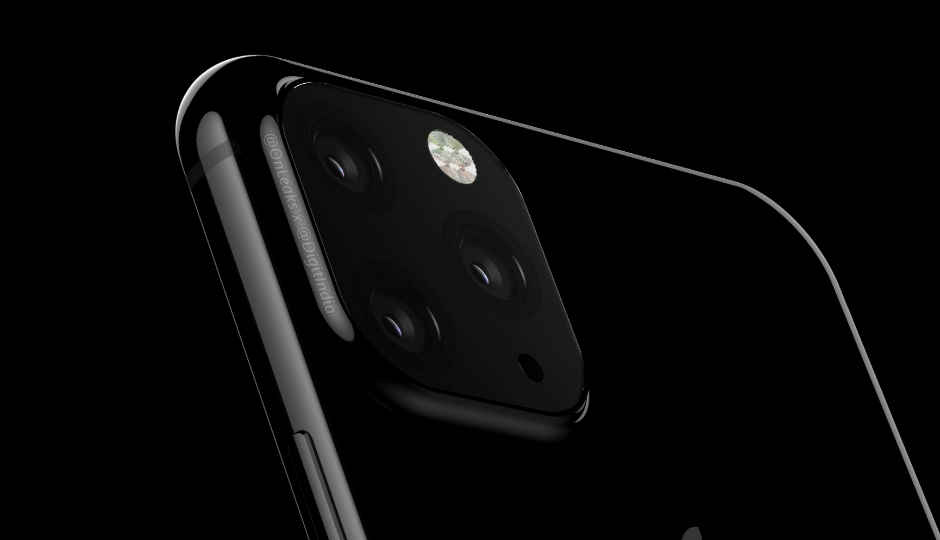 UPDATE: Tipster @IceUniverse also confirmed the leaked renders are indeed correct. Apple plans to use a triple-camera setup housed in a square camera unit with a rather large camera bump. Note that this is an early look at the upcoming smartphone and could undergo some more changes in the design. Apple’s planned expansion into a three-smartphone model wasn’t exactly rewarded in 2018 as the company’s shares dipped 12 percent in December, but the Cupertino-based company has a history of bouncing back. While it’s still too early to judge the fate of the iPhone XS, iPhone XS Max and the iPhone XR, we can now confirm that Apple will launch three new iPhones in 2019, continuing the current lineup. We have gotten our hands on a very early look at the 2019 iPhone thanks to a partnership with @Onleaks. This is in fact the very first look at what Apple is up to and by the looks of it, the next flagship iPhone will have three cameras on the back. Take a look at these renders in high resolution here: Render 1 & Render 2 The leaked renders reveal a square camera unit housing three cameras aligned non-linearly. There are two cameras aligned vertically, similar to the iPhone XS. The render reveals there will be a third camera placed between the two, on the side. Above that is an LED flash and a microphone on the bottom. OnLeaks claims the 2019 iPhones are still in Engineering Validation Test (EVT) stage, and there could be changes in the details when the phones will eventually launch in September 2019. We also know that Apple plans to launch three iPhones in September 2019 -- One low-end variant, possibly the successor to the iPhone XR and two high-end variants, succeeding the iPhone XS and the iPhone XS Max. Not knowing the scale at which the image was rendered, it is difficult to say which variant will sport the three cameras. However, given the drastic change in the camera setup, this, most probably, is our closest look at the top of the line 2019 iPhone. The fact that the 2019 iPhones may have three cameras is cross-referenced by an earlier report by Bloomberg that states Apple will adopt long-distance 3D ToF technology on the 2019 iPhones. With a non-aligned camera module on the back, Apple could adopt the technology for the rear camera, similar to the Oppo R17 Pro. ToF or Time of Flight technology relies on how much time light takes to bounce off an object to create a 3D map. Sony is presently manufacturing 3D sensors for the technology, and the Bloomberg report stated the publication spoke to Sony to confirm the news. The leaked renders, as a result seem to be accurate to the information available so far. “Cameras revolutionized phones, and based on what I’ve seen, I have the same expectation for 3D [cameras],” Satoshi Yoshihara, Head of Sony’s sensor division told Bloomberg. Sony plans to ramp up the production of rear and front facing 3D ToF sensors to meet the iPhone demand. The production is expected to kick start late summer. The third camera can be used to focus faster on the object, and to create 3D models. It can track objects even in dark almost instantaneously by throwing laser pulses at the object and measuring the time taken by the laser to bounce back to the sensor. The sensors can have an even bigger impact in AR and VR. Sony claims the ToF sensor can be used to map rooms in real-time. In a demonstration, the report claimed Sony showed the camera can be used to track user’s hands in a game, like casting a spell. The 2019 iPhones are still nine months away from becoming available. And while we can confirm the flagship smartphones will use a new technology to improve photography, the design itself is not final. However, the renders reveal the black-coloured rear panel will be made of glass (the shine around the edges denotes that). The Apple logo will remain the centre of attraction though, positioned in the top centre. An earlier report also claimed Apple will not have a major design revamp. Tipster Ice Universe had noted in a Tweet that Apple will stick to using the notch in 2019 and in 2020, the company is expected to launch iPhones with punch-hole displays. While the presence of three cameras certainly sound impressive, it is likely to push up the cost of production further. In a teardown of the iPhone XS Max, it was noted that the bill of materials of the 256GB 2018 flagship iPhone was $443, as compared to the $1243 price tag it fetches in the US. Knowing Apple and its affinity to use high-quality components, the cost is likely to increase further. Now it remains to be seen whether that will affect the price of the 2019 iPhones. Apple reduced the forecast of iPhone sales for the upcoming quarterly report after lower-than-expected sales in 2018. The company has introduced price-cuts and trade-in incentives to boost sales of the 2018 iPhones. Many analysts believe the ongoing trade war between US and China have hurt iPhone sales in China, while the high price of the iPhones in India have led to a lacklustre response in the world’s second largest smartphone market. It remains to be seen whether by adding a third camera to the setup (and making the iPhone look extremely ugly in the process), Apple can bounce back from a disappointing 2018. The company has done it multiple times in the past, and as the leaks suggest, a three-camera iPhone will be the key to company’s comeback plan.
  http://bit.ly/2Tvq0Ug
 Key Highlights: Samsung will unveil three new computer monitors at this year's CES The first is a slim monitor with a novel space-saving mounting design The second is a 49-inch ultra-wide gaming monitor The third is a curved display with a slim frame Samsung has a new set of computer monitors to showcase at this year’s CES in Las Vegas. To be more specific, the Korean electronics manufacturer has three new large monitors to offer to its consumers this year. The first is the Samsung UR59C, a 32-inch curved 4K UHD monitor. The second is the Samsung CRG9, an ultra-wide gaming monitor with Dual QHD resolution. The third, and the most interesting one, is the Space Monitor. Available in 27-inch and 32-inch sizes, the Space Monitor aims to create more space on the user’s desk by sticking to the edge of the table. At first, the Space Monitor might sound like something designed specifically for use on the International Space Station. But its name really refers to the physical space around the user’s workstation. While most monitors come with an oval or rectangular base that occupies space on the desktop, Samsung’s novel Space Monitor comes with an arm stand that clamps to the edge of the desk. The height-adjustable arm also houses the power and input cables to minimise clutter. The 27-inch model offers QHD resolution, while the 32-inch, 4K UHD. The Space Monitor is currently available for pre-order on Samsung’s website at a starting price of $499.99 (Rs 34,770 approx). Acting as an upgrade to the Samsung CHG90 from last year, the Samsung CRG9 spans 49 inches diagonally. It has an aspect ratio of 32:9 and a max resolution of 5120 × 1440 (Dual QHD). The peak brightness of the HDR-enabled monitor is 1,000 nits. Sold as a gaming monitor, the Samsung CRG9 offers a refresh rate of 120Hz and a response time of 4ms. It has support for AMD Radeon FreeSync 2 HDR to minimise stutter, screen tearing, and input latency. According to Samsung, the CRG9 is equivalent to two 27-inch QHD 16:9 monitors placed side-by-side. The last of the three monitors is somewhat more mainstream. The Samsung UR59C has a curved screen that spans 32 inches diagonally. According to the company, it has a contrast ratio of 2,500:1 and a resolution of 3840 × 2160 (4K UHD). The rear casing is, interestingly, fabric-textured and the depth of the monitor is 6.7 millimetres. The Samsung UR59C is available in Dark Blue Gray. All three models are expected to make an appearance at this year’s CES. Related Read: 10 Crazy gadgets to watch out for at CES 2019 CES 2019: What to expect from Sony, Samsung, LG, Panasonic, Nvidia, Dell and others
 http://bit.ly/2FaYOqH


