If you have a job today, there’s a good chance you personally reached out to your employer and interviewed with other humans to get it. Now that you’ve been there a while, it’s also likely the workday feels more like a long slog than the fulfilling career move you had envisioned.
But if today’s early-stage startups have their way, your next employment experience could be quite different.
First, forget the networking and interview gauntlet. Instead, let an AI-enabled screening program reach out about a job you don’t seem obviously qualified to do. Or, rather than talk to a company’s employees, wait for them to play some online games instead. If you play similarly, they may decide to hire you.
Once you have the job, software will also make you more efficient and happier at your work.
An AI-driven software platform will deliver regular “nudges,” offering customized suggestions to make you a more effective worker. If you’re feeling burned out, head online to text or video chat with a coach or therapist. Or perhaps you’ll just be happier in your job now that your employer is delivering regular tokens of appreciation.
Those are a few of the ways early-stage startups are looking to change the status quo of job-seeking and employment. While employment is a broad category, an analysis of Crunchbase funding data for the space shows a high concentration of activity in two key areas: AI-driven hiring software and tools to improve employee engagement.
Below, we look at where the money’s going and how today’s early-stage startups could play a role in transforming the work experience of tomorrow.
Artificial intelligence
To begin, let us reflect that we are at a strange inflection point for AI and employment. Our artificially intelligent overlords are not smart enough to actually do our jobs. Nonetheless, they have strong opinions about whether we’re qualified to do them ourselves.
It is at this peculiar point that the alchemic mix of AI software, recruiting-based business models and venture capital are coming together to build startups.
In 2018, at least 43 companies applying AI or machine learning to some facet of employment have raised seed or early-stage funding, according to Crunchbase data. In the chart below, we look at a few startups that have secured rounds, along with their backers and respective business models:
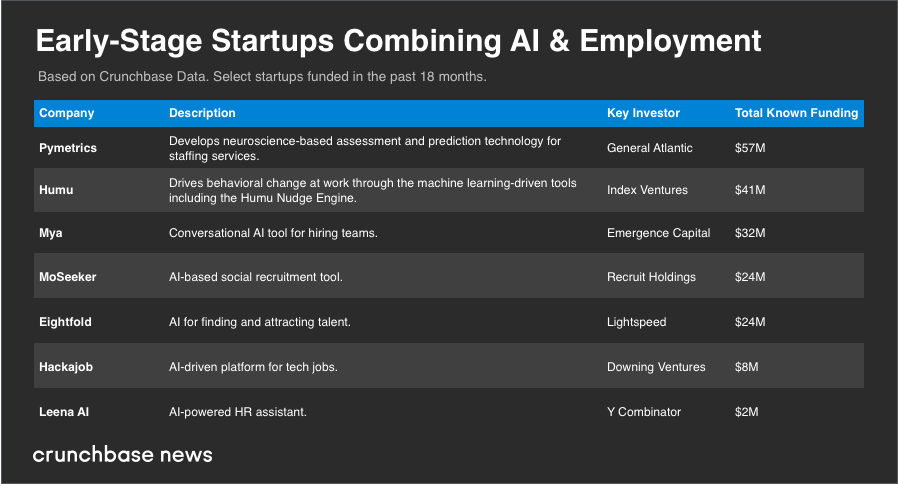
At present, even AI boosters don’t tout the technology as a cure-all for troubles plaguing the talent recruitment space. While it’s true humans are biased and flawed when it comes to evaluating job candidates, artificially intelligent software suffers from many of the same bugs. For instance, Amazon scrapped its AI recruiting tool developed in-house because it exhibited bias against women.
That said, it’s still early innings. Over the next few years, startups will be actively tweaking their software to improve performance and reduce bias.
Happiness and engagement
Once the goal of recruiting the best people is achieved, the next step is ensuring they stay and thrive.
Usually, a paycheck goes a long way to accomplishing the goal of staying. But in case that’s not enough, startups are busily devising a host of tools for employers to boost engagement and fight the scourge of burnout.
In the chart below, we look at a few of the companies that received early-stage funding this year to build out software platforms and services aimed at making people happier and more effective at work:
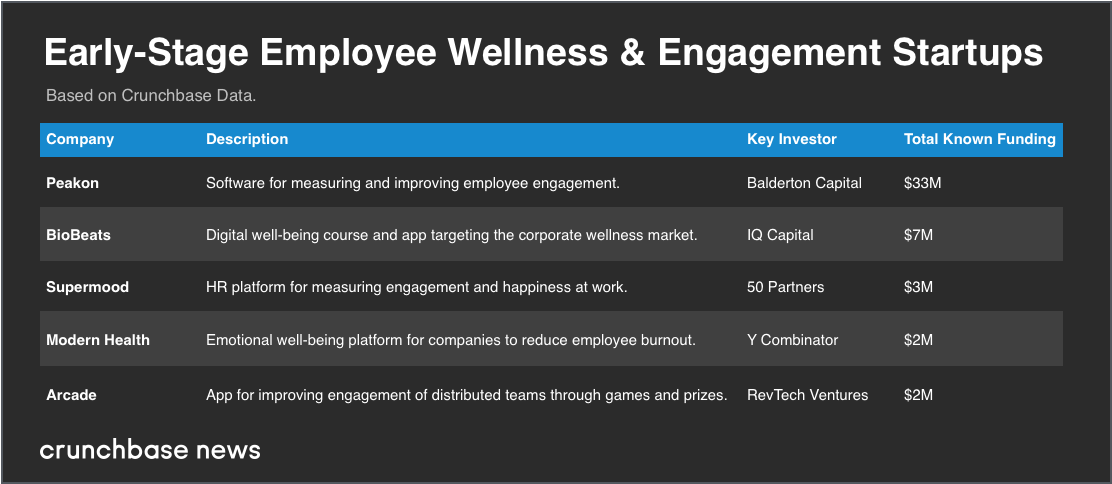
The most heavily funded of the early-stage crop looks to be Peakon, which offers a software platform for measuring employee engagement and collecting feedback. The Danish firm has raised $33 million to date to fund its expansion.
London-based BioBeats is another up-and-comer aimed at the “corporate wellness” market, with digital tools to help employees track stress levels and other health-related metrics. The company has raised $7 million to date to help keep those stress levels in check.
Early-stage indicators
Early-stage funding activity tends to be an indicator of areas with somewhat low adoption rates today that are poised to take off dramatically. For employment, that means we can likely expect to see AI-based recruitment and software-driven engagement tools become more widespread in the coming years.
What does that mean for job seekers and paycheck toilers? Expect to spend more of your time interfacing with intelligent software. Apparently, it’ll make you more employable, and happier, too.









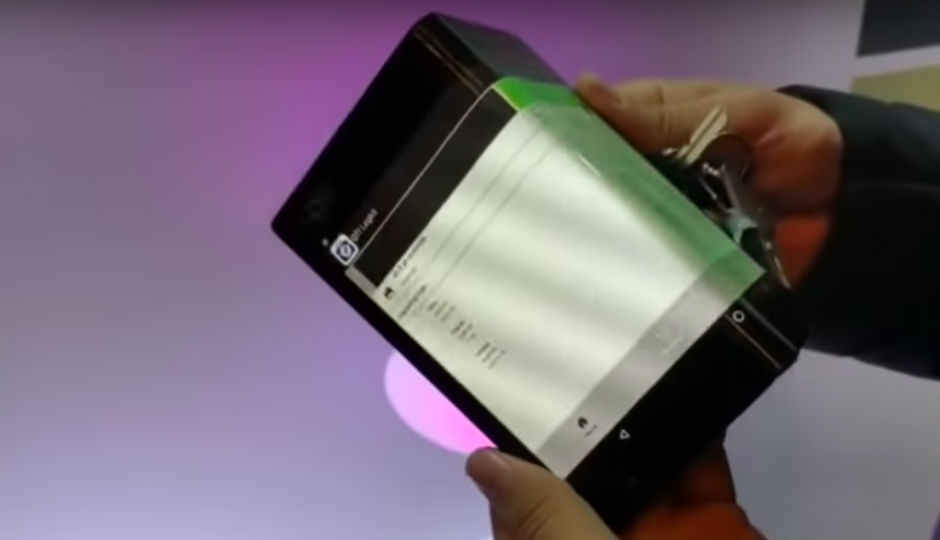 Foldable displays on smartphones have been talked about for many years now, but 2018 was the year when we actually saw some action in the space with the likes of Samsung and Chinese company Royole showcasing their own versions of the foldable device. The concept of a foldable smartphone comes from the ever increasing consumer demand of more screen real estate and as video streaming gains popularity, so will large screen smartphones that were once deemed phablets. A phone that can fold out to function like a tablet is the next big step towards increasing the screen surface area on a handset and that’s where foldable phones will make their mark. In a new video spotted online, display maker BOE’s 7.65-inch foldable display can be seen folding in and out with ease. The video shows that the flexible screen folds from the centre to take the form of a smartphone. It is reported that the BOE flexible display can achieve world’s smallest dynamic bending, which is a crucial factor to note when it comes to the form factor and design of future foldable phones. In terms of specs, the WQHD display reportedly sports a resolution of 2048 x 1536 pixels with a maximum brightness of 380 nits, a response time of 1ms and a high color gamut of 118% on the NTSC scale. As per reports, the screen can bend more than 100,000 times but in the video, the screen doesn’t really flatten very well once its folded out to achieve the table form. It has been long rumoured that Apple is in talks with BOE to source flexible OLED displays for future iPhones. According to a recent patent filing, Apple is working on a foldable phone which can be folded in front-to-front as well as back-to-back configuration. Xiaomi and Oppo are also said to be considering BOE or LG Display to source bendable displays for their own versions of foldable phones.
  http://bit.ly/2AwICMe
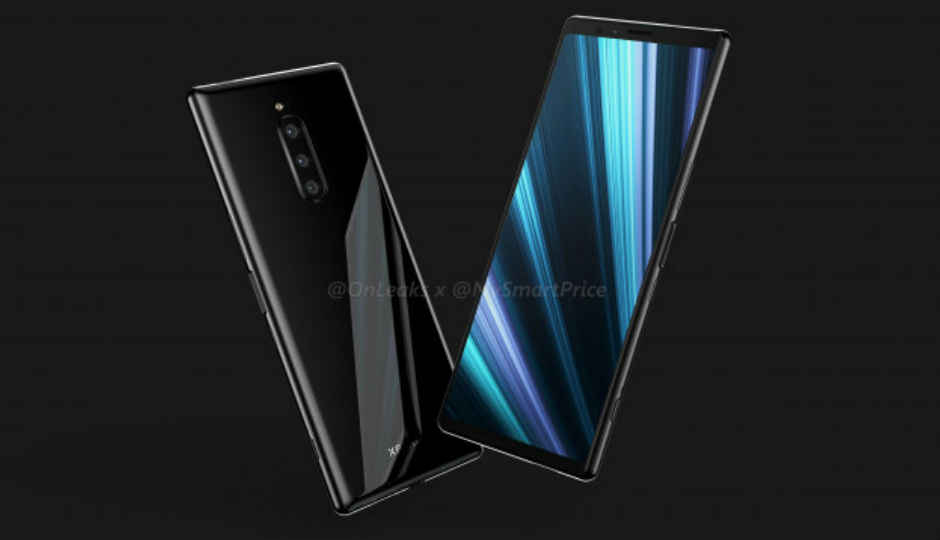 Key Highlights: Tipster Ice universe gives us a mock demo of the video-watching experience on the Sony Xperia XZ4 The tipster also shows photos of the phone's screen protector on Twitter Details about the upcoming Sony Xperia flagship smartphone are gradually crystallising. Only a week ago we found out that the Sony Xperia XZ4 could come with an extremely tall 21:9 display because a screen protector allegedly belonging to it was spotted in the wild. Now we’re seeing online tipster Ice universe play around with the screen protector to give us a demo of the viewing experience through it. In their most recent video that was uploaded on YouTube a couple of days ago, the tipster seems to have plastered the screen protector to a mock screen of 21:9 aspect ratio while playing a sample video, in an effort to show what watching videos on the Xperia XZ4’s display will be like. Neither the video nor its rather suggestive description conveys any unknown information about the upcoming smartphone. Apart from uploading a public video on YouTube, Ice universe also posted photos of the screen protector on Twitter, commenting that the Xperia XZ4’s display is 15.2 centimetres in length, which is nearly equal to the length of the iPhone XS Max. What’s evident from the screen protector though, is that the Xperia XZ4’s display sports no notches of any kind. Cut-outs for the earpiece, a single camera, and an LED flash can be seen on the screen protector. From what we’ve seen and heard before, the Sony Xperia XZ4 will come with a 6.5-inch OLED display. With an aspect ratio as wide as 21:9, the display could well be too tall for everyday use in portrait mode, no matter how long the user’s fingers are. That said, Sony might equip the software on it with an easy-access shortcut so elements high up on the screen can be brought to reach in the lower regions, much like the feature seen on some Apple iPhones. The Sony Xperia XZ4 is expected to be powered by a Qualcomm Snapdragon 855 chipset. RAM + storage options are said to be 6GB + 64GB and 8GB + 128GB. According to a recent report, the handset got an AnTuTu benchmark score of 395721. According to other reports, the Xperia XZ4 will sport a triple rear camera and a 3,900mAh battery that supports Quick Charge 4.0. We’ll know more about Sony’s upcoming flagship smartphone when more leaks pour in. Related Read: Sony Xperia XA3 will be priced much higher than its predecessor: Report
 http://bit.ly/2GTg0CC
 Key Highlights: Dutch astronaut André Kuipers dials 911 from space by mistake NASA security team on Earth frantically looks for signs of trouble Kuipers confesses his mistake in a radio show the next day Can you imagine what the security team at NASA's Johnson Space Center must've felt when they came to know that an astronaut aboard the International Space Station had just dialled 911? That's exactly what happened a couple of days ago when Dutch astronaut André Kuipers dialled the American emergency services number by accident from space. The security team at NASA raced to the room through which his call had connected only to find out nothing had happened. The sixty-year-old astronaut later explained himself in a radio programme by Dutch broadcasting network Nederlandse Omroep Stichting, "First you dial the 9 for an outside line, and then 011 for an international line. I made a mistake, and the next day I received an email message: Did you call 911?" Kuipers even quipped that he was a little disappointed that no one had come up to the space station to check. The phone system aboard the International Space Station uses Voice over Internet Protocol (VoIP) to allow astronauts on-board to place calls the way we would on Earth with Skype. The system has been around for a decade now, said Wayne Hale to National Public Radio. "A capability that was built into the ISS, with the rise of Internet phone calls, is the ability for the astronauts in the space station to just dial up anybody that they might want to," Hale had said. "Many people have gotten calls from space." This isn't the first time an astronaut has misdialled from space. Some three years ago, British astronaut tweeted to apologise to a woman he had apparently called by mistake during his voyage aboard the International Space Station. Though it's possible to call any number from the space station, the converse isn't; you can't make a call to an astronaut on the space station. Related Read: ISS astronaut unearths old NASA floppy disks in space
 http://bit.ly/2CQZHT1
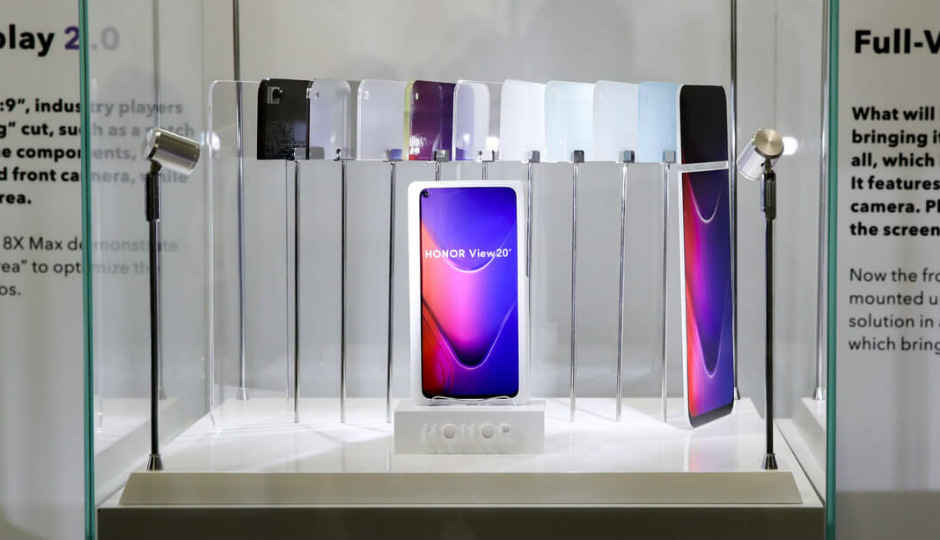 Highlights: Honor V20 features a 48MP rear camera. It has a punch-hole display. It also features Link Turbo technology to boost internet connectivity. Huawei has just sent out media invites for the launch of the Honor View 20 in India. The smartphone was launched in China just last month and is now headed to India with its first ever 48MP rear camera, a punch-hole display and a new technology called Link Turbo. The View 20 from Honor is a flagship grade smartphone and could be expected to cost somewhere between Rs 35,000 - Rs 45,000, depending on different storage variants. In terms of specs, the Honor View 20 features a 6.4-inch Full HD+ All-View display with a resolution of 2310x1080 pixels. The All-View display has a punch-hole in it to incorporate a selfie camera, similar to Samsung’s Infinity-O displays. The punch-hole is placed at the top left corner of the screen and measures 4.5mm in diameter. At the back, the phone is covered in glass which gets a V-shaped pattern under it signifying the View 20 moniker. At the heart of the View 20 lies Huawei’s flagship octa-core Kirin 980 chipset manufactured using the 7nm process. The processor has also been used on Huawei’s Mate 20 Pro flagship smartphone and so is the company’s GPU Turbo 2.0 performance and graphics boosting tech which also makes its way into the View 20. There is also a liquid cooling system to keep CPU temperatures in check. When it comes to the camera, the View 20’s 48MP rear camera is an industry first and get Sony’s IMX586 CMOS sensor with a pixel size of 0.8 μm, making it possible to pack 48 megapixels onto a 8.0 mm diagonal unit. One can expect the camera to account for good quality low light images with low noise. Minimal highlight blowouts or loss of detail in shadows can also be expected from the camera, but all depends on how well it has been optimised for the phone. The second sensor of the dual rear camera is used to capture depth. The punch-hole in the display houses a 25MP selfie shooter with f/2.0 aperture. The View 20 also gets a sizeable 4,000mAh battery with super fast charge support. Link Turbo tech in the phone is said to enable faster download speeds by leveraging both Wi-Fi and cellular connectivity at the same time. The phone runs on the latest Android 9 Pie OS with Magic UI 2.0 layered on top. Further, Honor View 20 comes in two variants - 6GB RAM + 128GB Storage and 8GB RAM + 128GB storage. In China, the 6GB variant of the phone is priced at CNY 2999 (approximately Rs 30,000) and the 8GB RAM version costs CNY 3499 (approximately Rs 35,500). Honor has also launched a special Moschino Edition of the View 20 with 8GB RAM and 256GB storage for CNY 3999 (approximately Rs 40,000). It is unknown which variants of the device will be launched in India. Related Read: Honor View 20 Maserati Edition Samsung Galaxy A8s launched with Infinity-O display
 http://bit.ly/2RAmRFa
 Highlights: Facebook tracks even those Android phones who don't have the app, says research At least 61% of the tested apps were found to automatically transfer data to Facebook In what could make things worse for Facebook, a new research has found that the social media giant tracks the data of even those Android users who do not use the company app. The findings of the research, conducted by UK-based charity Privacy International, once again raises questions on how the social media companies attack the privacy of its users as well as those who are indirectly connected to them. Facebook routinely tracks users, non users and logged out users outside its platform, said the study by UK-based charity Privacy International (via IANS). The findings showed that the app developers share data with Facebook through the Facebook Software Development Kit (SDK), a set of software development tools that help developers build apps for a specific operating system. According to the study, at least 61 percent of apps that were tested automatically transfer data to Facebook the moment a user opens the app. “This happens whether people have a Facebook account or not, or whether they are logged into Facebook or not. In our analysis, apps that automatically transmit data to Facebook share this data together with a unique identifier, the Google advertising ID (AAID),” the research said. For the study, Privacy International said that it examined 34 apps on Android, each with an install base from at least 10 million to a maximum of 500 million. The apps included language-learning tool Duolingo, travel and restaurant website TripAdvisor, job database Indeed and flight search engine Skyscanner, among others, the research said. All apps were tested between August and December 2018. In a response to the findings, Facebook reportedly said that sharing data is “common practice for many companies” and is useful for both users and the companies involved. “This information is important for helping developers understand how to improve their apps and for helping people receive relevant advertising in a privacy-protective way,” The Independent quoted Facebook as saying. “We do this in a transparent manner by explaining the practice through our Data Policy and Cookies Policy, and by using Google's advertising identifier, which can be controlled centrally by people using their device settings,” the social media giant was cited as saying. Facebook got embroiled in a scandal wherein a British data firm called Cambridge Analytica was found to be improperly gathering information of 87 million users. Related Read: Facebook CEO Mark Zuckerberg apologises to US Congress for data leaks affecting 87 million users
 http://bit.ly/2SKhr7K
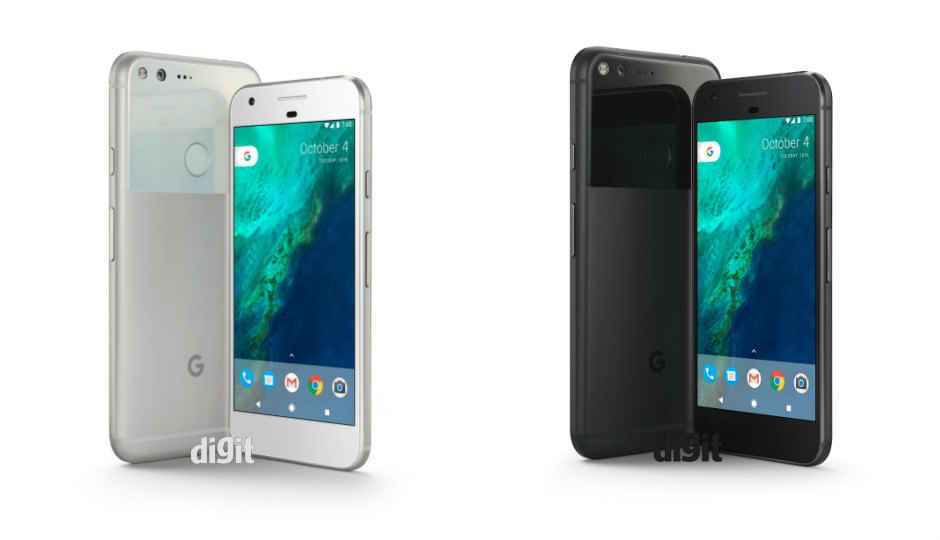 Highlights: Haryana man puts up anti-Google banners in Delhi Man claims the service centre did not rectify issues with his Pixel device What would you do when you are dissatisfied by a company’s service? The first idea that comes to our minds is to ‘shame’ the company on social media by listing our problems. This has been the trend lately but what if, the social media rant is not as fruitful as you thought it would be? In what could be called a bizarre incident, a Haryana man, frustrated by Google’s after sales service, resorted to a new idea to slam the company after it allegedly failed to rectify the problems in his Pixel smartphone. He put up posters in country’s Capital blaming the company of “Manipulations.” The whole scenario is a year old but media outlets started to pick this up recently. Several photos of anti-Google posters are now making rounds on the internet in which people are being advised to refrain from buying Google Pixel phones. As claimed, Manu Aggarwal from Haryana purchased a Pixel smartphone in early 2017 and started facing issues in the phone last year. As a normal person would do, he contacted the Google's customer service for repairs. According to his tweets, his Pixel device went through several rounds of repairs but he was not satisfied with the service. Aggarwal claims that instead of working fine, his phone developed even more snags than before. Frustrated with the persistent problems, Aggarwal chose Twitter to express his anger about the issue. In reply, Google reached out to him with a promise of fixing his smartphone. However, the issue never seemed to be sorted out. On Twitter, Aggarwal even uploaded screenshots of his conversations with the customer care executives terming those over two-hour long calls as “mental harassment.” Not only just tweeting to Google, he tagged Google CEO Sundar Pichai and Prime Minister Narendra Modi in most of his tweets in a bid to get the intervention so that his problems can be addressed quickly. When things didn’t turn out as expected, he apparently chose to make this issue get more eyeballs. Aggarwal got some anti-Google banners printed and went around places in Delhi to put up banners slamming Google’s alleged poor after sales service. The banners urged people to not buy Google phones. The banners were put up in places like Connaught Place, a frenetic business and financial hub in Central Delhi. The banners even had a QR code that linked back to his tweet. He even placed a placard on his car bashing Google for unsatisfactory service. It is not known whether his problems have been addressed or not but when we went to his profile, we could only see anti-Google tweets till May 28. Aggarwal had replied to an anti-Google tweet made by US President Donald Trump. He has also made an “eye opening” video titled, “Revolution for All Gadget Problems - Case Study of Google Pixel Fraud” in a bid to spread “awareness” about the “cheating and fraud by big brands.” Related Read: Google Pixel 3 launch
 http://bit.ly/2SI7KHi
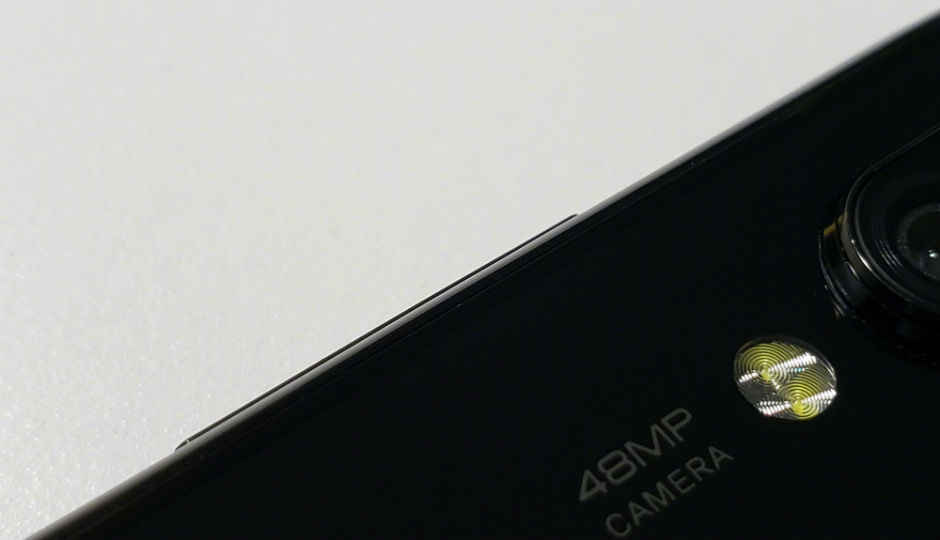 Highlights Founder and CEO of Xiaom, Lei Jun took to Weibo to ask his followers about USB type-C connectivity on a Redmi smartphone. It is possible that the upcoming Redmi phone has USB-C connectivity. It is also possible that the phone could house a 48MP camera. The only thing constant in life is change. When the change from micro USB to USB-C came, it was presumed that all smartphones and accessories would change to USB-C by the end of 2018. However, that isn’t the case. There are a lot of devices still functioning on micro USB connectivity including Redmi devices. However, Founder and CEO of Xiaom, Lei Jun posted comments on Chinese microblogging website Weibo asking his followers whether they would like to see a USB-C port on Redmi phones. There is no information whether the upcoming Redmi phone will feature USB-C so it is safe to assume that the upcoming device could move to USB-C connectivity. Adding USB-C connectivity instead of micro USB could increase the cost of the device, so it will be interesting to see how the smartphone is priced moving forward. Redmi has confirmed the phone with a 48MP rear camera saying that the launch event will be on January 10. It is assumed that this device will come with USB C. Except the date, there is no official information about the upcoming device. There are conflicting reports which claim that the phone will either be the Xiaomi Redmi Pro 2 or the Redmi 7. The company has teased an image which has “Redmi” written on it, alongside the date and time of the launch. A shadow in the image reads 48, possible implying the 48MP camera setup on the device. According to a previous report, the 48MP sensor could be a part of the triple camera setup on the back panel of the phone. Apart from this, this Redmi phone could have a punch-hole in the display to incorporate the selfie camera. Just like the Samsung Galaxy A8s and Honor View 20, this Redmi smartphone is expected to have an LCD panel. Also read Xiaomi CEO confirms Redmi will be a separate brand Xiaomi's POCO teases launch of 'New Poco' smartphone
  http://bit.ly/2CRny50
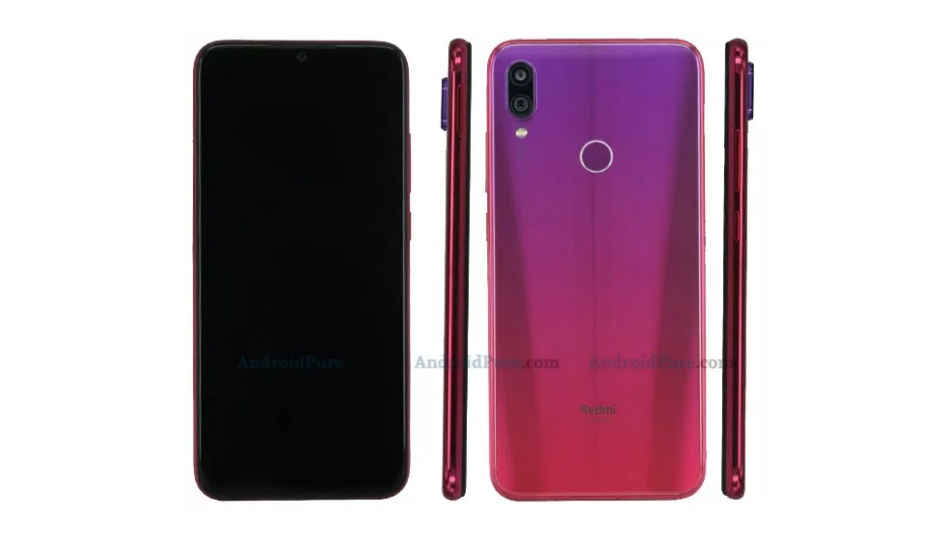 Highlights: Redmi Pro 2 to sport 6.3-inch display The phone to house 3900mAh battery It is expected to launch on January 10 Recently, it was announced that Xiaomi is all set to launch a Redmi device on January 10. Although, it was not confirmed what smartphone would the company launch but latest leaks and listing suggest that it could be the Redmi Pro 2. The official renders of the smartphone were spotted online and the the device has also been seen listed on TENAA. The Redmi Pro 2 will be the first device from Redmi as an independent entity after it got separated from parent brand Xiaomi. The Xiaomi Redmi Pro 2 surfaced on Chinese Certification Agency TENAA confirming the rear dual camera setup with LED flash and a fingerprint sensor. The image also shows the device sporting “Redmi” branding on the bottom of the rear panel, instead of the regular “Mi” attesting to the fact that Redmi is now a separate brand from Xiaomi. On the front, the phone is seen sporting a waterdrop notch, the power button and volume rocker buttons can be seen on the right edge of the device. The TENAA listing also reveals that the device in question will feature a 6.3-inch display and will be backed by a 3900 mAh battery. Apart from this, no other information on the hardware front was revealed. Allegedly, the Redmi Pro 2 will be powered by Qualcomm Snapdragon 675. It is expected to feature a Sony IMX576 24MP selfie camera and a dual camera setup with 48MP + 5MP sensors on the back. It could run on Xiaomi MIUI 10 based on Android Pie 9.0. As mentioned above, the smartphone would be Redmi’s first device after being an independent brand. Xiaomi CEO Lei Jun confirmed the development saying that the move would help the company focus more on the “Mi” brand and help in generating more revenue from it. After this split, Xiaomi will have three different brands under it: Redmi for budget phones, Poco for ‘affordable premium’ phones and Mi for premium phones. Related Read: Xiaomi may launch a Redmi device with 48MP camera on January 10 Smartphones expected to appear in 2019 Image courtesy: Android Pure
 http://bit.ly/2F7KgrU


