Thursday, November 29, 2018

Up close and hands-on with DJI’s Osmo Pocket gimbal

I’ll admit that I’ve warmed up pretty quickly to the Osmo Pocket. The original post from earlier today is pretty skeptical, owing in no small part to the price point. And while I stand by the earlier assessment that $349 is prohibitively expensive for the consumer market the company appears to be going after, I’ve become fairly enamored after a couple of hours with the device.

We plan on doing something a bit more thorough with our video team in a couple of weeks, but in the time I spent with the Pocket after today’s announcement, I see a lot of potential here — particularly in the hands of far more capable videographers.
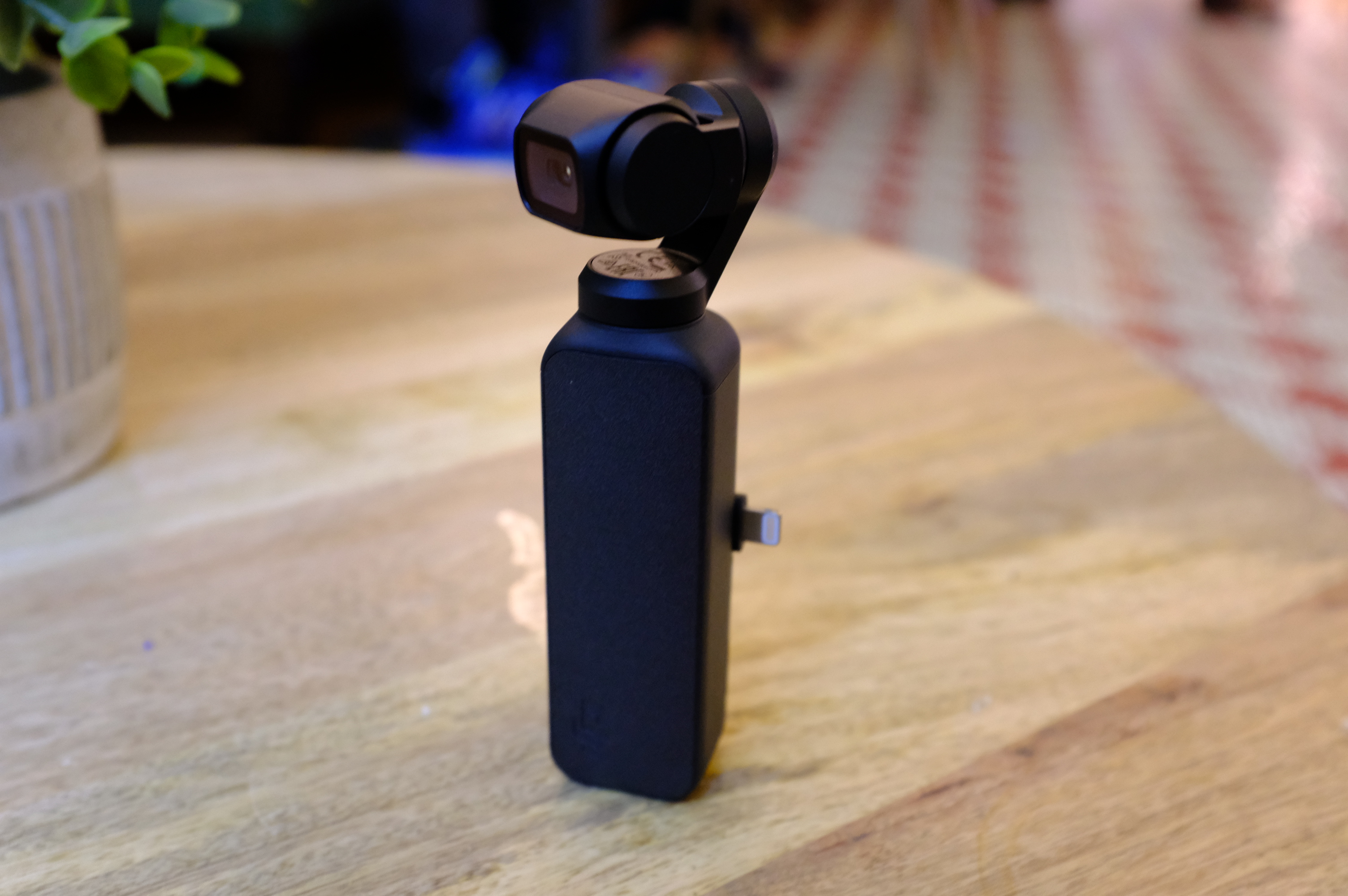
That’s not to say that this is a pro-level device. In fact, it’s intended to be the opposite. In spite of essentially costing double the standard Osmo, the Pocket is intended to be a more democratized take on the category — kind of the DJI Spark of the hand-held gimbal category. As such, it leans pretty heavily on pre-created scenes, ones similar to the kind you’ll find on the Mavic drones.

They’re pretty straightforward — and certainly the Osmo Pocket has far fewer points of failure than a drone. Among other things, if you manage to crash it into a tree, that’s entirely on you. Out of the box, you download the app, plug the Lightning or USB-C dongle into your phone and choose a scene. From there, it will walk you through the process of shooting and then neatly package it up, complete with edits and cheesy music.

It’s basically pre-made for sharing on social. And that’s really the core audience for a product like this. Serious shooters likely won’t be super inclined to lean heavily on the device, but with pretty minimal effort a first-time shooter can create some impressive stuff. I mean, I captured a bunch of neat-looking footage after puttering around the Times Square subway station for an hour.

That’s just commuters coming and going. You can imagine the sort of stuff you can grab when embedded in a more inspiring locale. And the miniature size means you can maneuver it into tighter spots. It’s not likely to serve as a GoPro replacement, but a bunch of optional cases and mounts mean you can probably pull off some interesting action cam-style shots.
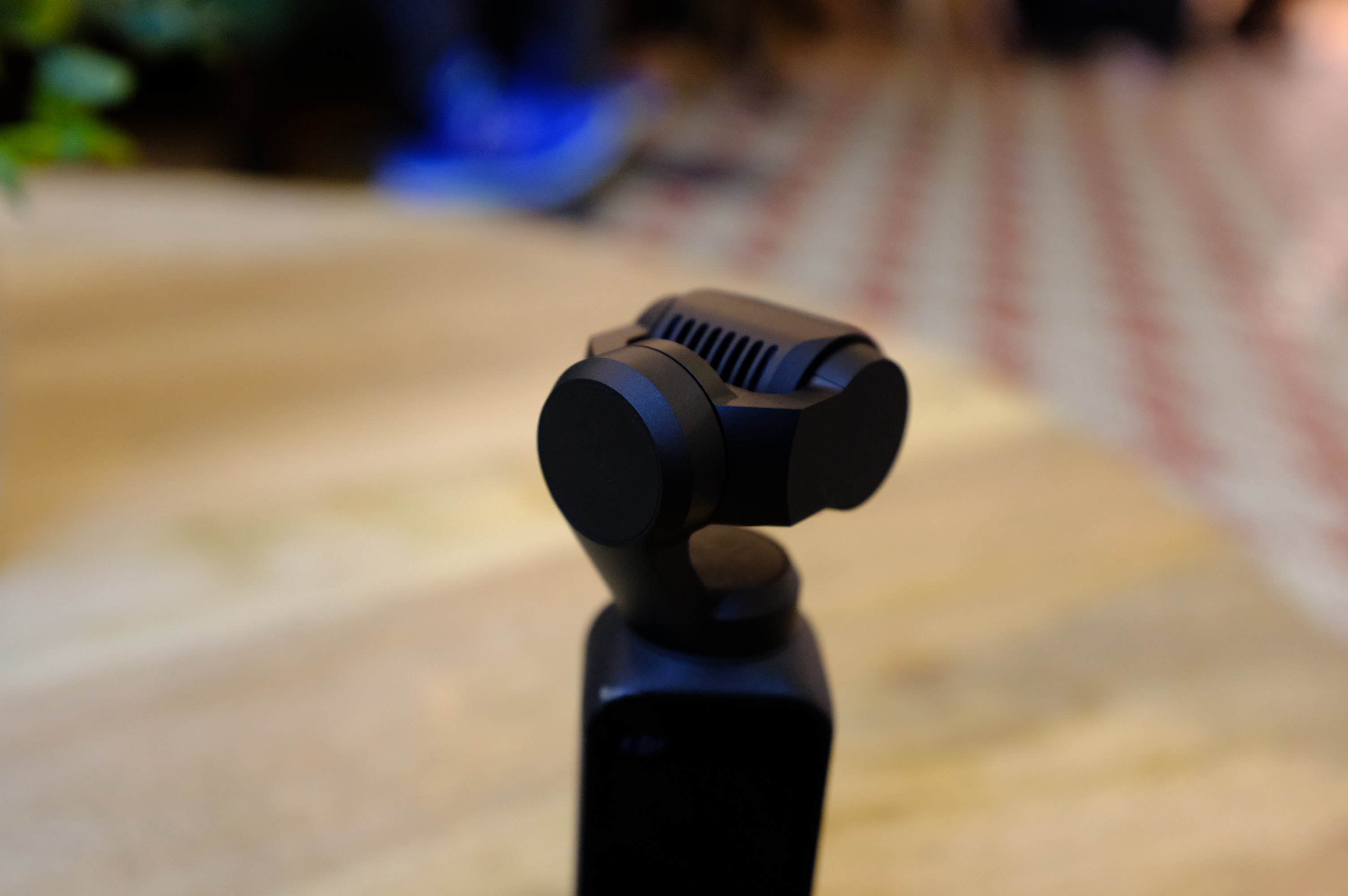
The product certainly has the underlying technology to create some impressive and innovative shots. The pre-loaded scenes lower the barrier of entry, but pro users can customize things plenty, while the built-in display means you can do live shots without tethering to the camera. The screen is small, however, and what you’re able to accomplish on it is still pretty limited.

[gallery ids="1751923,1751924,1751187,1751186,1751185,1751184,1751183,1751182,1751178,1751188"]

I stand by my earlier assessment that the Pocket is a product without a clear audience, particularly given the price point. Given what it can do, however, it’s sure to find a devoted fan base.

Qualcomm Ventures is dedicating $100M to AI investments

Qualcomm Ventures, the corporate venture capital arm of the chipmaker, has plans to invest up to $100 million in artificial intelligence.

Specifically, Qualcomm says it will provide capital to startups building on-device AI, which is AI that runs on the end device, like a smartphone or vehicle, rather than in the cloud. The fund’s leader, Qualcomm investment director Albert Wang (pictured), says on-device AI is the future.

“Today’s AI processing is very computationally intensive,” Wang told TechCrunch. “When you’re talking to Alexa, nothing is processed on your device, it gets taken to the cloud and gets scrunched there. There are a few problems with that — performance deteriorates, it consumes a lot of bandwidth and there are privacy issues. Imagine you have an Alexa that is more private and user-friendly, you ask the questions and can get the answers instantly. It doesn’t take the round trip all the way to the cloud.”

Qualcomm has previously made AI investments out of its evergreen venture fund, including in SenseTime, a Chinese AI facial recognition company, and GM-acquired Cruise, which is building AI-enabled autonomous driving technology. The AI fund’s debut investment was in AnyVision, an AI startup based in Tel Aviv working on face, body and object recognition technology. Qualcomm participated in the company’s $28 million Series A funding round, which was led by Bosch in July.

The corporate VC typically hands out cash to 12 to 15 startups per year. As for the AI fund, it’s not sure just how many companies it will back, but says its investments will range between $1 million and $10 million per deal.

Qualcomm doesn’t typically set aside capital for specialized funds, opting instead to rally behind its evergreen flagship vehicle. The firm did, however, launch a digital healthcare fund, which deployed capital to Fitbit, among others, years ago. As for AI, Wang says they bring a pretty unique set of resources to the table.

“Qualcomm is very big on the mobile platform and it’s gaining ground in the IoT space, so there are a lot of tech partnerships we can provide, a lot of market insight we can provide from both the hardware and software perspective, and just given our exposure, in general, we have a pretty big portfolio of companies.”

Following report on sluggish demand, Apple VP says iPhone XR is its most popular model

In the wake of a report from the WSJ last week that detailed how low demand for Apple’s latest iPhones was prompting the company to cut orders for the devices, particularly the iPhone XR, an Apple VP is detailing that the XR is the company’s best-selling model available right now.

The disclosure comes from Apple VP Greg Joswiak in an interview with CNET. It’s not a particularly juicy quote, only detailing that the device has “been our most popular iPhone each and every day since the day it became available.”

Joswiak didn’t specifically comment on the WSJ report. The assertion regarding iPhone XR sales relative to other iPhone models doesn’t really tell us a ton either, without some solid numbers.

The fact that the $749 XR is the best-selling of the iPhones available now isn’t wildly surprising. It was introduced as a crowd pleaser with a lower cost build that didn’t actually make many sacrifices in terms of compute power. The company’s iPhone XS retails for $999; they also are continuing to sell last-gen models at lower prices.

What’s interesting about this interview snippet is that this is just a slice of the detail we would generally get in a quarterly earnings report, but Apple recently decided that it’s not going to give that data moving forward and will instead just leave it at the revenues for its iPhone segment. In other words, this is about as good as it’s going to get moving forward in terms of insights about model breakdowns for device sales.

The company’s reasoning for not discussing unit sales moving forward pretty much boiled down to the fact that it wasn’t necessarily reflective of the company’s health, but the timing of this pertinent realization comes as analysts believe demand for the devices could start to slow.

The company’s stock price has taken about a 20 percent dive since it shared its most recent earnings.

Jam City is setting up a Toronto shop by buying Bingo Pop from Uken Games

The Los Angeles game development studio Jam City is setting up a shop in Toronto with the acquisition of Bingo Pop from Uken Games.

Terms of the deal weren’t disclosed.

The deal is part of a broader effort to expand the Jam City portfolio of games and geographic footprint. In recent months the company has inked agreements with Disney — taking over development duties on some of the company’s games like Disney Emoji Blitz and signing on to develop new ones — and launching new games in conjunction with other famous franchises like Harry Potter.

The Bingo Pop acquisition will bring a gambling game into the casual game developer’s stable of titles that pulled in roughly $700,000 in revenue through October, according to data from SensorTower.

“We are so proud to be continuing Jam City’s rapid global expansion with the acquisition of one of the most popular bingo titles, and its highly talented team,” said Chris DeWolfe, co-founder and CEO of Jam City, in a statement. “This acquisition provides Jam City with access to leading creative talent in one of the fastest growing and most exciting tech markets in the world. We look forward to working with the talented Jam City team in Toronto as we supercharge the live operations of Bingo Pop and develop innovative new titles and mobile entertainment experiences.”

Founded in Los Angeles in 2009 by DeWolfe, who previously helped create and launch Myspace, and 20th Century Fox exec Josh Yguado, Jam City rose to prominence on the back of its Cookie Jam and Panda Pop games. Now, the company has expanded through licensing deals with Harry Potter, Family Guy, Marvel and now Disney. Jam City has offices in Los Angeles, San Francisco, San Diego, Bogota and Buenos Aires.

India’s Drivezy raises $20M for its on-demand vehicle rental service

It’s been a year for on-demand services in India. Drivezy today became the latest to refuel after it raised a $20 million Series B.

The round was led by existing investor Das Capital, with participation from automotive giant Yamaha Motor Company, Axan Partners and IT-Farm. The deal takes Drivezy, which was formerly known as JustRide, to $31 million raised to date. In addition, the startup has also inked a $100 million asset financing deal backed by Japan’s AnyPay, which will see new cars and motorbikes added to Drivezy’s fleet over the next year.

Drivezy — which graduated Y Combinator and Google’s Launchpad Accelerator program — claims to have a fleet of around 8,000 vehicles that includes 5,000 two-wheelers (motorbikes and scooters) and 3,000 cars. That attracts around 37,000 customers every month. Abhishek Mahajan, one of the company’s five co-founders, told TechCrunch in an interview that the fleet should add a further 50,000-60,000 new vehicles, 75 percent of which would be two-wheelers, thanks to the AnyPay deal.

Mahajan said that Drivezy is currently market leader when it comes to self-drive two-wheelers — “self-drive” meaning vehicles that can be rented for a trip — with motorbikes and scooters accounting for “the bulk” of transactions, but just 20 percent of revenue. (That’s opposed to 80 percent for cars.) Revenue itself is 25 percent of the cut of a rental.

Aside from the asset financing deal — which will see AnyPay’s Harbourfront Capital vehicle own the new assets — Drivezy uses peer-to-peer and dealership partners for its fleet. The peer-to-peer appeal centers around increasing the utility of vehicles (and providing additional income to owners); that’s a similar pitch to car dealerships, who can draw income from vehicles used on Drivezy that would otherwise sit idle waiting to be purchased.

But the AnyPay deal is a “game changer,” according to Mahajan.

“When we fast-forward five years, we can’t imagine a scenario that car ownership in India goes from eight percent [right now] to U.S. level of 80 percent. India will have to skip a cycle on the culture of ownership and move into a sustainable sharing of cars model,” he added.

Drivezy isn’t alone in believing that future. The company’s main rivals include Revv, which raised $14.3 million led by Hyundai this year, and Zoomcar, which has raised $100 million from investors that include Ford and India’s Mahindra & Mahindra. With Yamaha jumping aboard with Drivezy, India’s on-demand rentals market has three automotive firms in the race.

For now, there’s no plan to move overseas, but Mahajan said that markets like Southeast Asia could become expansion targets in the future, once the India business is more developed.

Instagram is using object recognition tech to describe photos for visually impaired users

Instagram is a visual service; it’s a feed of photos and videos and memes that users take in, but the company is rethinking how to optimize a visual service for users with visual impairments via a couple of new features.

The accessibility-focused update rolling out today offers two options to give visually impaired users alternative text descriptions of what’s happening in posts. One leverages user text input while the other uses Facebook’s object recognition tech to do the heavy lifting.

The descriptions will surface for users utilizing screen readers. The user-input alternative text option will pop up in advanced settings when a user is posting a photo. It’s definitely a little out of the way, but it exists now, so that’s something. While there’s a level of depth that can only come from a human-written visual description, the company’s use of its object recognition software is obviously going to be carrying out most of the text descriptions on items in the Feed, Explore and Profile sections.

It’s an interesting proposition for a service that has made a name for itself through being almost entirely visual, keeping text and external navigations at bay while promoting a feed that’s all about visual absorption. At this point Instagram is far from fringe, and neither is the segment of the population that has a visual impairment — 285 million according to the blog post announcing the feature.

Audi’s e-tron GT concept is an all-electric sedan with some Porsche DNA

Audi is making room in its electric future for more than SUVs or crossovers.

After a string of teasers, the German automaker finally unveiled the Audi e-tron GT concept, a four-door all-electric coupe that has some Porsche DNA sprinkled in and that looks a lot like the A7. Audi introduced the concept Wednesday during the press days of the L.A. Auto Show.

The GT concept follows the September reveal of the automaker’s first all-electric vehicle, the Audi e-tron SUV that is expected to go into volume production next year.

The e-tron GT is a concept for now. But not for long.

The e-tron GT concept will be developed into volume-production models by the end of 2020. Initial deliveries will be made to customers in early 2021. Audi said its performance subsidiary Audi Sport is responsible for transforming the car into a volume-production model.

Audi-e-tron-GT-concept-side

First, the notable specs.

The Audi e-tron GT, which has a flat, wide underlying architecture and a long wheelbase, has separate electric motors fitted to the front and rear axles that produce an equivalent of 590 horsepower. The e-tron GT will accelerate from 0 to about 60 miles per hour in around 3.5 seconds and reach a top speed just shy of 150 mph, according to Audi.

The interior is vegan as well — perhaps a nod to Tesla — with synthetic leather and fabric from recycled fibers used on the seat cushions, armrests and center console. Audi doesn’t indicate whether a production version will offer a vegan interior.

The vehicle has some Porsche touches, as well. The Audi GT e-tron will be built on the Porsche Taycan platform. The Taycan, formerly known as Mission E, is an electric sports car that Porsche plans to put into series production in 2019.

While Porsche worked with Audi on the e-tron GT, it should not be confused with another joint electric platform project between the two companies. Audi and Porsche have also partnered to develop its “Premium Platform Electric” (PPE), which will be the foundation for multiple Audi model families with all-electric drive.

Audi-e-tron-GT-concept-5115

The electric GT will have a range of about 248.5 miles, although that could change by the time the vehicle goes into volume production. The Audi e-tron GT also shares the same 800-volt system as the Porsche Taycan, a feature that will shorten the time it takes to charge the battery. It will take about 20 minutes to recharge the battery to 80 percent of its capacity, according to Audi. (It’s worth noting that the Audi e-tron SUV doesn’t have this capability.)

The battery in the e-tron GT concept can be charged using a cable or wirelessly by positioning the vehicle over a charging pad that has an integral coil installed on the floor. It’s unclear if the induction charging feature will make it into the production version of the e-tron GT.

The e-tron GT is just the beginning of what promises to be a string of electric vehicle reveals by Audi. The company has said that it will sell 12 all-electric vehicles by 2025.

UK accountancy regulator FRC says auditors can't blame AI for audit failures, after it published what it called the world's first guidance on auditor AI usage (Ellesheva Kissin/Financial Times)

Ellesheva Kissin / Financial Times : UK accountancy regulator FRC says auditors can't blame AI for audit failures, after it published...