Wednesday, November 21, 2018

WTF is happening to crypto?

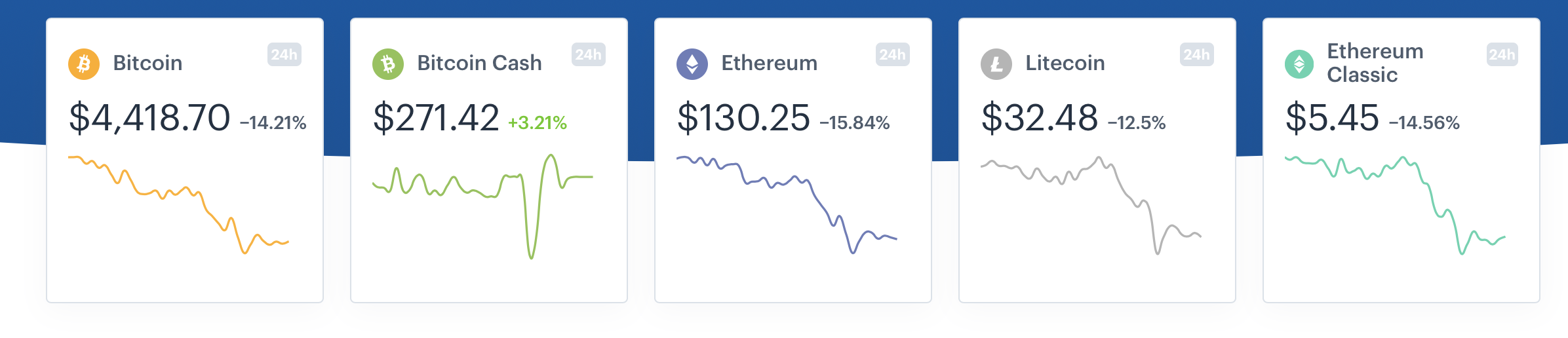
Four days ago the crypto markets were crashing hard. Now they’re crashing harder. Bitcoin, which hasn’t fallen past $6,000 for months, has dumped to $4,413.99 as of this morning, and nearly everything else is falling in unison. Ethereum, flying high at $700 a few months ago, is at $140. Coinbase, that bastion of crypto stability, is currently sporting a series of charts that look like Aspen black-diamond ski runs.
What is happening? There are a number of theories, and I’ll lay out a few of them here. Ultimately, sentiment is bleak in the crypto world, with bull runs being seen as a thing of a distant past. As regulators clamp down, pie-in-the-sky ideas crash and shady dealers take their shady dealings elsewhere, the things that made cryptocurrencies so much fun — and so dangerous — are slowly draining away. What’s left is anyone’s guess, but at least it will make things less interesting.

The bag holder theory

November was supposed to be a good month for crypto. Garbage sites like FortuneJack were crowing about bitcoin stability while the old crypto hands were optimistic and pessimistic at the same time. Eric Vorhees, founder of ShapeShift, felt that the inevitable collapse of the global financial system is good for folks with at least a few BTC in their wallets.

Others, like the Binance CEO Changpeng Zhao, are expecting a bull run next year and said his company was particularly profitable.

Ultimately, crypto hype moves the market far more than it has any right to, and this is a huge problem.

So who do you believe, these guys or your own lying eyes? That’s a complex question. First, understand that crypto is a technical product weaponized by cash. Companies like Binance and Coinbase will work mightily to maintain revenue streams, especially considering Coinbase’s current level of outside investment. These are startups that can literally affect their own value over time. We’ll talk about that shortly. Ultimately, crypto hype hasn’t been matching reality of late, a major concern to the skittish investor.

“I think that the downturn is due to things not going up as much as people had wanted. Everyone was expecting November to be a bull month,” said Travin Keith, founder of Altrean. “When things indicated that it wasn’t going that way, those who were on borrowed time, such as those needing some buffer, or those in the crypto business needing some money, needed to sell.”

Tether untethered

Tether has long been the prime suspect in the Bitcoin run up and crash. Created by an exchange called Bitfinex, the currency is pegged to the dollar and, according to the exchange itself, each tether — about $2.7 billion worth — is connected to an actual dollar in someone’s bank account. Whether or not this is true has yet to be proven, and the smart money is on “not true.” I’ll let Jon Evans explain:

What are those whiffs of misconduct to which I previously referred? I mean. How much time do you have? One passionate critic, known as Bitfinexed, has been writing about this for quite some time now; it’s a pretty deep rabbit hole. University of Texas researchers have accused Bitfinex/Tether of manipulating the price of Bitcoin (upwards.) The two entities have allegedly been subpoenaed by US regulators. In possibly (but also possibly not — again, a fog of mystery) related news, the US Justice Department has opened a criminal investigation into cryptocurrency price manipulation, which critics say is ongoing. Comparisons are also being drawn with Liberty Reserve, the digital currency service shut down for money laundering five years ago:

So what the hell is going on? Good question. On the one hand, people and even companies are innocent until proven guilty, and the opacity of cryptocurrency companies is at least morally consistent with the industry as a whole. A wildly disproportionate number of crypto people are privacy maximalists and/or really hate and fear governments. (I wish the US government didn’t keep making their “all governments become jackbooted surveillance police states!” attitude seem less unhinged and more plausible.)

But on the other … yes, one reason for privacy maximalism is because you fear rubber-hose decryption of your keys, but another, especially when anti-government sentiment is involved, is because you fear the taxman, or the regulator. A third might be that you fear what the invisible hand would do to cryptocurrency prices, if it had full leeway. And it sure doesn’t look good when at least one of your claims, e.g. that your unaudited reserves are “subject to frequent professional audits,” is awfully hard to interpret as anything other than a baldfaced lie.

Now Bloomberg is reporting that the U.S. Justice Department is looking into Bitfinex for manipulating the price of Bitcoin. The belief is that Bitfinex has allegedly been performing wash trades that propped up the price of Bitcoin all the way to its previous $20,000 heights. “[Researchers] claimed that Tether was used to buy Bitcoin at pivotal periods, and that about half of Bitcoin’s 1,400 percent gain last year was attributable to such transactions,” wrote Bloomberg. “Griffin briefed the CFTC on his findings earlier this year, according to two people with direct knowledge of the matter.”

This alone could point to the primary reason Bitcoin and crypto are currently in free fall: without artificial controls, the real price of the commodity becomes clear. A Twitter user called Bitfinex’d has been calling for the death of Tether for years. He’s not very bullish on the currency in 2019.

“I don’t know the when,” Bitfinex’d said. “But I know Tether dies along with Bitfinex.”

Le shitcoin est mort

As we learned last week, the SEC is sick of fake utility tokens. While the going was great for ICOs over the past few years with multiple companies raising millions if not billions in a few minutes, these salad days are probably over. Arguably, a seed-stage startup with millions of dollars in cash is more like a small VC than a product company, but ultimately the good times couldn’t last.

What the SEC ruling means is that folks with a lot of crypto can’t slide it into “investments” anymore. However, this also means that those same companies can be more serious about products and production rather than simply fundraising.

SEC intervention dampens hype, and in a market that thrives on hype, this is a bad thing. That said, it does mean that things will become a lot clearer for smaller players in the space, folks who haven’t been able to raise seed and are instead praying that token sales are the way forward. In truth they are, buttoning up the token sale for future users and, by creating regulation around it, they will begin to prevent the Wild West activity we’ve seen so far. Ultimately, it’s a messy process, but a necessary one.

“It all contributes to greater BTC antifragility, doesn’t it?,” said crypto speculator Carl Bullen. “We need the worst actors imaginable. And we got ’em.”

Bitmain

One other interesting data point involves Bitmain. Bitmain makes cryptocurrency mining gear and most recently planned a massive IPO that was supposed to be the biggest in history. Instead, the company put these plans on hold.

Interestingly, Bitmain currently folds the cryptocurrency it mines back into the company, creating a false scarcity. The plan, however, was for Bitmain to begin releasing the Bitcoin it mined into the general population, thereby changing the price drastically. According to an investor I spoke with this summer, the Bitmain IPO would have been a massive driver of Bitcoin success. Now it is on ice.

While this tale was apocryphal, it’s clear that these chicken and egg problems are only going to get worse. As successful startups face down a bear market, they’re less likely to take risks. And, as we all know, crypto is all about risk.

Abandon all hope? Ehhhhh….

Ultimately, crypto and the attendant technologies have created an industry. That this industry is connected directly to stores of value, either real or imagined, has enervated it to a degree unprecedented in tech. After all, to use a common comparison between Linux and blockchain, Linus Torvalds didn’t make millions of dollars overnight for writing a device driver in 1993. He — and the entire open-source industry — made billions of dollars over the past 27 years. The same should be true of crypto, but the cash is clouding the issue.

Ultimately, say many thinkers in the space, the question isn’t whether the price goes up or down. Instead, of primary concern is whether the technology is progressing.

“Crypto capitulation is once again upon us, but before the markets can rise again we must pass through the darkest depths of despair,” said crypto guru Jameson Lopp. “Investors will continue to speculate while developers continue to build.”

Elon Musk’s extracurricular antics reportedly spark a NASA safety probe at SpaceX

Elon Musk’s dabble with the doobage in a September radio interview may have sparked more than just an outpouring of adulation from his acolytes (and a fairly interesting conversation around artificial intelligence, social media, invention and space).

The Washington Post reports that the folks at the National Aeronautics and Space Administration were less than amused with Musk’s antics and have ordered a safety review of SpaceX and Boeing as a response to the colorful chief executive’s shenanigans.

In an interview, NASA associate administrator for human exploration, William Gerstenmaier, told the Post that the review will begin next year and would examine the “safety culture” of both Boeing and SpaceX.

Rather than focus on the safety of the actual rockets, the Post said that the review would look at the hours employees work, drug policies, leadership and management styles, and the responsiveness of both companies to safety concerns from employees. 

The review is going to be led by the Office of Safety and Mission Assurance within NASA, which has conducted similar probes before, according to the Post report.

According to the NASA official, the process could be “pretty invasive,” with the potential for hundreds of interviews with employees at every level and across all locations where the companies operate.

At stake is the potential $6.8 billion in contracts the two companies received in 2014 to revive crewed missions to space. SpaceX grabbed $2.6 billion from NASA for the program, while the remainder went to Boeing.

Both companies have stumbled as they test their crewed systems to get NASA astronauts into orbit. Boeing still needs to test the heat shields and parachute systems of its spacecraft and address the potential for propellant leakage during the emergency abort process.

SpaceX also is having problems with its parachute system.

In a statement given to the Post, SpaceX said, “We couldn’t be more proud of all that we have already accomplished together with NASA, and we look forward to returning human spaceflight capabilities to the United States.”

Half a million Android users tricked into downloading malware from Google Play

More than half a million users have installed Android malware posing as driving games — from Google’s own app store.

Lukas Stefanko, a security researcher at ESET, tweeted details of 13 gaming apps — made by the same developer — which were at the time of his tweet downloadable from Google Play. Two of the apps were trending on the store, he said, giving the apps greater visibility.

Combined, the apps surpassed 580,000 installs before Google pulled the plug.

Anyone downloading the apps were expecting a truck or car driving game. Instead, they got what appeared to be a buggy app that crashed every time it opened.

In reality, the app was downloading a payload from another domain — registered to an app developer in Istanbul — and installed malware behind the scenes, deleting the app’s icon in the process. It’s not clear exactly what the malicious apps do; none of the malware scanners seemed to agree on what the malware does, based on an uploaded sample to VirusTotal. What is clear is that the malware has persistence — launching every time the Android phone or tablet is started up, and has “full access” to its network traffic, which the malware author can use to steal secrets.

We reached out to the Istanbul-based domain owner, Mert Ozek, but he did not respond to our email. (If that changes, we’ll update).

Google spokesperson Scott Westover confirmed that the apps “violated our policies and have been removed from the Play Store.”

It’s another embarrassing security lapse by Google, which has long faced criticism for its backseat approach to app and mobile security compared to Apple, which some say is far too restrictive and selective about which apps make it into its walled garden.

Google has spent years trying to double down on Android security by including better security features and more granular app permission controls. But the company continues to battle rogue and malicious apps in the Google Play app store, which have taken over as one of the greatest threats to Android user security. Google pulled more than 700,000 malicious apps from its app store last year alone, and has tried to improve its back-end to prevent malicious apps from getting into the store in the first place. 

And yet — clearly — that isn’t enough.

LinkedIn launches its own Snapchat Stories. Here’s why it shouldn’t have

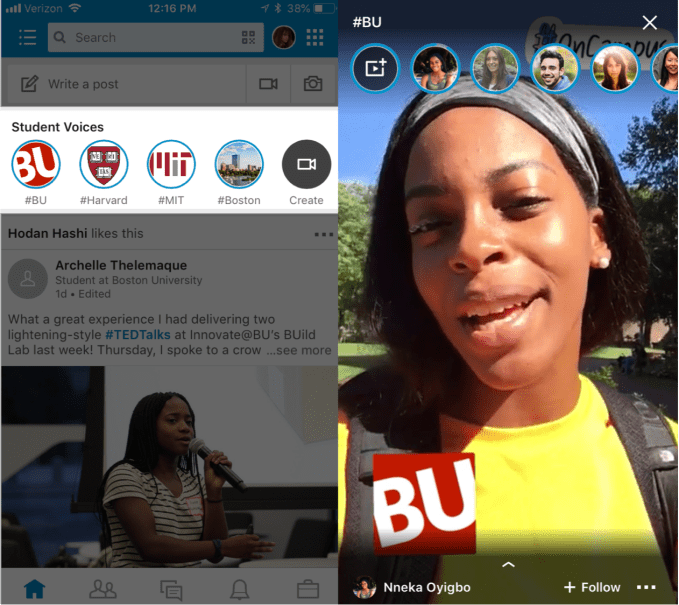
The social media singularity continues with the arrival of Snapchat Stories-style slideshows on LinkedIn as the app grasps for relevance with a younger audience. LinkedIn confirms to TechCrunch that it plans to build Stories for more sets of users, but first it’s launching “Student Voices” just for university students in the U.S. The feature appears atop the LinkedIn home screen and lets students post short videos to their Campus Playlist. The videos (no photos allowed) disappear from the playlist after a week while staying permanently visible on a user’s own profile in the Recent Activity section. Students can tap through their school’s own slideshow and watch the Campus Playlists of nearby universities.

LinkedIn now confirms the feature is in testing, with product manager Isha Patel telling TechCrunch “Campus playlists are a new video feature that we’re currently rolling out to college students in the US. As we know, students love to use video to capture moments so we’ve created this new product to help them connect with one another around shared experiences on campus to help create a sense of community.” Student Voices was first spotted by social consultant Carlos Gil, and tipped by Socially Contented’s Cathy Wassell to Matt Navarra.

A LinkedIn spokesperson tells us the motive behind the feature is to get students sharing their academic experiences like internships, career fairs and class projects that they’d want to show off to recruiters as part of their personal brand. “It’s a great way for students to build out their profile and have this authentic content that shows who they are and what their academic and professional experiences have been. Having these videos live on their profile can help students grow their network, prepare for life after graduation, and help potential employers learn more about them,” Patel says.

But unfortunately that ignores the fact that Stories were originally invented for broadcasting off-the-cuff moments that disappear so you DON’T have to worry about their impact on your reputation. That dissonance might confuse users, discourage them from posting to Student Voices or lead them to assume their clips will disappear from their profile too — which could leave embarrassing content exposed to hirers. “Authenticity” might not necessarily paint users in the best light to recruiters, so it seems more likely that students would post polished clips promoting their achievements… if they use it at all.

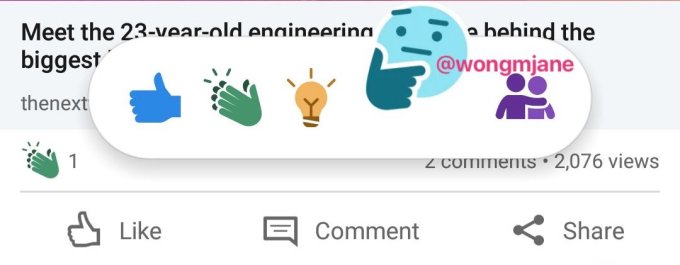
LinkedIn seems to be desperate to appeal to the next generation. Social app investigator and TechCrunch’s favorite tipster Jane Manchun Wong today spotted 10 minor new features LinkedIn is prototyping that include youth-centric options like GIF comments, location sharing in messages and Facebook Reactions-style buttons beyond “Like” such as “Clap,” “Insightful,” “Hmm,” and “Support.”

When users post to Student Stories, they’ll have their university’s logo overlaid as a sticker they can move around. LinkedIn will generate this plus a set of suggested hashtags like #OnCampus based on a user’s profile, including which school they say they attend, though users can also overlay their own text captions. Typically, users in the test phase were sharing videos of around 30 to 45 seconds. “Students are taking us to their school hackathons, showing us their group projects, sharing their student group activities and teaching us about causes they care about,” Patel explains. You can see an example video here, and watch a sizzle reel about the feature below.

For now, LinkedIn tells me it has no plans to insert ads between clips in Student Voices. But if the Stories content assists with discovering and vetting job candidates, it could make LinkedIn more unique and indispensable to recruiters who do pay for premium access. And if these Stories get a ton of views simply by being emblazoned atop the LinkedIn feed, users might return to the app more frequently to share them. As we’ve seen with the steady increase in popularity of Facebook Stories, if you give people a stage for narcissism, they will fill it.

LinkedIn’s start as a dry web tool for seeking jobs has made for a rocky transition as it tries to become a daily habit for users. Some tactical advice in its feed can be helpful, but much of LinkedIn’s content feels blatantly self-promotional, boring or transactional. Meanwhile, it’s encountering new competition as Facebook integrates career listings and job applications for blue-collar work into its social network that already sees over a billion people visit each day. It’s understandable why LinkedIn would try to latch on to the visual communication trend, as Facebook estimates Stories sharing will surpass feed sharing across all apps in 2019. But Student Voices nonetheless feels unabashedly “how do you do, fellow kids?”

Gift Guide: Black Friday tech deals that are actually pretty good

Black Friday is, for the most part, bad. People are awful, retailers pull all sorts of shenanigans to make it seem like you’re getting a better deal than you are and a lot of people end up buying junk they don’t need to make the day feel like a “success.”

But you know that. If you’re gonna do this, you might as well go in with some sort of game plan. Our advice? Stay inside and shop online where you can, be aware that most of the best deals are stocked in hilariously low quantities and don’t be stubborn and buy some no-name Android tablet just because the sign says it’s 80 percent off and, well, they’re out of the TV you wanted anyway.

We’ve had roughly 4 billion Black Friday deal emails hit our inboxes over the last month. We’ve sifted through most of them to try to sort out the junk. We’ll keep adding new deals as we find them, so check back on the regular.

Many (most?) of these are already live, unless otherwise noted.

Amazon

If you’re trying to load up on Amazon’s own gear (things like the Fire TV stick, or the Echo), Black Friday is one of the best days to do it. Plus, since it’s all online, no waiting outside in the cold for you!

If you’re buying something else on Amazon on Black Friday because it seems like a good deal, punch it into CamelCamelCamel to check the price history first:


Audible

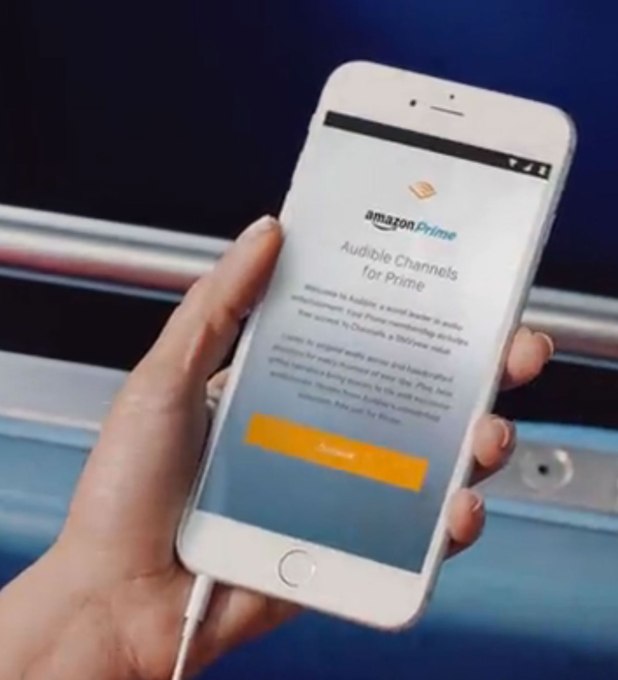
Amazon’s audiobook service, Audible, is usually $15 per month. This week they’re selling three-month plans for $7 per month. That gets you one audiobook per month (plus two Audible Originals)… so, in a roundabout way, you’re getting three audiobooks for roughly $21.

Just remember to cancel when you’re done if you’re not using it, as the price jumps back up to $15 after three months. Set up a calendar reminder or something, if you have to.

Google

If you’ve put off buying a Pixel 3 or updating your Chromecast in hopes that there’d be some sort of deal, you’re in luck. Google says the sale won’t start until 11/22, but they’re pretty solid:

  • Buy one Pixel 3 or Pixel 3 XL, you can get a second one 50 percent off.
  • Just need one? The Pixel 3 will be $150 off its normal price ($649 instead of $799), while the Pixel 3 XL will be $200 off ($699 instead of $899).
  • Google Home Hub, Google’s first Home device with a big ol’ screen on it, is being dropped from $149 to $99.
  • Google Home Mini, usually $49, is dropping to $25.
  • The standard Google Home will drop from $129 to $79.
  • Chromecast is going from $35 to $25, while the 4K-friendly Chromecast Ultra is going from $69 to $49.
  • The Pixelbook will drop from $999 to $699.

All of these will be available on Google’s own store but, again, they don’t go live until 11/22.


Samsung

Living that Android life, but don’t want a Pixel? Samsung has cut a few hundred bucks off both of its current flagship Android smartphones. The Galaxy S9 (64GB, unlocked) is currently $520 — down from $720. The bigger, beefier S9+ (64GB, unlocked) is down to $639, usually $839. The same $200 discount applies to all capacities, so you can bump it up to 128GB or 256GB if you need the space.

Sony

Sony is making a huge push this season by selling the 1 TB PlayStation 4 Slim, usually $300, for $199 at most major retailers. Better yet: It comes with a copy of Spider-Man, the new(ish) and absolutely fantastic PS4 exclusive that ate hundreds upon hundreds of hours of my life.

They’re pushing this sale at all the big-box stores, so you have your pick. You can find it at, for example, GameStop, Target, Walmart or Best Buy.

You also can get a year of PlayStation Plus, usually $60, for $40 from Walmart or Amazon. It’s a digital renewal code, so even if you’re not ready to renew right now, you can hang on to it for later.

GameStop, meanwhile, has PS4 controllers marked down to $38 (usually $60)

Microsoft

It’s not quite as good as the PS4 deal — but if you lean heavier toward the Xbox camp, Amazon has 1 TB Xbox One S with Battlefield V or with NBA 2K19, each for $230 (usually $299).

Need more controllers? Starting on Thanksgiving Day, Microsoft will also be selling controllers for $40 — down from the normal price of $60. Walmart is price-matching the deal a little early, though the price isn’t showing until it’s in your cart.

Got your sights set on the highest-end Xbox, the Xbox One X? It doesn’t come with any games, but both Amazon and Walmart have it marked down to $400 from its usual price of $499.

Apple

Apple doesn’t really play the Black Friday game. As a result, there are only a handful of Apple-related deals this year — expect stock to be super limited, and most of them won’t go live until Thanksgiving Day.

Walmart, Target, Costco and Jet will all be selling the 2018 iPad (32 GB) for $250 — down from the usual price of $320. Best Buy, meanwhile, will sell the 2018 iPad (128 GB) for $329 — down from $429.

Target and a few other stores, meanwhile, are dropping the Apple Watch Series 3 down from $279 to $199…. but be aware that this is a generation behind, as Apple has already moved on to Series 4.


Sonos

Sonos doesn’t often do sales on its speakers, but they’ve got a few lined up for this week. These won’t actually start until Thanksgiving day — but once they do, they should be available on Sonos.com and run until Monday, 11/26.

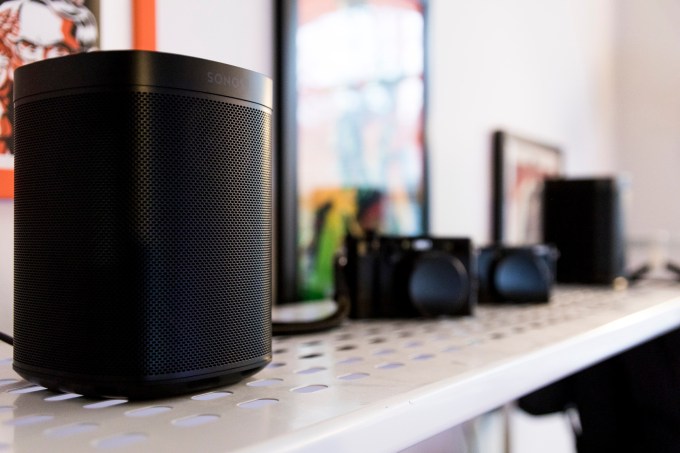
Sonos One, the company’s compact speaker with Alexa built in (and pictured above), will drop from $199 to $175.

Sonos Beam, their smaller soundbar, will drop from $399 to $349 (alas, there’s no official deal on the company’s bigger, badder soundbar, the Playbar — but Amazon has a deal going right now that keeps it at the normal $699 price but also throws in a wallmounting kit and a $50 Amazon gift card).

The Sonos SUB, meanwhile, drops from $699 to $599.

TechCrunch Gift Guide 2018 banner

The highest-flying consumer tech stocks have lost $1 trillion

Another day, another stock market setback for once high-flying technology companies, which have lost roughly $1 trillion in the latest stock market slide.

Shares of the core group of consumer technology companies, including Facebook, Amazon, Apple, Alphabet and Netflix, are falling again — contributing to the big indexes like the Dow Jones Industrial Average and the S&P 500 sliding into negative territory for the year.

This collapse is thanks in part to rising interest rates that have investors looking for a more stable return profile than placing bets on high-growth technology companies. There’s also some concern that maybe growth won’t be so high for these technology giants as they enter their teenage and twenty-something years as public companies.

It’s also happening against the backdrop of an overall economic picture that looks less rosy for the United States. Single-family housing starts, which are considered a bellwether for the nation’s economic health, are still down from their highs, despite multi-family housing starts picking up.

None of this is particularly good news for startups or venture investors.

Indeed, it could impact planned IPOs for 2019, which has been billed as the big year when several later-stage companies were to make their public market debuts. Those public offerings were supposed to give investors liquidity, bolstering the argument for the billions of dollars which investors have poured into high-tech startups over the past decade.

If the IPO window closes, which looks likely should this slide continue, investors might be less inclined to open their wallets for startups looking to raise cash.

That could, in turn, present problems for companies with high burn rates. The declining value of tech stocks will also impact liquidity in other ways as companies become more conservative and will likely spend less on mergers or acquisitions that provided another avenue to exits for startup companies.

In all, this is a tenuous time for the tech industry, and it might mean the beginning of the end for this current boom cycle.

UK accountancy regulator FRC says auditors can't blame AI for audit failures, after it published what it called the world's first guidance on auditor AI usage (Ellesheva Kissin/Financial Times)

Ellesheva Kissin / Financial Times : UK accountancy regulator FRC says auditors can't blame AI for audit failures, after it published...